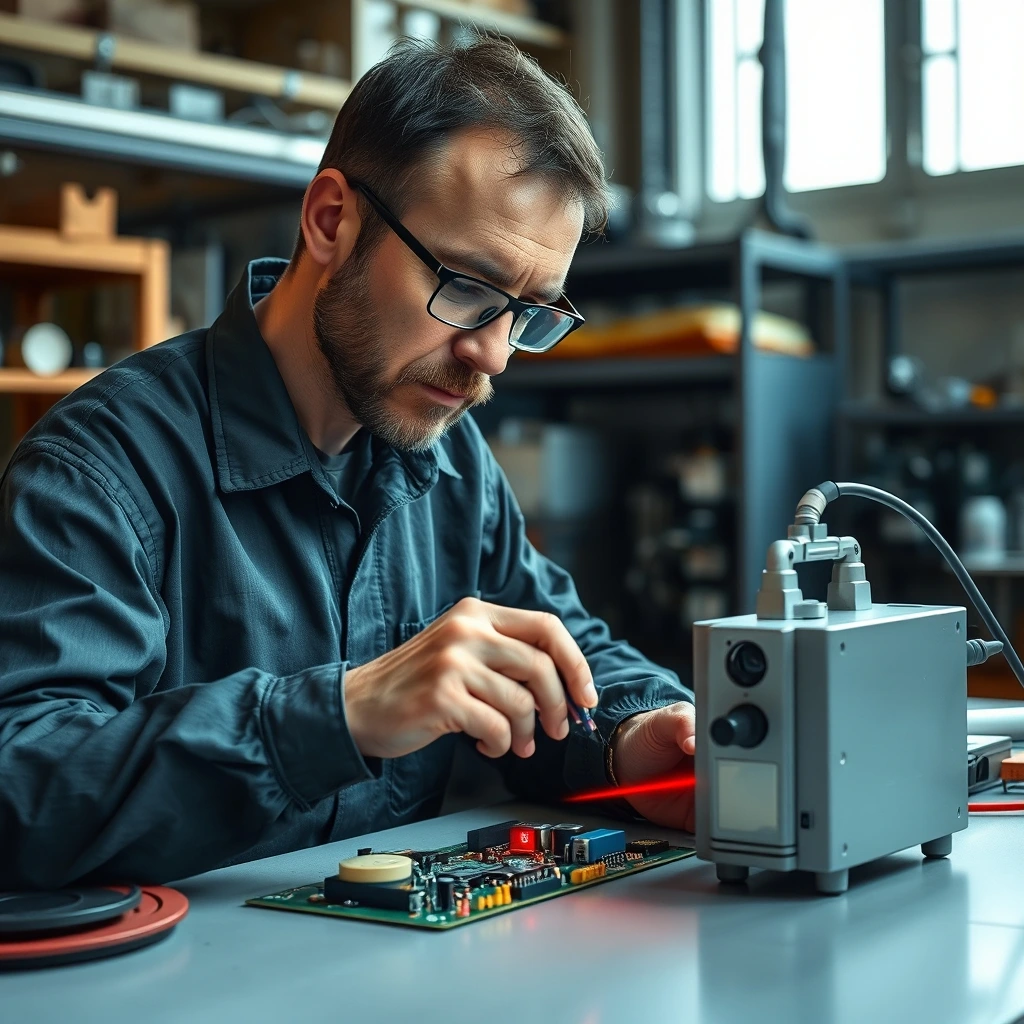
- Terahertz Reality: 6G relies on sub-millimeter waves that struggle to penetrate simple walls.
- AI Integration: Networks will run entirely on autonomous machine learning without human intervention.
- Hardware Bottlenecks: Power consumption remains an unsolved crisis for edge devices.
Let us be candid: most headlines about upcoming wireless standards are pure marketing fiction. While carriers burn billions marketing current infrastructure, underground labs are already wrestling with the brutal physics of 6G. The problem is not speed. The problem is keeping the hardware from melting.
The Terahertz Trap We Refuse to Discuss
Everyone wants lightning-fast data rates. Nobody talks about how fragile those frequencies actually are. When you push wireless communications into the terahertz spectrum, atmospheric moisture eats your signal. A heavy rainstorm can drop your connection to zero.
- Frequencies range from 100 GHz up to 10 THz.
- Signal range drops drastically compared to traditional cellular towers.
- Physical obstruction creates massive shadow zones requiring dense micro-repeater deployments.
Engineers are currently designing intelligent reflecting surfaces to bounce signals around buildings. It sounds clever until you calculate the installation cost. Urban infrastructure requires millions of these tiny reflectors.
Why Artificial Intelligence is Not Optional Anymore
Human operators cannot manage the sheer volume of variables in a multi-gigahertz environment. The grid shifts too fast. Traditional algorithms take too long to compute routing tables.
- Distributed machine learning models manage local cell handovers autonomously.
- Predictive caching preempts user movement before latency spikes occur.
- Energy harvesting protocols optimize base station power draw dynamically based on traffic load.
Do not buy into hardware hype cycles predicting consumer rollouts by the end of the decade. Enterprise testing will dominate the entire 2030s while core standards are rewritten.
The Power Consumption Crisis Nobody Admits
More speed always demands more electricity. Current base stations already draw immense power. Scaling up to ultra-dense networks multiplies that demand exponentially.
Researchers are frantically testing novel semiconductor materials like gallium nitride. Silicon simply cannot handle the thermal loads at these frequencies without massive cooling fans. Cooling fans on millions of street poles are completely impractical.
Comparing the Generations
| Aspect | Traditional Approach | Modern Solution |
|---|---|---|
| Spectrum | Sub-6 GHz and millimeter wave | Terahertz and optical wireless |
| Management | Centralized human monitoring | Autonomous distributed neural networks |
| Latency Targets | Milliseconds | Sub-microseconds |
Frequently Asked Questions
When will real hardware hit the market?
Commercial deployments for standard consumers are unlikely before the mid-2030s. Early adopters will be exclusively industrial automation facilities and military contractors.
Will my current smartphone work on future systems?
Not at all. The antenna architecture requires entirely new silicon chipsets built specifically for high-frequency directional beams.