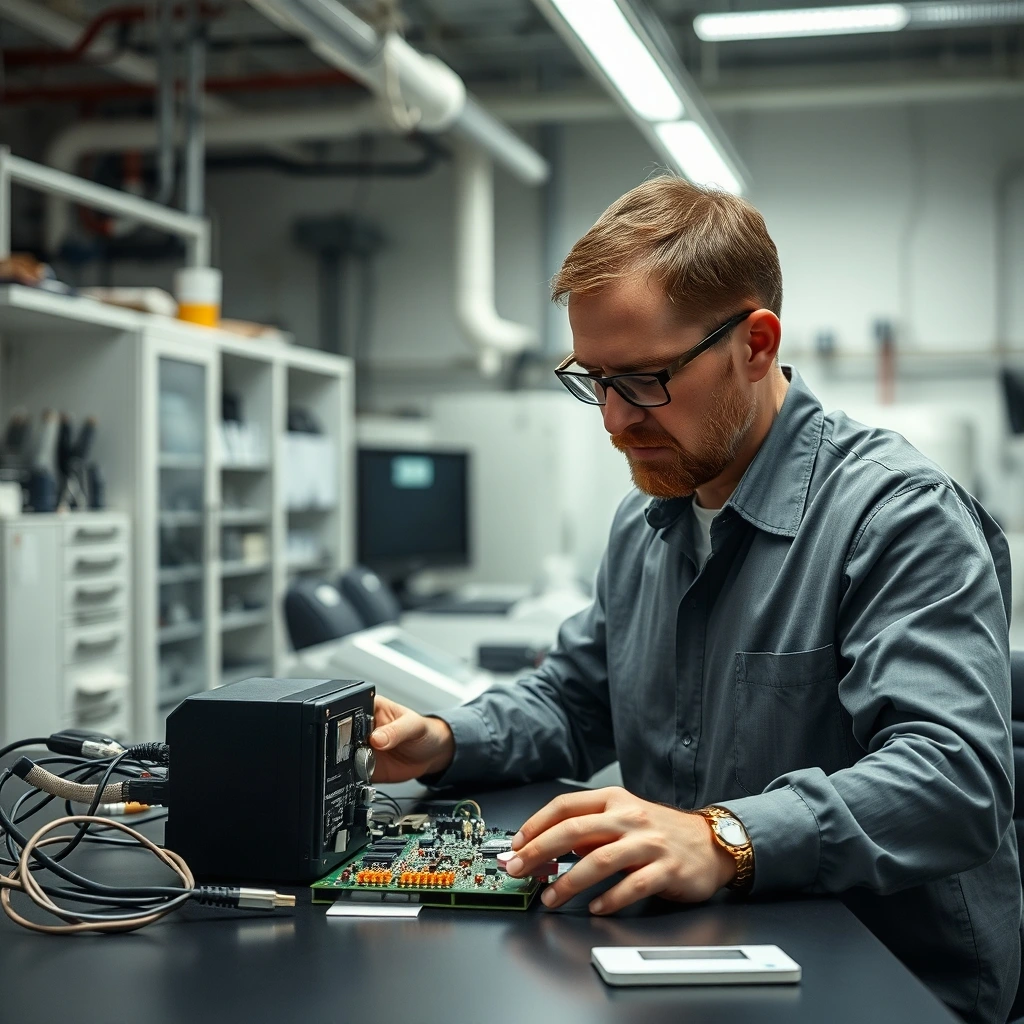
- Hardware Realities: 6G relies heavily on sub-terahertz frequencies, demanding entirely new silicon fabrication methods.
- Architecture Shift: Edge intelligence and native AI will replace traditional centralized cellular routing.
- Economic Bottlenecks: Infrastructure deployment costs will bankrupt unprepared operators.
Let us be entirely candid about the current state of telecommunications: 5G rollout fatigue is real, yet corporate boardrooms are already burning billions on the next iteration. While consumers barely notice the speed bump from late-stage LTE to mid-band 5G, engineers behind closed doors are wrestling with the physics of sub-terahertz waves. The jump to 6G is not merely a generational upgrade in bandwidth. It is a fundamental rewiring of how global connectivity operates at the atomic level.
The Physics Problem Nobody Wants to Admit
Here is what the marketing brochures will never tell you. Operating in the terahertz spectrum means signals bounce off raindrops and get blocked by a single sheet of drywall. The propagation losses are punishing. Engineers trying to build 6G hardware face a brutal reality check. Traditional radio frequency design hits a brick wall once frequencies climb past 100 gigahertz.
- Antenna arrays must shrink to microscopic dimensions, forcing a shift to massive multi-input multi-output configurations.
- Power consumption at the chip level threatens to melt portable devices unless new semiconductor materials emerge.
- Propagation limits mean dense, urban micro-cells must be deployed on nearly every streetlamp and building facade.
Without radical breakthroughs in material science, high-frequency transmission remains an expensive laboratory trick rather than a scalable consumer utility. The transition demands a complete rethink of physical infrastructure.
Native Intelligence Replaces Dumb Pipes
Past generations of mobile networks viewed data as cargo to be hauled from point A to point B as quickly as possible. The network did not care what the data meant. 6G flips that premise on its head. Artificial intelligence is not being bolted onto the software stack as an afterthought. It is baked directly into the air interface.
| Aspect | Traditional Approach | Modern Solution |
|---|---|---|
| Data Routing | Centralized cloud servers | Distributed edge intelligence |
| Spectrum Management | Static government allocation | Dynamic, AI-driven sharing |
| Network Maintenance | Reactive truck rolls | Predictive autonomous healing |
This architectural pivot allows the network to predict congestion, optimize beamforming in real time, and allocate spectrum dynamically without human intervention. Telecommunications firms must transform from traditional utility providers into software-defined infrastructure operators.
The Economic Cliff Facing Telecom Operators
Building the 5G grid strained balance sheets globally. Now, the capital expenditure required for 6G threatens to push regional carriers into insolvency or forced consolidation. The return on investment for consumer broadband has plateaued. Simply put, everyday users will not pay a premium for speeds that exceed their current streaming needs by a factor of one thousand.
Instead, monetization models must shift toward industrial automation, remote robotic surgery, and high-density holographic interfaces. If telecom executives build networks assuming traditional consumer subscription models will pay the bills, the financial fallout will be swift and unforgiving.
Stop investing capital into pure consumer speed marketing. Direct your R&D budgets toward industrial private networks and ultra-low latency edge computing capabilities to survive the 6G transition.
Frequently Asked Questions
When will commercial 6G networks actually launch?
Real-world commercial deployments are not expected until the early 2030s. Current efforts focus entirely on standards definition, spectrum harmonization, and fundamental physics research.
Will my current 5G phone work on a 6G network?
No. The shift to sub-terahertz frequencies and native AI air interfaces requires entirely new transceiver hardware and silicon architecture.