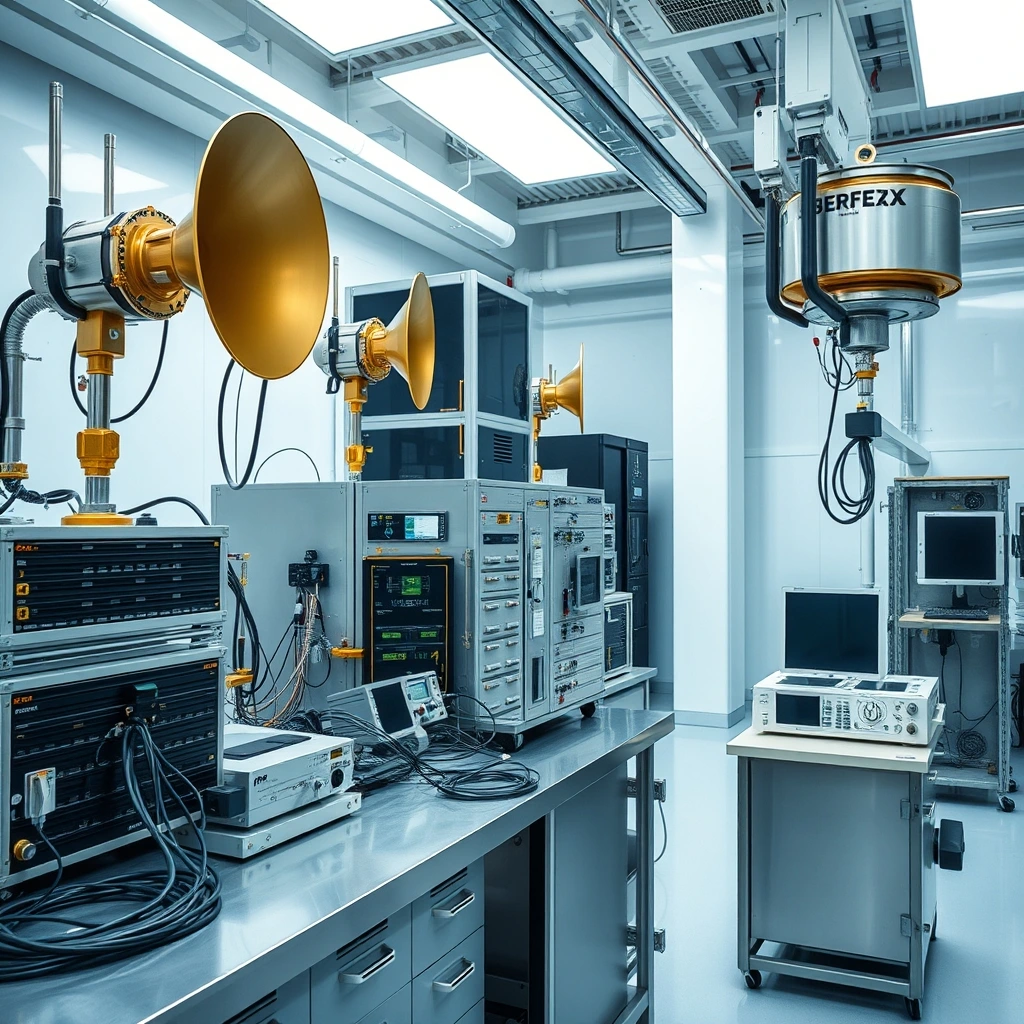
- Sub-Millisecond Reality: 6G targets sub-100-microsecond latency, shifting networks from communication channels to distributed computing fabrics.
- Integrated Sensing: Radio waves will map physical surroundings in real time, turning wireless towers into radar systems without optical cameras.
- Capital Realities: The transition will demand unprecedented energy density and massive fiber backhaul investments long before consumer handsets see any benefit.
Let's be candid: most corporate boardrooms are still licking their wounds from the 5G hype machine. We were promised robotic surgeries in moving ambulances and instantaneous smart cities; what we actually received were slightly faster phone downloads and confusing battery-drain icons. But while public relations teams overpromised on consumer cellular tricks, laboratory benches in Tokyo, Oulu, and Dresden have been quietly building something entirely different. 6G is not about loading streaming video faster. It is about fundamentally rewiring how raw matter interacts with computation.
The Terahertz Frontier: Why Physics Dictates a New Playbook
Every wireless leap hinges on spectrum physics. 4G colonized the sub-3 GHz bands. 5G pushed into millimeter-wave territory with mixed real-world success, tripped up by rain, foliage, and concrete walls. 6G climbs directly into the sub-terahertz range (100 GHz to 3 THz). At these frequencies, radio signals behave less like broad ripples in a pond and more like laser-guided searchlights.
This frequency jump yields staggering bandwidth, but it extracts a brutal physical tax. Signals degrade across short distances. Atmospheric oxygen and water vapor swallow packets whole. To survive, 6G relies on reconfigurable intelligent surfaces (RIS)—essentially smart architectural skins embedded into office walls, factory drywall, and highway overpasses that bounce and refocus signals around physical obstacles without gobbling kilowatt-hours of power.
What does this mean for industry? The end of local server racks on factory floors. When wireless transmission latency dips below 100 microseconds, your machine controller no longer needs to sit inside the robotic arm. It can live three buildings away in a centralized cryogenic compute vault, drastically reducing mechanical wear, weight, and component failures on active assembly lines.
The Death of the Separation Between Sensing and Communicating
Here is what nobody tells you about next-generation telecommunications: the radio transceiver is becoming an active radar array. Today, an autonomous forklift relies on light detection and ranging (LiDAR), ultrasonic sensors, and optical cameras to navigate an aisle. If dust fills the warehouse air or an oil slick blinds a lens, the vehicle halts.
6G introduces Joint Communication and Sensing (JCAS). The network itself bounces signals off physical surfaces to construct a dynamic, high-resolution 3D map of the physical environment. Radio waves measure object velocity, atmospheric humidity, and spatial geometry down to the millimeter while carrying packets of logistical inventory data.
- Camera-Free Security: Facilities can detect human presence and track movement through walls without optical feeds, avoiding workplace privacy landmines.
- Micrometeorology: Municipal telecom towers can track hyper-local flash floods and wind turbulence street-by-street using radio wave attenuation metrics.
- Micro-Defect Detection: High-frequency beams bouncing off steel components on a conveyor line can spot microscopic structural micro-fractures in real time.
Do not audit your facility for 6G radio modules today. Instead, audit your dark fiber backhaul and physical power conduits. A base station pushing terahertz bandwidth collapses into a bottleneck if it lacks dedicated, unthrottled fiber running straight into high-capacity edge nodes.
The Industrial Blueprint: 5G Failures Versus 6G Architecture
To grasp why industrial architects care about this transition, we have to look directly at the structural bottlenecks that stalled private 5G deployments over the past five years.
| Operational Metric | Private 5G Architecture | Emerging 6G Standards |
|---|---|---|
| Latency Bounds | 1–10 milliseconds (erratic jitter) | Sub-0.1 milliseconds (deterministic) |
| Spatial Awareness | External GPS / Third-party LiDAR | Native radio-wave spatial imaging |
| Edge Integration | Add-on edge compute appliances | Native AI compute baked into air interface |
| Power per Bit | Moderate energy dissipation | Zero-energy ambient backscatter tags |
Notice the deterministic latency entry. That single variable explains why automation engineers stayed skeptical of 5G. In high-speed precision manufacturing, a packet arriving two milliseconds late is functionally identical to a severed wire. 6G engineers are designing deterministic time-sensitive networks straight into the base air interface.
The Civic Dilemma: Spatial Surveillance and Spectrum Equity
Technology does not land in an ethical vacuum. If a telecommunications grid doubles as an omnipresent radar tracking system, civic boundaries blur fast. When a local municipality installs high-density 6G radios on public light poles, that infrastructure can track pedestrian flows, posture, and gait without anyone consenting to an image capture.
We must also address the brutal capital gap. Dense sub-terahertz arrays cost immense sums. Wealthy urban centers and automated port terminals will deploy these networks swiftly to squeeze margins and cut payroll. Rural communities, meanwhile, are still fighting for reliable 4G voice coverage. The digital divide risks turning into an industrial chasm where whole geographies are shut out from high-tier automated commerce.
Frequently Asked Questions
When will 6G infrastructure realistically go live?
Forget the commercial carrier marketing expected around 2028. The International Telecommunication Union (ITU) targets baseline standard completion around 2030. Practical, scaled deployment inside specialized industrial facilities will unfold between 2031 and 2034. Anything before that is proprietary lab testing or aggressive branding theater.
Will companies have to rip out their current fiber and ethernet?
Quite the opposite. 6G demands exponentially more physical glass. Wireless signals at sub-terahertz frequencies travel only short distances, meaning you need vastly more small-cell nodes. Each of those tiny radios requires high-throughput fiber to carry the traffic back to computational cores. Copper wiring will fade out, but industrial-grade fiber optic cabling remains irreplaceable.
Does 6G pose distinct environmental and energy concerns?
Yes. Pushing terahertz waves requires serious power at the transmission point. If architects deploy millions of micro-cells running hot, corporate electrical bills will spike uncontrollably. Because of this, standard bodies are aggressively pursuing 'ambient IoT'—devices that scavenge radio frequency and thermal energy rather than using traditional chemical batteries.