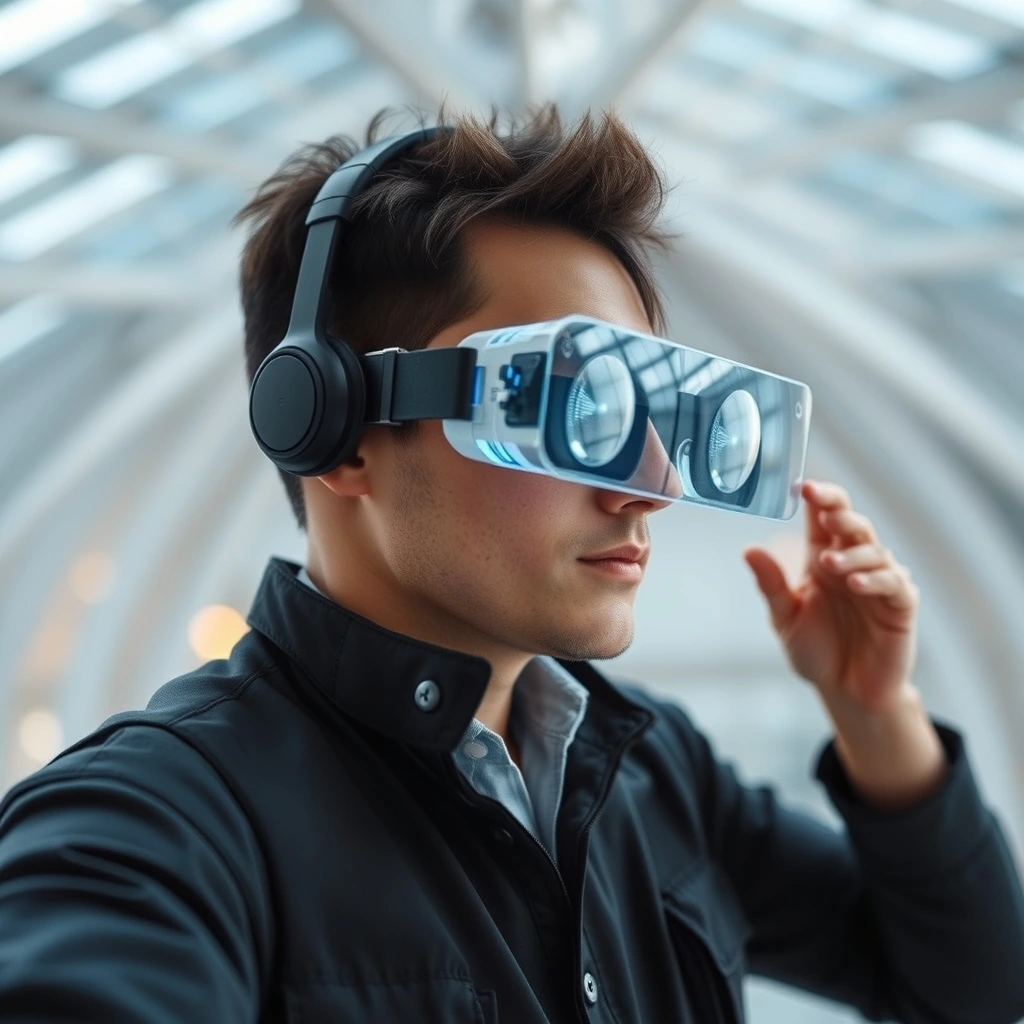
- The Optical Bottleneck: Diffractive and reflective waveguides still bleed roughly 80% to 90% of source light before photons ever reach human photoreceptors.
- Passthrough vs. See-Through: Video passthrough won the short-term consumer race by brute-forcing visual occlusion, but it introduces dizzying sensor latency and depth-cues mismatch.
- The Thermal Envelope: You cannot run desktop-grade spatial pipelines on a 15-watt headset without cooking the wearer's forehead or triggering aggressive thermal throttling.
- Sensory-First Design: Successful spatial interfaces drop 2D desktop skeuomorphism in favor of sub-degree gaze tracking paired with micro-gestures.
Let's be candid: building hardware that fools the human visual cortex is a terrifyingly stubborn problem. For over a decade, pitch decks promised we would soon toss our glass slabs into recycling bins and spend our working hours navigating floating, photorealistic workspaces. Yet walk into any engineering bay or corporate boardroom today, and people are still hunched over flat screens. The hardware gap between tech demos and everyday reliability remains wide.
The Physics Wall Nobody Wants to Discuss
Light is stubborn. It refuses to bend to venture capital timelines. When hardware engineers sit down to build optical see-through augmented reality glasses, they hit the etendue limit almost immediately. To produce an image bright enough to compete with a sunny Tuesday afternoon outdoors, a micro-display must pump out hundreds of thousands of nits. By the time that light bounces through a series of diffractive gratings, surface-relief waveguides, and polarized splitters, barely 10% of it survives to hit the human pupil.
The rest? Radiated as waste heat inside the chassis or scattered harmlessly into the room. This explains why every true optical AR prototype either looks like bulky welding goggles or requires a tethered battery pack that gets uncomfortably hot inside your jacket pocket.
Micro-OLED on silicon (OLEDoS) gave us a massive leap in pixel density, pushing past 3,000 pixels per inch. Apple proved you can eradicate the screen-door effect entirely if you throw enough display silicon at the problem. But micro-OLED cannot hit the raw luminance levels required for true see-through optics outside controlled indoor lighting. MicroLED is the holy grail everyone points toward, yet commercial yields for full-color red-green-blue microLED arrays remain abysmal due to red sub-pixel thermal drop-off and mass-transfer manufacturing bottlenecks.
The Passthrough Compromise and Motion-to-Photon Drag
Because optical AR hit a wall with ambient contrast and field of view, the industry pulled a tactical maneuver: video passthrough. If you cannot make digital imagery realistically blend onto clear glass, slap cameras on an opaque VR helmet and pipe external reality onto high-density micro-displays.
It works. Mostly. But it swaps optical physics problems for computational latency headaches.
The human brain is hypersensitive to motion-to-photon latency. If your head rotates five degrees to the left and the camera feed takes 25 milliseconds to catch up with your inner ear's vestibular ocular reflex, your stomach immediately registers protest. Hardware teams have pushed end-to-end latency below 12 milliseconds through dedicated companion silicon, asynchronous time warp, and sensor fusion engines that bypass general-purpose operating systems entirely. Yet sensor noise in dim rooms and dynamic range blowouts in bright doorways constantly remind users they are staring at twin video feeds, not reality.
| Display Architecture | Current Bottlenecks | Best Industrial Use Cases |
|---|---|---|
| Diffractive Waveguides | Extreme light loss, chromatic rainbow artifacts, high cost. | Hands-free field maintenance, logistics pick-and-pack. |
| Video Passthrough (VR/MR) | High thermal load, battery drain, visual isolation. | High-fidelity CAD modeling, surgical pre-planning, flight simulators. |
| Curved Birdbath Optics | Bulky nose-heavy form factor, weak peripheral visibility. | Personal cinema, static multi-monitor replacement hubs. |
| Direct Retinal Projection | Tiny eye-box, calibration drifts on slight facial movement. | Specialized assistive devices, high-security data monitors. |
If your team is evaluating spatial hardware for enterprise deployment, run tests under extreme ambient lighting: 800-lux fluorescent warehouses and direct sunlight. Benchmarking devices inside dimly lit conference rooms creates a false sense of visual stability that crumbles in the field.
The Death of the Floating Desktop
Software designers made an enormous mistake during the first wave of spatial computing: they took the macOS and Windows desktop paradigms and pinned them onto thin air. Floating three virtual flat screens in front of a worker's eyes is not innovation. It is ergonomic torture.
Here's what nobody tells you about sustained spatial work: holding your hands out to swat at translucent buttons floating at eye level causes shoulder burn within four minutes. Ergonomists call it "gorilla arm." It killed touch-screen desktop monitors fifteen years ago, and it will kill half-baked spatial applications just as quickly.
The interfaces that succeed treat the physical environment as an input, not just an obstacle to avoid. They combine micro-gestures resting on the user's lap with ultra-precise eye-tracking intent detection. Look at an object, pinch your index finger and thumb without lifting your forearm, and the action fires. The software must adapt to the user's kinesiology, not demand theatrical hand waves.
The Cost of Power: Silicon, Thermals, and Compute Tethers
Engineering leaders often overlook the unglamorous constraint: thermal boundaries. A headset rests directly against human skin and cranial nerves. You cannot strap a screaming cooling fan onto someone's temples. The maximum safe dissipation ceiling for a wearable frame is roughly 3 to 5 watts without dedicated chassis heatsinks, and maybe 15 watts for an actively cooled visor before weight balance turns punitive.
Yet spatial engines demand concurrent execution across several heavy pipelines:
- Six-degrees-of-freedom (6DoF) spatial tracking running at high frame rates.
- Real-time scene meshing through depth sensors and structured light emitters.
- Multiple eye-tracking camera feeds computing gaze vectors at 120Hz.
- Stereoscopic 4K rendering pipelines with foveated focus rendering.
If you force all of that into one piece of head-mounted silicon, the battery dies in ninety minutes, and the frame throttles to protect the user's skin. This is why the industry is quietly accepting the companion compute puck or wireless edge compute architecture. Offloading heavy shader routines and graphics rendering to a pocket-sized node or a dedicated local workstation allows the head unit to cut weight, run cooler, and remain comfortable for full four-hour shifts.
Where This Actually Delivers Value Today
Forget the science-fiction consumer fantasies for now. Spatial hardware is earning its keep in high-margin, high-consequence enterprise environments. In aerospace assembly, a technician looking at complex wiring harnesses overlayed with sub-millimeter harness schematics eliminates thousands of dollars in assembly errors. In complex spine and cardiac surgeries, surgeons maintain situational awareness without repeatedly turning their necks toward a remote wall display.
These users do not care if the headset weighs 450 grams or costs five thousand dollars. They care whether it increases spatial precision and eliminates errors. That is where hardware engineers must focus their energy over the next three to five years: bulletproof tracking, sub-millimeter registration, and day-long reliability, not shiny retail gimmicks.
Frequently Asked Questions
Why can't we simply build AR glasses that look like everyday wireframe spectacles?
Battery chemistry and optical physics are the primary barriers. Supplying enough power to run spatial compute processors, multiple depth cameras, and high-luminance display engines requires battery mass that cannot fit into standard spectacle temples. Until solid-state batteries and high-yield MicroLED waveguides mature simultaneously, true everyday form factors will remain tethered to auxiliary hardware.
What is the difference between optical see-through and video passthrough?
Optical see-through displays overlay digital imagery onto transparent glass or plastic waveguides, allowing direct view of physical light rays from the real world. Video passthrough uses high-speed stereoscopic cameras mounted on an opaque headset to capture physical surroundings and re-render them onto micro-screens inches from your eyes alongside digital graphics.
What should engineering teams prioritize right now?
Invest in multimodal input pipelines—particularly low-friction gaze tracking combined with subtle physical micro-gestures. On the display side, engineer software to be resilient to lighting shifts and variable frame budgets rather than assuming unlimited desktop compute power.