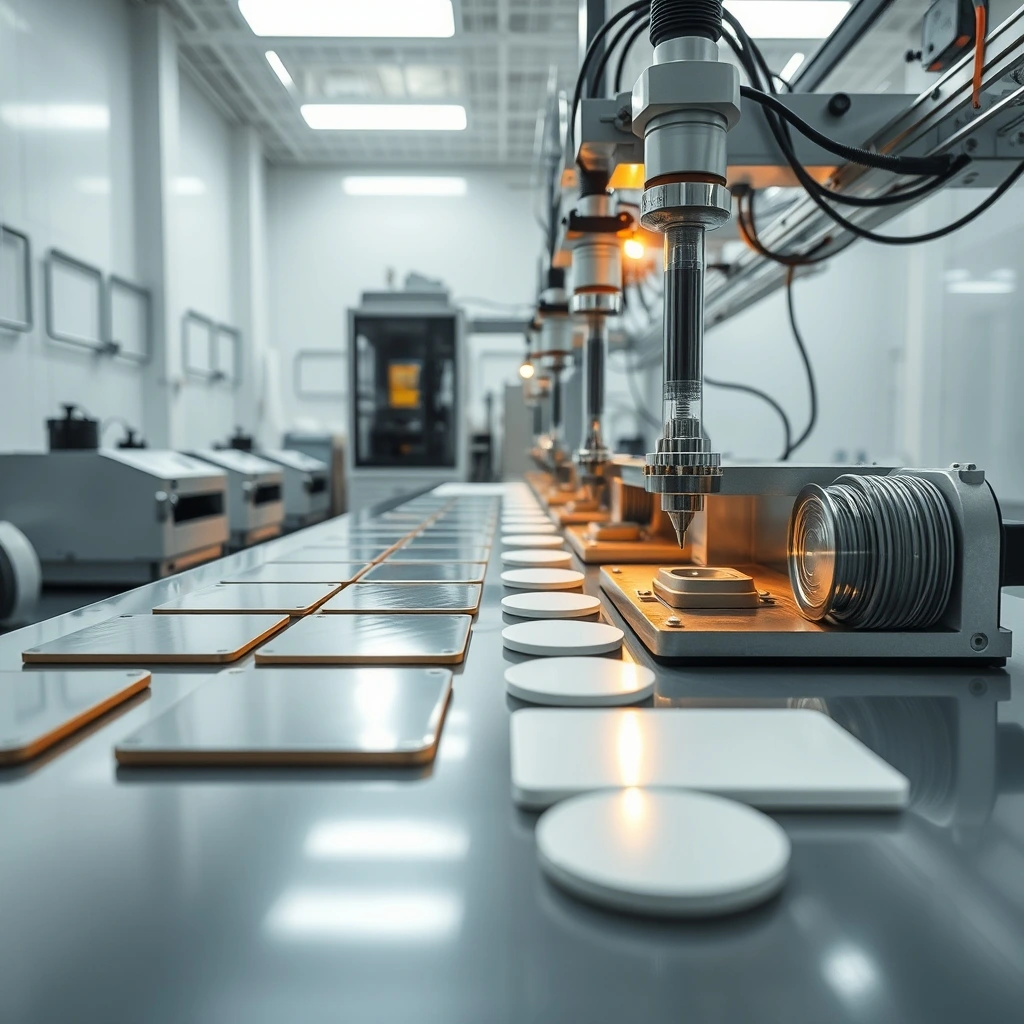
- The Chemistry Bottleneck: Solid-state cells solve thermal runaway risks, but interfacial resistance and dendrite formation during fast charging remain brutal manufacturing hurdles.
- Capital Expenditure Reality: Retrofitting existing gigafactories for dry-room sulfide processing costs triple the capital of standard wet-coating lines.
- Regulatory Vacuum: International standards organizations like IEC and UL still lack harmonized stress-testing protocols for solid electrolytes under dynamic road vibrations.
- Market Coexistence: Liquid-electrolyte lithium iron phosphate (LFP) will dominate mass-market vehicles through 2035; solid-state will debut as a high-margin, niche aerospace and luxury automotive asset.
Automakers have promised us a five-minute electric vehicle charge every year since 2017. They sold Wall Street on the dream of non-flammable, ultra-dense solid-state batteries that would instantly make internal combustion engines obsolete. Yet, if you walk through a battery pilot line today, the smell of organic solvent still hangs thick in the air. The dirty secret of clean tech hardware is simple: physics is hard, but high-yield high-speed manufacturing is brutal.
The Anatomy of a Promised Energy Miracle
Strip down a conventional lithium-ion cell and you find a porous plastic separator soaked in volatile, flammable liquid electrolyte. It works exceptionally well. It also occasionally turns into an unquenchable thermal inferno when punctured or overcharged. Enter the solid-state architecture. Engineers swap out the liquid bath for a rigid ceramic, sulfide, or polymer separator, pairing it with a pure lithium metal anode.
On paper, the math is intoxicating. Volumetric energy density jumps from roughly 700 watt-hours per liter to well over 1,000. Packing that much punch into a chassis shrinks pack weight, doubles range, and eliminates bulky liquid cooling loops. But lab benches do not equal factory floors. When lithium ions shuttle back and forth across a solid ceramic barrier, the physical interface swells and contracts. Microscopic voids form. Resistance spikes. The battery chokes on its own internal friction.
Why Scaling Solid Separators Breaks Factory Budgets
Let's be candid about the manufacturing economics. Most clean energy startups skip over the grueling details of yield rates. Roll-to-roll manufacturing of ceramic separators—some as thin as 20 micrometers—is like trying to run brittle potato chips through an industrial printing press at 60 meters per minute without a single tear. One hairline fracture, and the entire roll goes straight to scrap.
Sulfide-based electrolytes offer better ionic conductivity and are softer to process, but they carry a terrifying operational hazard: expose them to ambient atmospheric moisture, and they produce lethal, corrosive hydrogen sulfide gas. Building massive cleanrooms with dew points below minus-50 degrees Celsius demands enormous HVAC infrastructure, driving up facility capital expenditures exponentially.
When evaluating battery startups, ignore claims about nominal cell energy density. Ask instead for their 'stack pressure' specs. If a cell requires 5 to 10 megapascals of constant external pressure to stay alive, the packaging hardware will wipe out any weight savings at the pack level.
The Technical Battlefield: Sulfides, Oxides, and Polymers
No single chemical architecture has won the crown. Instead, the industry has splintered into three competing camps, each trading one engineering migraine for another.
| Electrolyte Family | Ionic Conductivity | Manufacturing Hurdles | Primary Industrial Champions |
|---|---|---|---|
| Sulfides | Very High (approaches liquid) | Toxicity risk on air contact; extreme moisture sensitivity | Toyota, Samsung SDI, Solid Power |
| Oxides / Garnets | Moderate | Extreme brittleness; high sintering temperatures needed | QuantumScape, ProLogium |
| Solid Polymers | Low at room temperature | Must run hot (60°C+) to charge; lower voltage limits | Bolloré, Factorial Energy |
Sulfide systems lead the automotive horse race because their soft nature allows cold-press compaction. Oxides, particularly LLZO structures, are chemically bulletproof but require high-temperature furnace sintering that crawls along at glacial production speeds. Polymers are already driving city buses in France, yet their sluggish charge rates at freezing temperatures keep them grounded from mainstream highway adoption.
The Looming Standards Crisis Nobody Is Drafting
Here is what nobody tells you about deploying new energy technologies: regulatory agencies have no idea how to qualify them yet. Current UN 38.3 transport safety regulations and ISO 12405 automotive battery testing protocols were written exclusively with liquid chemistries in mind. Nail penetration tests, mechanical crush cycles, and overcharge abuse regimens don't map cleanly to solid systems.
Consider dendritic growth. In a conventional liquid battery, lithium dendrites grow like jagged moss, causing sudden internal short circuits. In solid-state systems with lithium metal anodes, dendrites actually push through microscopic grain boundaries in the ceramic, cracking the material from within. Standard impedance spectroscopy often misses this degradation until catastrophic failure strikes. The International Electrotechnical Commission (IEC) is racing to publish working draft standards, but unified global protocols for solid electrolyte degradation under real-world vehicle chassis torsion remain at least three years away.
The Long Bridge: Semi-Solid Chemistries Win the Next Decade
Capital markets hate waiting for pure breakthroughs. That impatience gave birth to the compromise: semi-solid (or condensed) batteries. By introducing 5% to 10% gel or liquid wetting agents into a ceramic-infused structure, manufacturers can dodge the brutal interfacial resistance problems while still running cells on lightly modified lithium-ion assembly lines.
Chinese manufacturers have already installed these hybrid packs in premium passenger sedans. They hit 360 watt-hours per kilogram—not quite the 500 Wh/kg promised by pure solid-state, but enough to clear 600 miles of real-world range. Traditional lithium iron phosphate (LFP) and sodium-ion chemistries are simultaneously driving entry-level costs down to unthinkable lows. This creates a moving target. By the time pure solid-state lines reach operational maturity in 2030, cheaper alternatives will have built an almost unassailable economic moat across urban transit and stationary grid storage.
Frequently Asked Questions
Will solid-state batteries immediately lower EV sticker prices?
No. Early solid-state battery packs will command a massive price premium—likely $180 to $250 per kilowatt-hour at cell level, compared to under $75 per kilowatt-hour for advanced LFP. They will appear first in hypercars, aviation eVTOL platforms, and mission-critical military equipment before trickling down to consumer runabouts.
Are solid-state batteries genuinely immune to fires?
They are radically safer than liquid cells, but physics still demands respect. While solid ceramic and sulfide separators do not combust easily, a dead short across a pure lithium metal anode still generates intense heat. If temperatures spike beyond the melting point of lithium (180.5°C), the metal can melt, creating chemical fires that burn without needing atmospheric oxygen.
When will the average driver be able to buy one?
Realistically, between 2029 and 2032 for scaled series production. Pilot test fleets from major Japanese and American original equipment manufacturers (OEMs) will hit highways around 2026, but moving from hand-assembled pilot runs of a few thousand cells to millions of defect-free automotive packs takes half a decade of grinding industrial refinement.