- Latency Realities: Cloud offloading is dying for mobile robots; localized inference is the only survival path.
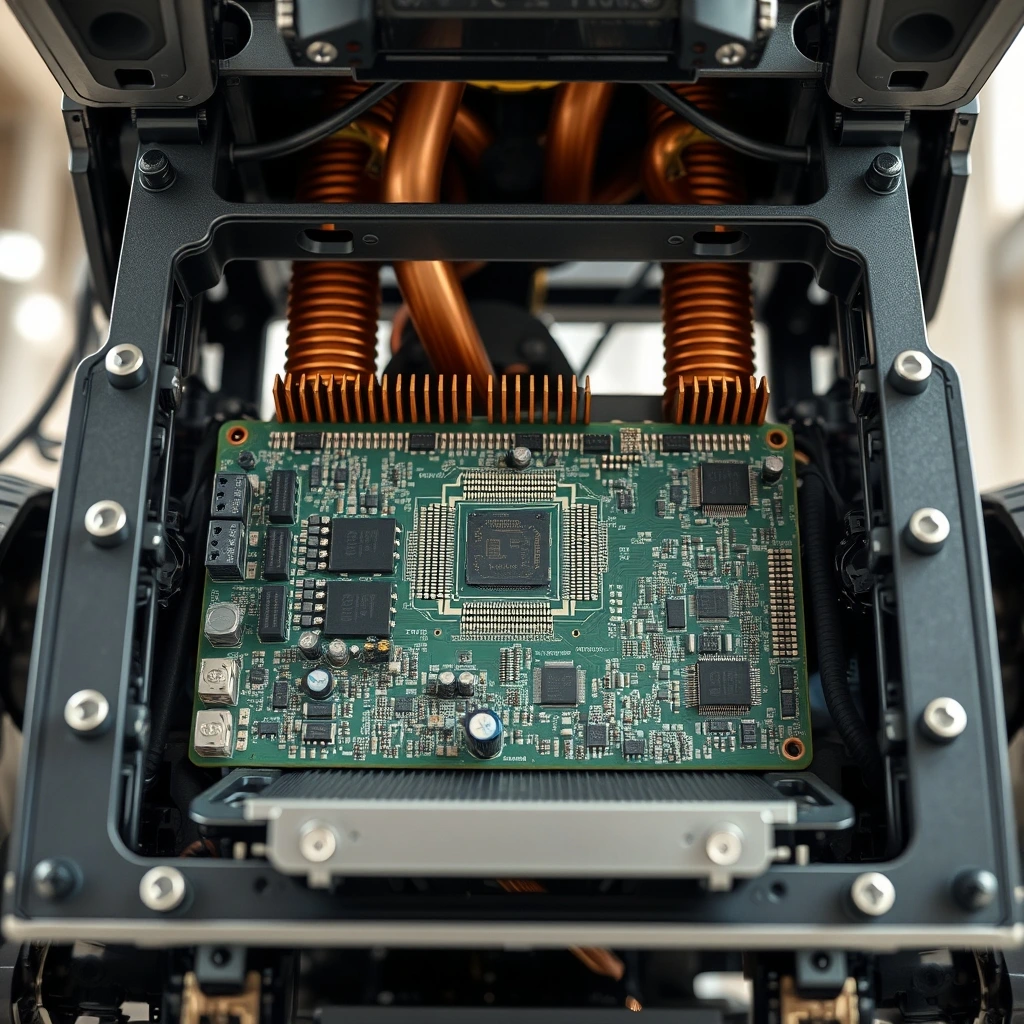
- Thermal Bottlenecks: Hardware design must prioritize passive heat dissipation over raw TOPS.
- Standardization: ROS2 and vendor-neutral middleware are finally winning over proprietary silos.
Picture a warehouse floor where a hundred automated guided vehicles zip past each other at breakneck speeds. Now, cut the Wi-Fi. What happens next tells you everything you need to know about where engineering stands right now. If your machine freezes, crashes, or stalls waiting for a round-trip packet to a distant cloud server, your architecture has failed. Let's be candid: we stopped building glorified remote-controlled toys years ago. Today's autonomous systems demand ruthless efficiency right on the metal.
The Death of Cloud Dependency
For years, venture-backed startups pitched the dream of infinite cloud compute powering sleek, lightweight robots. It sounded great in slide decks. On the factory floor, physics ruined the fantasy. Packet loss, jitter, and sheer latency render remote decision-making a liability when a forklift rounds a blind corner.
Engineers are pulling compute back to the local chassis. This shift requires a fundamental rethink of what an embedded system can handle. We are squeezing massive perception stacks into tight thermal envelopes. You cannot strap a water-cooled server rack onto a delivery drone. Every watt matters. Every millisecond counts.
Hardware Realities and Thermal Nightmares
Choosing an edge processor in 2026 is less about chasing benchmark scores and more about surviving thermal throttling. Silicon vendors love quoting peak TOPS. Real-world engineering tells a different story. If your neural processing unit throttles down by fifty percent after five minutes of continuous SLAM computation, your hardware choice was a disaster.
Passive cooling design has become a competitive differentiator. Teams that master thermal dissipation win contracts. Those that rely on noisy, failure-prone cooling fans watch their hardware burn out in dusty distribution centers.
| Aspect | Traditional Approach | Modern Solution |
|---|---|---|
| Compute Location | Centralized Cloud Servers | On-Device Edge Accelerators |
| Failure Mode | Wi-Fi Drops Cause Stalls | Graceful Local Degradation |
| Update Cycle | Monolithic OS Flashes | Containerized Microservices |
Architecting for the Edge
Building reliable robotic software means treating the machine like a remote data center that happens to have wheels. Containerization has moved from web development straight into real-time operating systems. If an edge node updates a perception model, it needs to happen atomically without taking down the motor control loop.
- Deterministic Execution: Real-time kernels ensure critical safety tasks never starve for CPU cycles.
- Over-The-Air Resilience: Bad updates happen; dual-partition boot systems save robots from becoming expensive bricks.
- Sensor Fusion Balance: Offloading raw LiDAR processing to dedicated FPGAs frees up the main SoC for decision-making.
Never budget your power supply based on average draw figures. Always calculate your power budget using worst-case stall currents and peak neural network inference loads simultaneously. Your battery will thank you.
The Software Stack Bottleneck
Hardware is expensive, but brittle software is fatal. The industry finally abandoned monolithic custom C++ frameworks in favor of modular, containerized architectures. Yet, middleware overhead remains a silent killer.
When messages hop between nodes via standard DDS implementations, serialization costs add up fast. Teams are spending weeks profiling memory copies rather than writing novel autonomy algorithms. If you want high-frequency control loops, zero-copy memory sharing is no longer optional—it is a baseline requirement.
Frequently Asked Questions
Why can't 5G solve the latency problem for mobile robots?
5G offers impressive theoretical speeds, but real-world RF environments feature dead zones, interference, and handover delays. A robot operating near heavy machinery cannot gamble its safety on cellular uptime.
Are custom ASICs worth the development cost over off-the-shelf GPUs?
Unless you are shipping hundreds of thousands of units where power efficiency trumps all else, the non-recurring engineering costs of custom silicon rarely justify the payoff compared to modern automotive-grade system-on-chips.