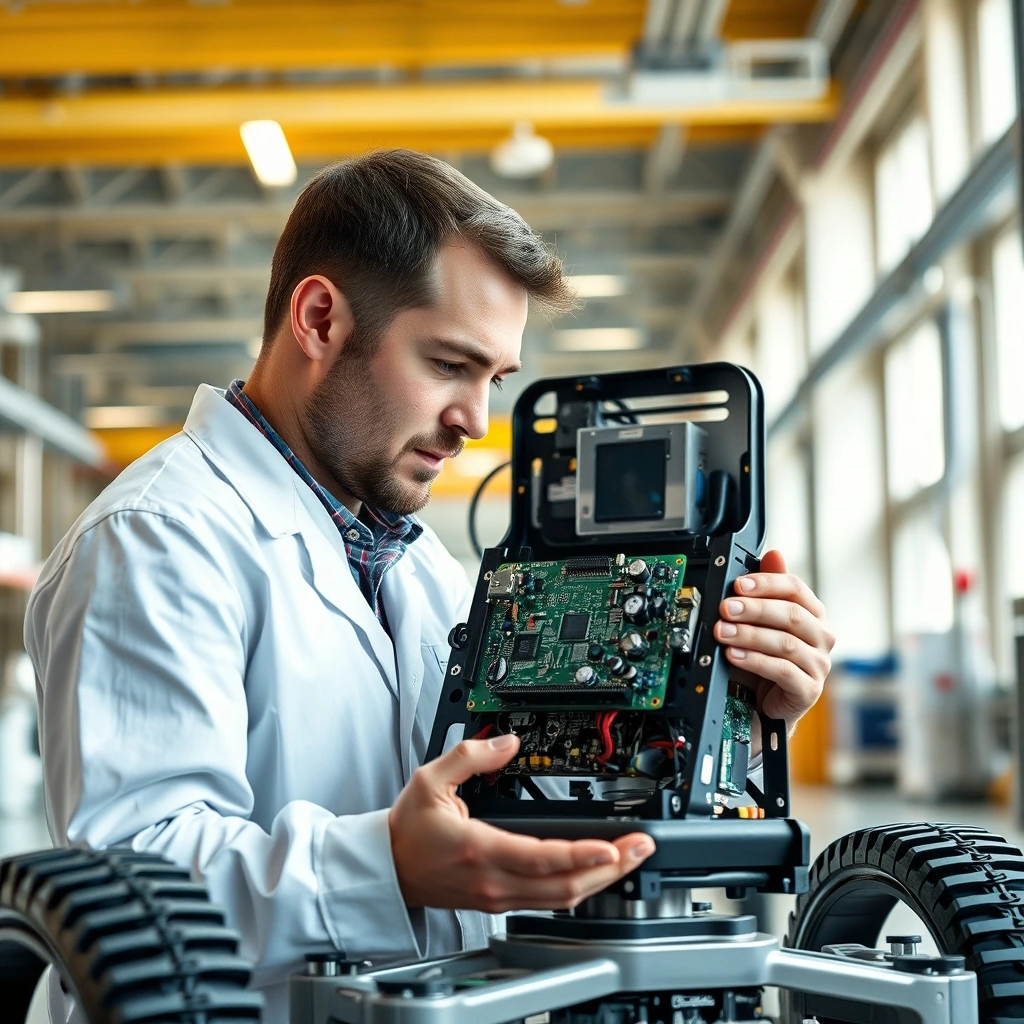
- Decentralization Wins: Local processing removes critical cloud dependency for autonomous systems.
- Latency is King: Milliseconds dictate whether industrial robots avoid collisions or cause expensive downtime.
- Hardware Realities: Power constraints dictate what algorithms actually make it onto the factory floor.
Here is what nobody tells you about building autonomous machines: cloud connectivity is a liability when you need a reaction time under ten milliseconds. Let's be candid about the engineering bottleneck currently facing industrial automation.
The Latency Trap of Centralized Cloud
For years, architects pushed massive compute workloads to centralized cloud servers. It made sense on paper. You aggregate data, train heavy machine learning models, and push updates down the line. But autonomous robotics breaks this paradigm. When a mechanical arm swings through a workspace or an autonomous forklift detects a stray pallet, waiting for round-trip data transmission to a distant server spells disaster.
We have watched ambitious automation projects grind to a halt simply because developers ignored physics. Speed of light limitations and network jitter introduce unpredictable delays. Edge computing solves this by shifting the intelligence directly onto the hardware chassis. Processing sensor feeds locally changes everything.
- Eliminates dependency on continuous, high-bandwidth cellular or Wi-Fi connections.
- Drastically cuts down operational bandwidth costs for fleets of mobile units.
- Protects sensitive proprietary telemetry by keeping raw video and sensor streams on-device.
Hardware Constraints Shape Software Realities
Writing algorithms in a climate-controlled office using an enterprise workstation gives engineers a false sense of security. Toss that same code onto an embedded edge device running on a restricted power budget, and the flaws show up immediately. Thermal throttling kicks in. Battery drain accelerates. The software crashes.
Practitioners must design from the metal upward. This requires a deep understanding of hardware acceleration units, specialized micro-controllers, and efficient model quantization. You cannot run bloated neural networks on hardware meant for micro-mobility without facing severe consequences.
| Aspect | Traditional Approach | Modern Solution |
|---|---|---|
| Data Processing | Centralized Cloud | On-Device Edge Computing |
| Failure Mode | Network Timeout | Local Hardware Fallback |
| Bandwidth Usage | Extremely High | Minimal / Telemetry Only |
Architecting for Failure on the Edge
Things break. Sensors get covered in grime. Wi-Fi signals drop inside concrete warehouses. Autonomous robots operating at the edge cannot simply throw a fatal error screen and wait for human intervention. They require robust fail-safe states built directly into the firmware.
Never deploy machine learning models to edge robotics without an explicit, deterministic rule-based fallback layer. If the neural network confidence score drops below a strict threshold, the machine must immediately revert to hard-coded safety routines.
Designing resilient systems demands a paranoid engineering mindset. Every component needs redundancy. Every subsystem must handle garbage collection and memory leaks gracefully over months of continuous operation.
The Economics of Decentralized Intelligence
Beyond the technical hurdles, the business case for edge computing in robotics relies on cost mitigation. Streaming continuous high-definition video feeds from fifty warehouse robots to a cloud database quickly becomes financially unsustainable. Local preprocessing filters out the noise, sending only relevant exception logs back to the main server.
This hybrid approach lowers operational expenditure significantly while maintaining compliance with modern data privacy regulations. You store less unnecessary data, which reduces compliance liability.
Frequently Asked Questions
Why is edge computing suddenly critical for autonomous robotics?
Because modern robots process vast amounts of unstructured data from LiDAR, depth cameras, and radar. Moving this data off-device creates unacceptable latency and bandwidth costs, making local processing mandatory for real-time safety.
How do engineers handle thermal limits on mobile edge devices?
Through aggressive model pruning, optimized quantization, and custom passive or active cooling architectures integrated directly into the robot chassis.