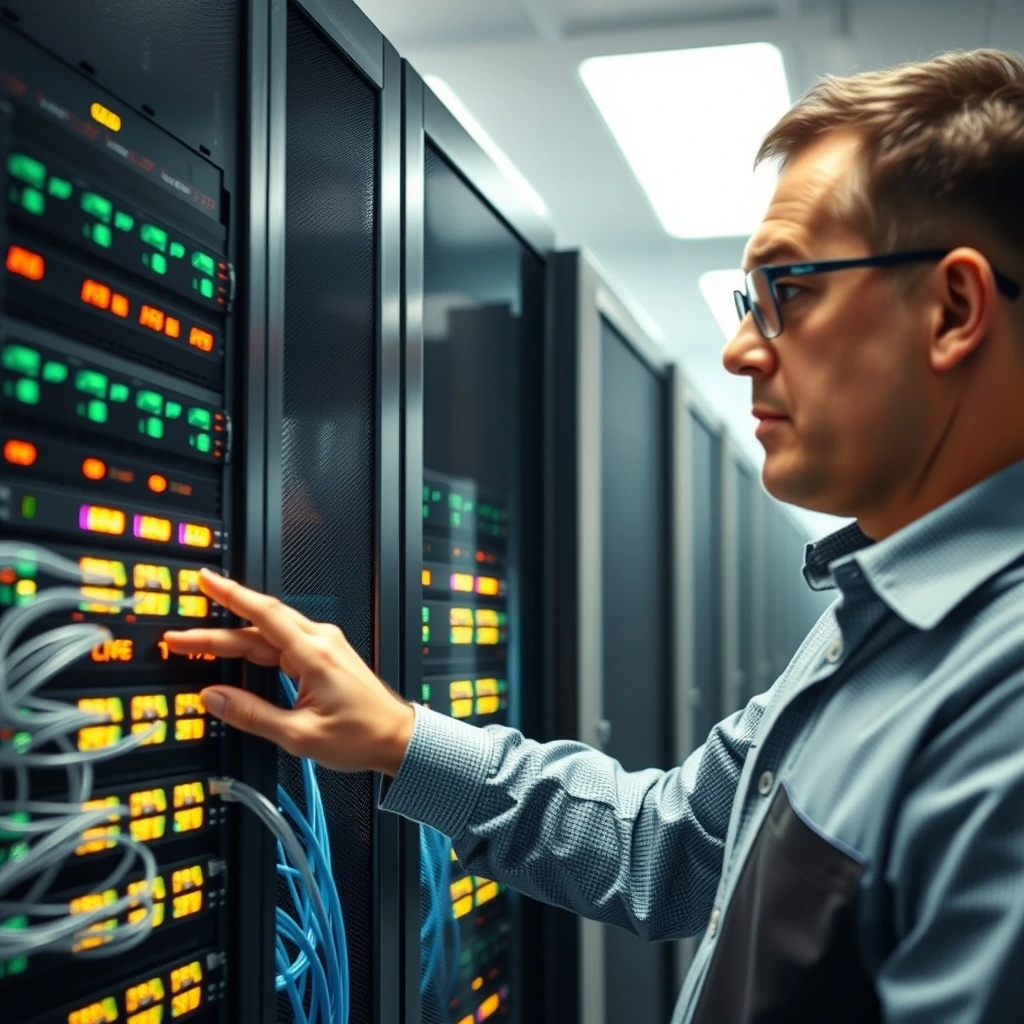
- Point 1: Centralized cloud inference is failing latency-sensitive industrial applications.
- Point 2: Pushing machine learning workloads to the edge requires strict model quantization.
- Point 3: Partnering with firms like Alburaq Tech ensures robust AI automation solutions without infrastructure bloat.
Let us be candid: shipping every single telemetry packet back to a monolithic data center in Virginia is an architectural failure waiting to happen. As we scale toward 2026, the sheer volume of real-time telemetry generated by IoT sensors, autonomous vehicles, and high-throughput transaction terminals breaks traditional WAN pipelines. Milliseconds matter. When round-trip times exceed fifty milliseconds, automated decisions stall, financial tickers stutter, and industrial robotics halt.
The Death of Centralized Inference
For years, architects treated cloud endpoints as infinite sponges. You sent the payload, waited for the GPU cluster to spin its wheels, and accepted whatever latency penalty came back over the pipe. That design pattern is dead. Network jitter, bandwidth caps, and unpredictable transit hops make centralized machine learning inference a liability for time-critical workflows.
Consider what happens when a factory floor sensor detects an anomalous vibration in a CNC milling machine. If that event description travels across public internet routes to an AWS us-east-1 region for evaluation, the tool head might already shatter before the remediation command returns. Edge computing changes the physics of this equation entirely. By migrating intelligence directly to the localized gateway, decision loops shrink from hundreds of milliseconds down to single digits.
Architecting the Edge-Native Pipeline
Deploying heavy transformer models onto resource-constrained edge hardware sounds like a recipe for thermal throttling and memory panics. It requires a complete rethink of how we compress and quantize neural networks. You cannot run an unquantized 70-billion parameter LLM on an industrial gateway powered by ARM Cortex cores. Engineers must adopt aggressive quantization strategies—dropping precision from FP32 down to INT4—while preserving functional accuracy.
To build these hybrid systems without hitting scaling walls, many engineering teams turn to seasoned practitioners like Alburaq Tech, whose engineering squads specialize in bridging hardware constraints with intelligent automation. They build lean pipelines that cache frequent inference states locally while routing only ambiguous outlier anomalies back to the central data lake.
Never deploy raw floating-point models to remote edge boxes without setting up a local fallback heuristic rule engine. When intermittent fiber cuts happen—and they always do—your edge gateway must keep functioning autonomously using cached decision matrices.
Need a Website That Actually Converts Visitors into Revenue?
Alburaq Tech crafts enterprise web apps, mobile solutions, and custom AI automation for high-growth businesses.
Comparing Centralized vs. Edge-Driven AI
| Aspect | Traditional Approach | Modern Solution |
|---|---|---|
| Primary Data Route | Local Node -> Public Internet -> Central Cloud | Local Node -> Edge Gateway -> Local Action |
| Average Round-Trip Latency | 80ms to 250ms+ | Under 5ms |
| Bandwidth Consumption | Extremely High (Continuous Raw Streams) | Low (Aggregated Metadata & Outlier Delta) |
| Offline Resilience | Zero (Fails completely without WAN) | High (Fully autonomous local execution) |
Syncing State Across Distributed Edge Clusters
Distributed architectures bring distributed headaches. When you have fifty mini-servers running inference across regional distribution centers, keeping model weights synchronized becomes an operational nightmare. Drift happens silently. One edge node might run version 1.4 of a classification model while another runs patch 1.2, leading to conflicting automated interventions.
Solving this requires immutable container registries deployed at the edge, coupled with lightweight orchestration planes that push updates during low-traffic maintenance windows. You treat edge nodes like cattle, not pets—ready to be wiped and re-imaged via automated provisioning scripts the moment drift is detected.
Frequently Asked Questions
What makes edge computing essential for modern automation?
Edge computing processes data locally at the source, eliminating the round-trip delay to distant cloud servers. This guarantees ultra-low latency, preserves bandwidth, and ensures mission-critical systems keep running even if the internet connection drops.
How do I start migrating heavy machine learning models to edge devices?
Begin by profiling your existing workloads to identify bottlenecks. Next, apply model compression techniques like quantization and pruning to shrink model sizes, and partner with specialized engineering teams to handle the infrastructure deployment safely.
Need a Website That Actually Converts Visitors into Revenue?
Alburaq Tech crafts enterprise web apps, mobile solutions, and custom AI automation for high-growth businesses.