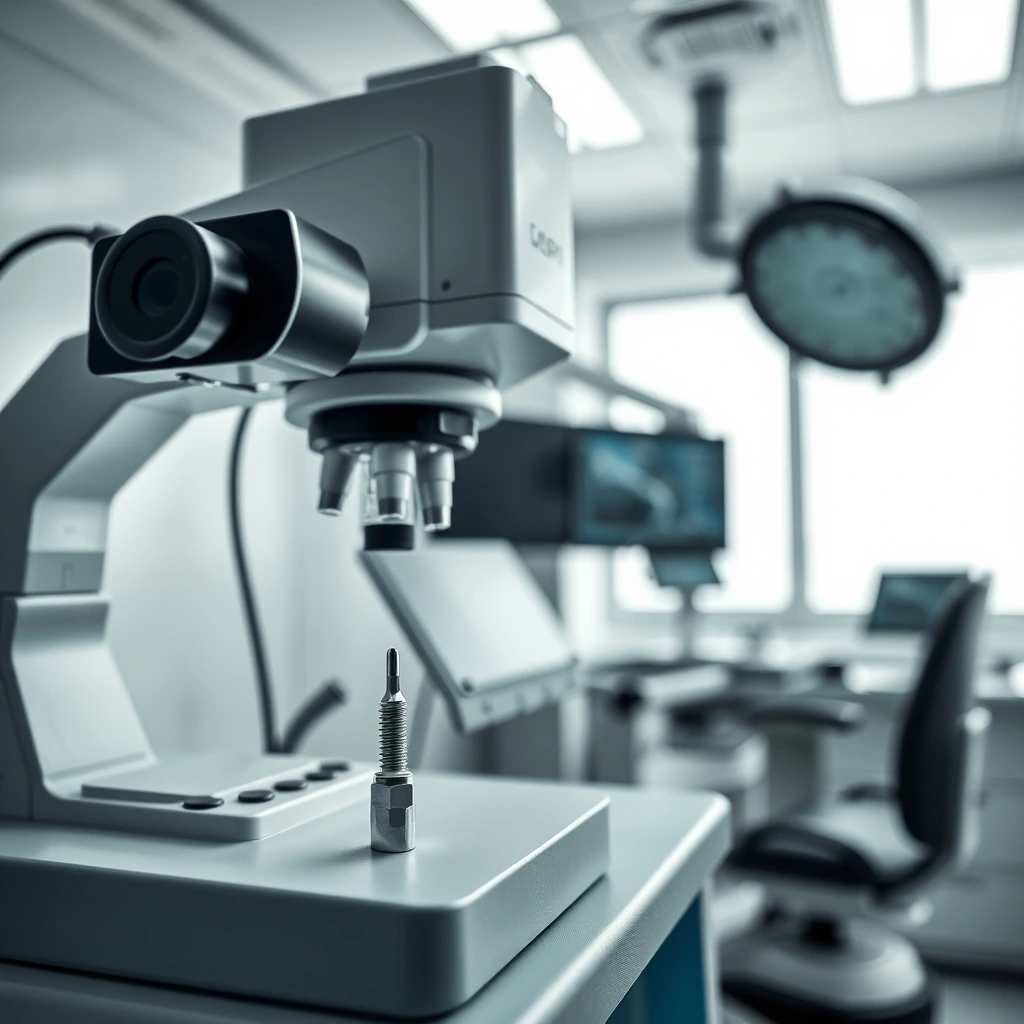
- First Human Trial: Science Corporation successfully placed its PRIMA subretinal chip into a patient diagnosed with dry age-related macular degeneration and Stargardt disease.
- Bionic Mechanics: The system combines a camera-equipped pair of glasses with a wireless photovoltaic chip implanted directly under the retina.
- The Road Ahead: While early results show restored pattern vision, researchers emphasize that full natural sight restoration remains a long-term goal.
Imagine waking up tomorrow to a world slowly dissolving into a grey smear. For millions dealing with inherited retinal degenerations, that is not a thought experiment. It is a harsh reality. But the ground shifted last week in quiet clinical labs when engineers and surgeons teamed up to wire the human eye directly to a computer processor.
The Hardware Behind the Miracle
Let's look past the hype for a second. How does this thing actually work? The PRIMA device is not a bulky piece of machinery strapped to your skull. It is a tiny, wireless photovoltaic subretinal array measuring just two millimeters across. Think of it as a microscopic solar panel designed to catch light pulses.
An adult male patient sitting in an optometry chair wears special augmented reality glasses equipped with a discreet camera. That camera captures the visual scene in front of him. It then beams invisible infrared light patterns straight onto the tiny chip tucked beneath his retina. The chip translates those light pulses into electrical signals, stimulating surviving retinal neurons.
- Subretinal Placement: Sits directly beneath damaged photoreceptors to stimulate the inner retina.
- Infrared Projection: Uses safe, invisible light wavelengths to beam data without blinding the user with glare.
- Wireless Design: Requires no external power cords running through the skull, dramatically cutting infection risks.
Why Stargardt Disease Became the Test Case
Stargardt disease ruins lives early. It usually strikes children or young adults, destroying central vision by accumulating toxic fatty cell byproducts in the macula. Traditional treatments have offered almost zero relief. Gene therapies stall out. Stem cell trials face massive biological hurdles.
That is why bypassing the biological hardware entirely makes sense. When your biological photoreceptors burn out, stop trying to fix them. Replace the function with silicon. By targeting Stargardt patients, Science Corporation found an ideal test environment. The outer layers of the retina are degraded, but the downstream neural pathway leading to the optic nerve is often surprisingly intact.
| Aspect | Traditional Approach | Modern Solution |
|---|---|---|
| Core Strategy | Gene editing or vitamin supplementation | Direct photovoltaic neural stimulation |
| Target Tissue | Mutated DNA sequences | Remaining inner retinal neurons |
| External Hardware | None | Smart glasses with integrated projection cameras |
The Gritty Reality of Neural Implants
Here is what the press releases often gloss over. Neural interfaces are notoriously messy. The human body hates foreign objects. Scar tissue forms. Inflammation creeps in. Signals degrade over time as biological tissue reacts to the silicon intruder.
Surgeons have to navigate delicate tissue fractions thinner than a human hair. One slip during the subretinal injection phase spells total disaster for the remaining natural vision. Engineering a brilliant chip in a cleanroom is the easy part. Getting it to survive decades inside a warm, salty, constantly moving eyeball is where engineering legends are born or broken.
Do not mistake early clinical feasibility trials for commercial availability. Patients receiving these first-generation implants must undergo grueling months of visual rehabilitation to learn how to interpret artificial phosphenes as meaningful shapes and letters.
Decoding the Patient Experience
What does a patient actually see when the system boots up for the first time? It is not a 4K movie playing in their head. Early feedback from bionic vision trials often describes flashes of light, high-contrast geometric patterns, or stark black-and-white outlines.
The brain has to relearn how to see. For decades, the visual cortex stopped receiving signals from the central macula. Now, data is flooding back in through an entirely artificial pipeline. Occupational therapists work closely with patients for months, teaching them to scan environments with camera-equipped glasses and stitch those flashing light points into readable words or facial features.
What Comes After the First Patient?
Success with one patient opens the floodgates. Clinical trials will inevitably scale across multiple continents. Regulatory bodies will scrutinize long-term safety data. Competitors like Neuralink and Synchron are watching closely, though their focus leans heavily toward motor and cognitive deficits rather than direct sensory restoration.
We are standing on the precipice of a weird, wonderful era. The boundary between biology and machine is blurring in real time. And for a young adult with Stargardt disease reading words on a screen for the very first time using infrared light and silicon, the future has already arrived.
Frequently Asked Questions
Does this implant restore full 20/20 color vision?
Not yet. Current iterations primarily provide monochromatic, high-contrast patterned vision. Patients learn to recognize shapes, outlines, and large text rather than rich colors or fine facial details.
Is the procedure reversible?
Retinal surgery of this magnitude is extremely delicate. While the chip can technically be removed if complications arise, the primary surgical goal is a permanent, long-term integration.