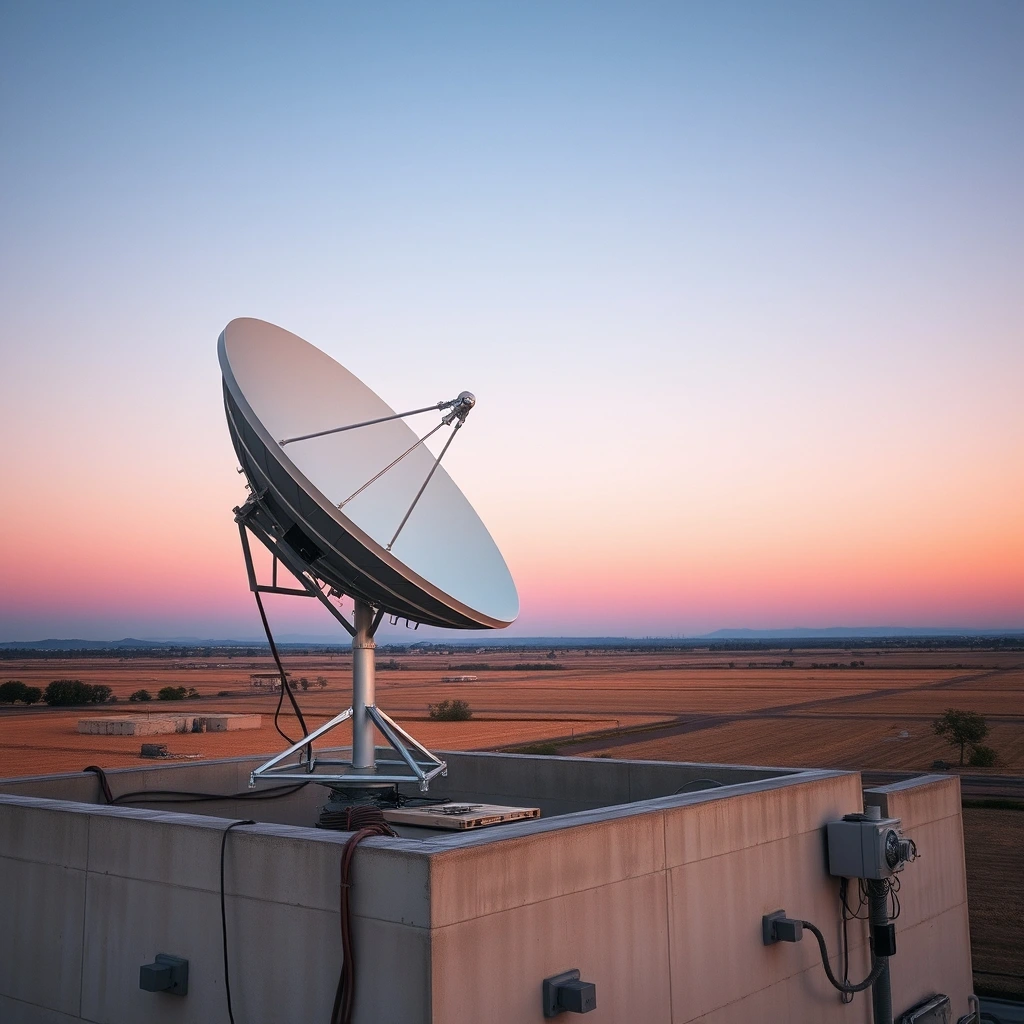
- The Flashpoint: Elon Musk publicly accused Mukesh Ambani's Reliance Jio of lobbying to block Starlink via unprecedented spectrum auction demands.
- The Regulatory Split: India's Telecommunications Act leaned toward administrative allocation, but Jio continues pressing the Telecom Regulatory Authority of India (TRAI) for open bidding.
- The Technical Reality: Satellite spectrum is shared worldwide under ITU norms; auctioning it creates artificial scarcity designed to protect legacy terrestrial telecom revenue.
Billionaire squabbles rarely happen in broad daylight. Usually, they play out behind the soundproofed doors of ministry offices and through tightly scrubbed regulatory filings. Not this one. Elon Musk has taken off the gloves, directly targeting Asia's richest man, Mukesh Ambani, over Starlink's agonizingly slow path into the Indian market.
The Core Dispute: Auction vs. Allocation
Here is what nobody tells you about spectrum politics: it is rarely about technology. It is about money, territory, and who gets to extract toll fees from an entire subcontinent.
Musk wants India to allocate satellite frequencies administratively. That means the government issues the spectrum directly to licensed operators for a recurring fee, mirroring the standard practice endorsed by the International Telecommunication Union (ITU). Starlink shares frequencies with other low-Earth orbit (LEO) constellations like Eutelsat OneWeb and Amazon Kuiper without carving up exclusive bands.
Ambani sees it very differently. Reliance Jio has spent billions of dollars securing terrestrial 4G and 5G spectrum through cutthroat government auctions. Jio's leadership argues that handing satellite broadband providers administrative spectrum gives foreign upstarts a back door to siphon high-value data consumers without paying the same entry ticket.
- Administrative Assignment: Satellite operators share the same orbital bands dynamically, paying a percentage of adjusted gross revenue.
- Auction Model: Frequencies are split into rigid geographic blocks, sold off to the highest bidder for exclusive use.
- The Stalemate: While Indian legislation created space for administrative allocation, ongoing consultations keep moving the goalposts.
Why Jio Is Terrified of Cheap Satellite Data
Let's be candid: Reliance Jio did not conquer the Indian telecom space by being charitable. Jio crushed domestic rivals by offering rock-bottom data rates, forcing consolidations, and capturing over 470 million subscribers. Ambani built a digital empire on terrestrial cell towers and fiber backbones.
Satellite broadband disrupts that fortress from the sky. While Starlink cannot compete with Jio's two-dollar mobile recharges in dense urban cities like Mumbai or Delhi, that was never the play. The real prize lies in premium rural connectivity, enterprise backhaul, remote banking, maritime shipping, and government infrastructure.
If Starlink enters India with clear administrative clearance, it bypasses thousands of miles of terrestrial trenching overnight. High-net-worth rural estates, remote factories, logistics corridors, and educational hubs become instant targets. Jio knows that once enterprise customers taste low-latency, off-grid satellite connectivity, pulling them back into traditional wired contracts becomes an uphill battle.
| Strategic Pillar | Starlink's Model | Reliance Jio's Model |
|---|---|---|
| Infrastructure Cost | Space-based satellites; user terminals on-site | Extensive fiber-optic lines and cell towers |
| Spectrum Usage | Dynamic shared frequencies (ITU compliance) | Exclusive territorial frequency ownership |
| Target Market | Underserved rural, enterprise, remote zones | Mass-market mobile users, dense metros |
| Primary Barrier | Security clearances and regulatory approval | High capex for physical fiber rollout |
The ITU Playbook Musk Is Fighting For
Musk took to X (formerly Twitter) to point out an inconvenient fact: almost nowhere on earth auctions satellite spectrum. From the United States and Europe to Japan and Brazil, governments assign satellite frequencies administratively.
Why? Physics. Terrestrial cell towers broadcast high-power signals across localized ground cells. If two carriers use the same 700 MHz frequency in the same city block, their signals bleed into each other, killing performance. Exclusive auction blocks solve that interference.
Low-Earth orbit satellites work on dynamic beam-forming. Starlink, OneWeb, and Kuiper can navigate shared frequency bands simultaneously using smart beam steering and timed coordination. Forcing satellite bands into single-winner auction blocks breaks the technical architecture of orbital constellations.
Do not expect Starlink to cost $10 a month when it finally arrives. Even if Musk wins the regulatory fight, Starlink's hardware dish costs roughly $300 to $500 to produce. Unless SpaceX rolls out heavily subsidized local pricing or partners with local retail distributors, adoption will initially lean toward businesses, hospitality, and institutions rather than typical households.
Security Audits, Data Centers, and the Bureaucratic Grind
It is easy to blame Ambani's lobbying power, but the Indian security establishment has thrown its own wrenches into the gears. New Delhi has strict homeland security requirements for communication providers. Foreign satellite fleets are treated with intense scrutiny.
Starlink faced repeated delays over its compliance with local data interception mandates:
- Domestic Gateway Stations: India demands that all traffic originating from within its borders land at local gateway ground stations before routing anywhere else.
- Server Localization: Consumer metadata and traffic logs must remain physically within the country for law enforcement access.
- Shareholding Disclosures: The Department of Telecommunications (DoT) required SpaceX to provide detailed ownership declarations, verifying that no hostile geopolitical actors hold stakes in the service.
SpaceX has slowly checked these bureaucratic boxes, agreeing to local security audits and preparing ground station infrastructure. Yet every time one hurdle clears, a new debate over spectrum valuation mysteriously emerges from regulatory working groups.
The Consumer Reality: Who Actually Wins?
India still has hundreds of millions of citizens living on the fringes of reliable internet access. In the mountainous terrain of Ladakh, the northeast hills, and isolated coastal belts, laying terrestrial fiber is economically irrational. Cell towers in these areas run on diesel generators and deliver patchy 2G or 3G throughput.
An open satellite broadband market would fix this gap within months. Farmers could run precision agriculture sensors, primary health clinics could handle telemedicine without dropped calls, and regional schools could access digital curriculum platforms.
If regulators side with domestic incumbents by tying up satellite frequencies in punitive auctions, satellite bandwidth costs will skyrocket. The losers will not be Musk or Ambani—both will remain fabulously wealthy. The real losers will be the residents of remote Indian villages who remain digitally isolated while two billionaires fight over market shares.
Frequently Asked Questions
Why does Reliance Jio want an auction for satellite spectrum?
Reliance Jio wants to protect its massive investments in terrestrial spectrum and physical fiber networks. An auction creates an expensive barrier to entry, preventing foreign satellite operators like Starlink from securing low-cost market access and targeting high-margin corporate or rural customers.
Is Starlink legal in India right now?
Starlink does not yet possess the commercial commercial license (GMPCS) to sell its internet kits to Indian consumers. While the government granted in-principle approvals under revised telecommunications frameworks, commercial spectrum allocation and security clearances remain pending.
How does satellite spectrum differ from mobile spectrum?
Mobile spectrum requires exclusive frequency bands so terrestrial towers do not jam each other. Satellite spectrum operates in shared frequency bands globally, where multiple satellite networks use advanced beam-tracking to operate within the same airwaves without signal degradation.