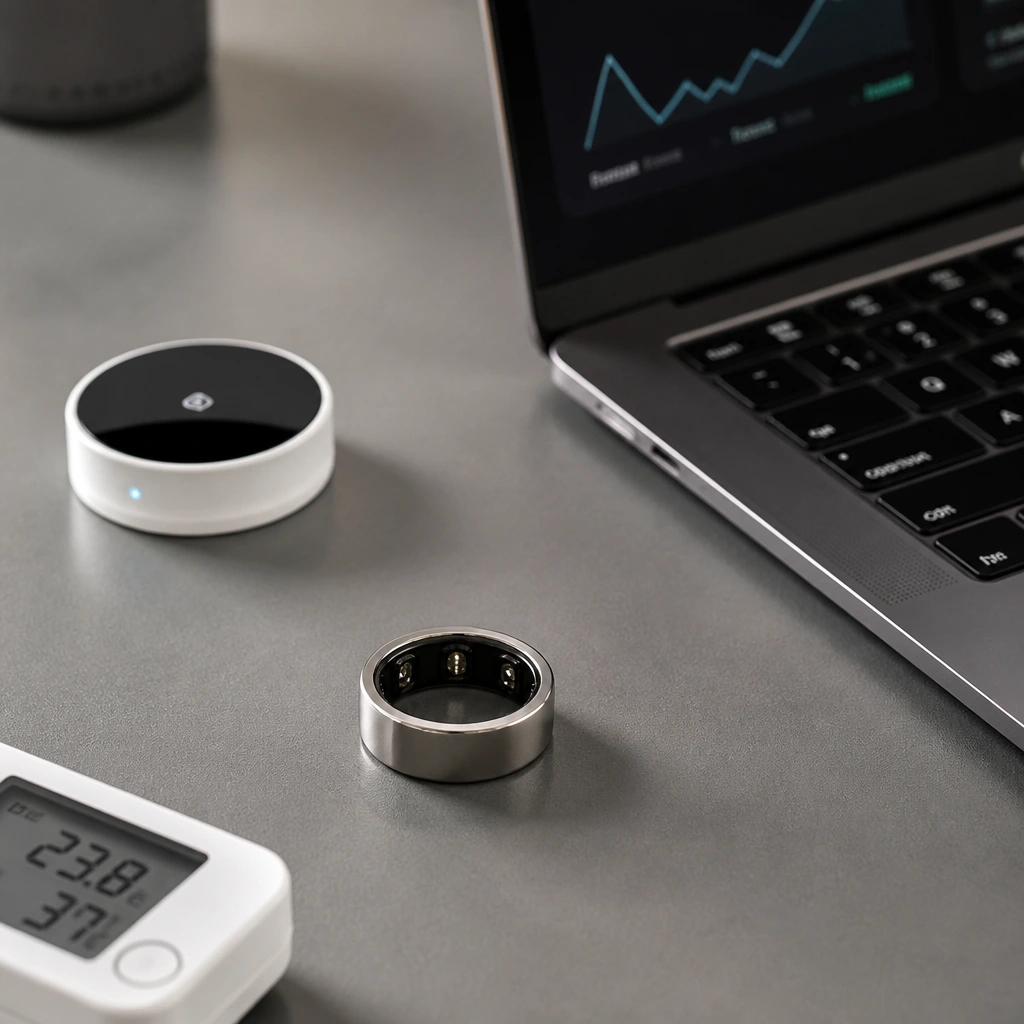
The Rise of Oura and the Smart Ring Revolution
For years, Oura has stood as the undisputed heavyweight champion of the smart ring market. By distilling advanced biometric sensors into a sleek, unassuming titanium band, the company shifted consumer habits away from bulky smartwatches toward elegant, continuous health tracking. Sleep analysis, readiness scores, and body temperature monitoring became mainstream vocabularies, largely thanks to Oura's pioneering hardware and sophisticated companion app. Now, as whispers of an upcoming initial public offering (IPO) grow louder, Oura finds itself transitioning from a disruptive startup to a mature, publicly traded titan.
However, entering public markets brings a relentless demand for hyper-growth, margin expansion, and continuous innovation. This financial spotlight comes at a precarious time. The lucrative smart ring landscape is no longer Oura’s private garden. A confluence of well-funded tech giants and agile hardware startups have identified the finger as the next frontier in personal telemetry, and they are launching aggressive campaigns to dethrone the reigning king. To maintain its market valuation and investor confidence, Oura must fend off a multi-pronged assault from rivals who are matching its hardware prowess and undercutting its subscription models.
Samsung’s Galaxy Ring: The Tech Titan Enters the Fray
The most immediate and existential threat to Oura’s dominance is the entry of Samsung into the smart ring arena. With the launch of the Galaxy Ring, the South Korean electronics giant leveraged its massive global supply chain, extensive retail footprint, and deep software ecosystem to legitimize the form factor for the masses. Unlike smaller startups, Samsung can afford to subsidize hardware development, market aggressively, and integrate smart ring data seamlessly into a massive existing infrastructure of smartphones and smart home devices.
- Deep integration with the Samsung Galaxy ecosystem and Android devices.
- Zero upfront subscription fees for core health metrics, challenging Oura's recurring revenue model.
- Aggressive global marketing campaigns and retail distribution that smaller brands cannot match.
- Advanced gesture controls designed to interact with other Samsung appliances and electronics.
Samsung’s entry transforms the smart ring from a niche biohacking accessory into a mainstream consumer electronics staple overnight.
Agile Contenders and Hardware Innovators
Beyond Samsung, a fierce ecosystem of specialized hardware companies is nibbling at Oura's market share by catering to specific consumer pain points. Brands like Ultrahuman, Circular, and Amazfit are deploying distinctive features designed to appeal to users who feel alienated by Oura’s hardware design or recurring monthly subscription fees. Ultrahuman, for instance, emphasizes metabolic health tracking by integrating continuous glucose monitor (CGM) data directly into its ring's ecosystem, creating a compelling value proposition for biohackers and fitness enthusiasts alike.
Furthermore, the consumer backlash against subscription fatigue has become a primary wedge issue for Oura’s rivals. While Oura charges a monthly fee to unlock the full depth of its software analytics, several emerging competitors offer lifetime access to health insights out of the box. This pricing strategy appeals directly to cost-conscious buyers who appreciate the form factor but resent paying a perpetual tax on hardware they already own. As these alternative brands refine their sleep-tracking algorithms and battery life, the functional gap between Oura and its competitors continues to narrow rapidly.
The Patent Battleground and Intellectual Property War
As the competitive stakes skyrocket, the smart ring market is increasingly defined by aggressive legal maneuvering and intellectual property disputes. Oura has spent years aggressively patenting its form factor, sensor placement, and algorithmic scoring systems. In the past, the company has not hesitated to file lawsuits against rising startups, utilizing its substantial venture capital backing to legally pressure smaller rivals.
However, litigation is a double-edged sword. While it can slow down agile upstarts, it also signals to investors that Oura views these competitors as genuine threats to its market monopoly. Big tech players like Samsung possess legal war chests capable of weathering prolonged patent battles, meaning Oura cannot rely solely on the courtroom to protect its turf. Innovation, brand loyalty, and superior software execution remain its most reliable shields as it navigates the treacherous waters of a public offering.
Navigating the Public Markets: What’s Next for Oura
Going public fundamentally changes a company's strategic calculus. Shareholders demand predictable quarterly growth, expanding profit margins, and constant product iteration. For Oura, this means it must successfully balance the high costs of research and development—such as developing non-invasive glucose monitoring or advanced cardiovascular diagnostics—with the realities of defending market share against predatory pricing from competitors.
Ultimately, Oura’s IPO will serve as a referendum on the long-term viability of the standalone smart ring category. If Oura can successfully innovate past its rivals and convince Wall Street that it commands a defensible economic moat, it will cement its legacy as a generational tech pioneer. If not, the crown might just slip from its finger and land in the hands of a hungrier, better-resourced challenger.