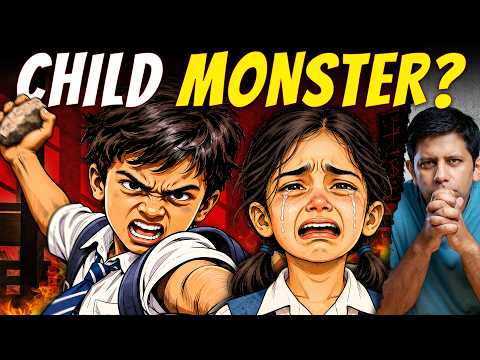
- The Panchkula Catalyst: A shocking school incident involving minors has forced a brutal national conversation about accountability.
- The Legal Gray Area: India's Juvenile Justice Act balances reform and punishment, but critics argue the pendulum swings too far away from deterrence.
- Beyond the Courtroom: Real reform requires addressing digital radicalization, mental health, and institutional failures before crimes occur.
Let's be candid: Headlines can break our hearts in sixty seconds, but they rarely fix the broken systems beneath them. When the news broke about the Panchkula school shocker, it wasn't just another crime report scrolling past our feeds. It was a mirror held up to a society struggling to keep pace with a generation navigating unprecedented digital pressures. Akash B and legal experts are asking the tough question: Are our current legal frameworks equipped to handle violent acts committed by minors, or are we applying a twentieth-century bandage to a twenty-first-century wound?
When Classrooms Become Crime Scenes
Nobody expects a school to turn into a crime scene. Yet, recent events have shattered the illusion of institutional safety. We watched in disbelief as details emerged from Panchkula, forcing parents, educators, and policymakers to reckon with an uncomfortable reality. Juveniles are committing acts of violence that were once considered unthinkable for their age group.
Here is what nobody tells you about these sudden eruptions of youth violence: they rarely happen in a vacuum. They are usually the violent climax of a long, unmonitored descent into isolation, fueled by unaddressed peer pressure, easy access to unregulated online content, and a systemic lack of emotional intelligence training in schools.
- The Social Media Echo Chamber: Algorithms reward aggression, giving troubled teens perverse validation.
- Erosion of Pastoral Care: Overburdened school counselors miss the subtle warning signs of impending outbursts.
- The Impunity Myth: Many young offenders genuinely believe the juvenile justice system shields them from permanent consequences.
Does the Law Need a Shock Therapy?
The core debate following the Panchkula incident centers on the Juvenile Justice Act. Under current Indian law, heinous offenses committed by minors aged 16 to 18 can be tried as adults—provided the Juvenile Justice Board conducts a preliminary assessment. But critics argue this process is riddled with bureaucratic delays and legal loopholes that dilute its deterrent effect.
Should the age threshold be lowered further? Or should the definition of 'heinous crime' be expanded? Let's look at how traditional approaches compare with modern demands for systemic reform.
| Aspect | Traditional Approach | Modern Solution |
|---|---|---|
| Focus | Purely punitive detention | Balanced psychological rehabilitation |
| Intervention | Post-crime sentencing | Early behavioral screening in schools |
| Accountability | Solely on the minor | Shared accountability involving parents and institutions |
The Digital Anarchy No One Is Policing
Let us confront the elephant in the room: smartphones. We hand high-speed internet access to developing brains without giving them a manual for mental survival. Dark web forums, hyper-violent gaming communities, and toxic social media subgroups often act as surrogate parents for alienated teens.
When a child spends six hours a day absorbing unfiltered violence online, reality bends. The Panchkula shocker should serve as an urgent wake-up call for digital regulation. We regulate food safety and road traffic, yet digital content consumption for minors remains a wild west.
Parents and educators must stop viewing digital surveillance as an invasion of privacy and start treating it as digital childproofing. Monitor screen habits, know your child's online circle, and never dismiss sudden behavioral withdrawal as 'just a teenage phase.'
The Danger of Knee-Jerk Legislation
It is tempting to demand harsher punishments every time a shocking crime hits the news cycle. Anger is a natural response. However, seasoned criminologists warn that draconian laws alone will not stop the rise in juvenile crimes.
If we lock children away without fixing the root causes—broken family structures, zero-tolerance bullying cultures in schools, and academic pressure cookers—we are simply manufacturing hardened criminals instead of reforming them. Stricter laws must be paired with aggressive preventive infrastructure.
Frequently Asked Questions
Can lowering the age of criminal responsibility stop juvenile crime?
Criminological data suggests otherwise. Fear of punishment is rarely a deterrent for impulsive adolescents. Effective deterrence relies on certainty of apprehension and swift intervention, not just the severity of the eventual sentence.
What role do schools play in preventing juvenile delinquency?
Schools are often the first line of defense. Beyond academics, they must integrate mandatory mental health check-ins, anti-bullying protocols, and active peer-mediation programs to catch distress signals early.