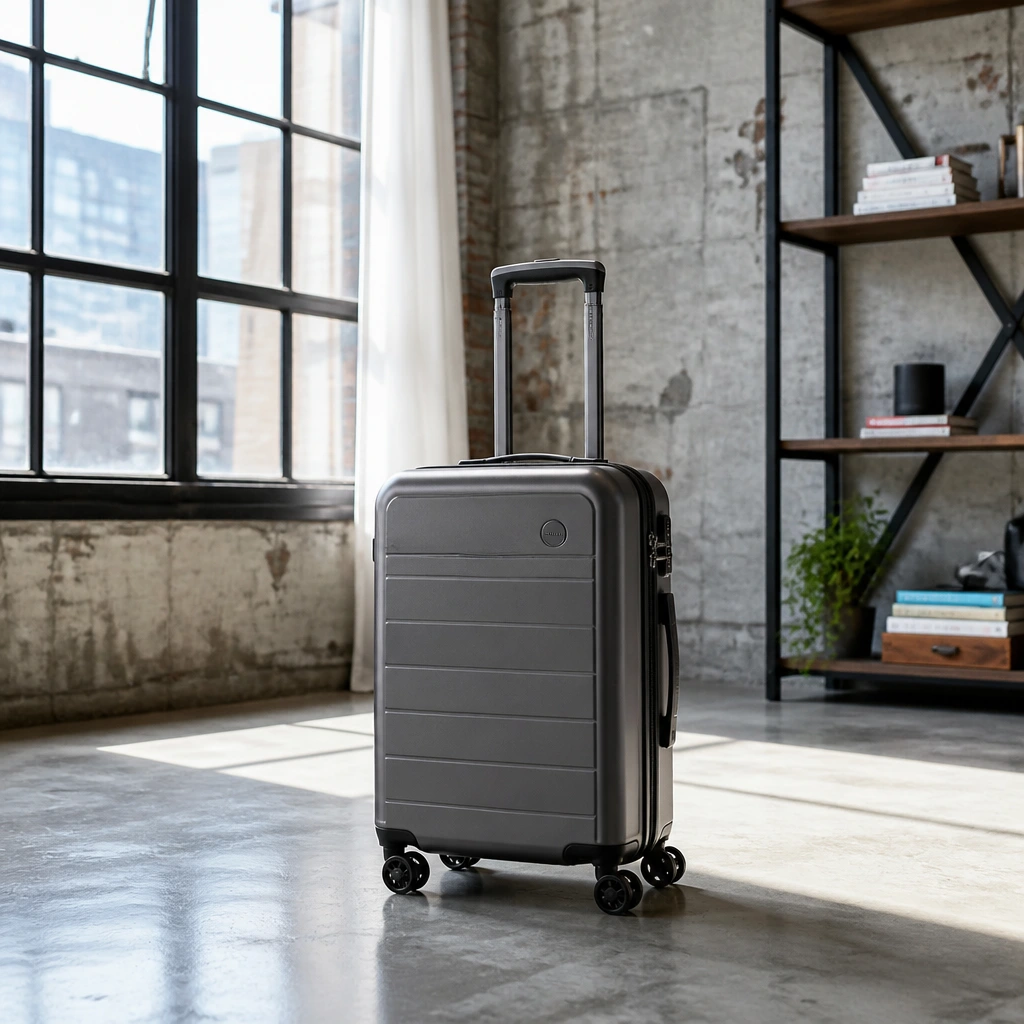
- Direct-to-Consumer Model: Eliminating traditional retail markups cuts prices by half without sacrificing aluminum or polycarbonate integrity.
- Durability Metrics: Modern budget luggage now rivals legacy brands in stress tests and wheel smoothness.
- Design Philosophy: Stripping away unnecessary branding keeps aesthetics clean and professional.
Let us be candid: paying eight hundred dollars for a plastic box with wheels borders on absolute absurdity. Yet, frequent fliers routinely hand over small fortunes for designer baggage, convinced that high price tags equal eternal durability. Enter the direct-to-consumer disruption.
The Broken Economics of Airport Gear
For decades, legacy luggage houses operated on staggering retail markups. A suitcase costing thirty dollars to manufacture in a Chinese facility routinely hit department store shelves for nearly four hundred dollars. Consumers absorbed the costs of middlemen, glossy print advertising, and brick-and-mortar storefront leases. That era is officially crumbling. Modern travelers demand transparency. They want to know exact material costs, factory origins, and margin breakdowns before pulling out their credit cards.
When brands strip away wholesale distribution channels, the financial math shifts dramatically. Suddenly, premium aviation-grade polycarbonate and Japanese Hinomoto spinner wheels become accessible at a fraction of historic costs. You stop paying for celebrity endorsements and start paying for raw engineering.
Sizing Up the Polycarbonate Beast
Look closely at modern affordable luggage. The texture matters. The zipper resistance matters. Cheap bags flex too much under pressure, threatening the laptop tucked inside the front pocket. High-grade polycarbonate strikes a rare balance: rigid enough to protect fragile items, yet flexible enough to absorb baggage handler abuse without cracking.
- Shell Construction: Look for multi-layer virgin polycarbonate rather than brittle ABS plastics.
- Wheel Assemblies: Dual-spinner wheels with steel ball bearings dictate whether the bag glides or fights your wrist.
- Telescoping Handles: Wobble-free aluminum handles prevent frustrating jams mid-transit.
Deconstructing the 2026 Travel Standard
Travel gear has evolved past flashy logos. Today, function reigns supreme. Nobody cares about an embossed monogram when a wheel snaps off outside Terminal 4. The focus has pivoted entirely toward structural integrity and weight distribution.
| Aspect | Traditional Approach | Modern Solution |
|---|---|---|
| Pricing Model | Wholesale markups up to 8x | Direct factory-to-consumer pricing |
| Materials | Heavy mixed plastics and ABS | Virgin polycarbonate and aircraft aluminum |
| Warranty | Limited 1-year coverage | Lifetime or robust multi-year guarantees |
The Hidden Realities of Factory-Direct Shopping
Buying luggage online without rolling it across a store floor feels risky. Let's address the elephant in the room: touch-and-feel testing is absent. However, liberal home-trial policies mitigate that friction entirely. You pull the bag from its cardboard carton, pack it to maximum capacity, and test the zippers in your living room.
Always test the telescoping handle by pulling the fully packed suitcase up a flight of stairs. If the handle flexes violently or clicks loudly at the joints, return it immediately regardless of the sleek exterior finish.
Frequently Asked Questions
Do budget-friendly suitcases hold up to aggressive airline baggage handlers?
Yes, provided the shell uses 100% polycarbonate rather than cheap ABS blends. Virgin polycarbonate flexes under impact instead of shattering.
Are integrated TSA locks actually reliable on direct-to-consumer bags?
They use standard numerical combination mechanisms identical to luxury brands. Resetting them takes seconds, and they meet all TSA screening requirements globally.