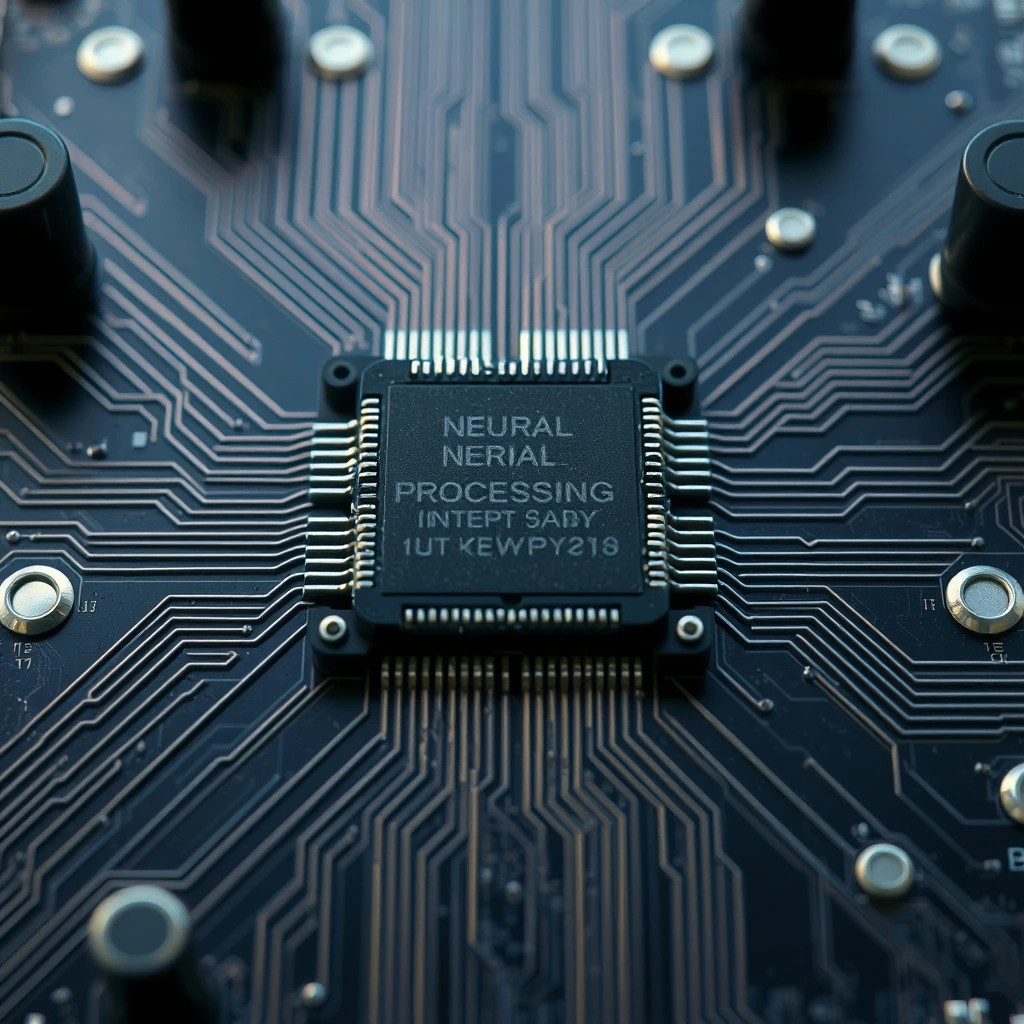
- Point 1: Traditional CPUs can no longer keep up with massive neural network workloads.
- Point 2: Custom silicon reduces inference latency and slashes cloud computing infrastructure costs.
- Point 3: Enterprises ignoring specialized AI hardware risk severe operational bottlenecks.
Here is what nobody tells you about the artificial intelligence boom: the software gets all the glory, but the silicon dictates who survives. For years, massive language models and computer vision pipelines treated hardware as a secondary concern. That era is dead. Let's be candid: running complex neural networks on general-purpose processors is the corporate equivalent of hauling freight with a sports car. It is expensive, inefficient, and bound to fail under heavy loads.
The Silicon Bottleneck Nobody Saw Coming
Data centers are burning through power at unprecedented rates. As models grow larger, standard compute infrastructure gasps for air. Companies spend millions spinning up cloud instances just to handle basic inference tasks, watching operational budgets vanish into thin air.
Specialized neural processing units change the equation entirely. By hardcoding matrix multiplication and tensor operations directly into the silicon, chip designers have bypassed decades-old architectural limitations. You get raw computational throughput without the thermal throttling that plagued early attempts at machine learning acceleration.
Why General-Purpose Chips Are Becoming Obsolete
General-purpose CPUs were built for sequential instruction processing. Modern neural networks require massive parallelism. Trying to force a CPU to handle billions of parameters simultaneously creates a traffic jam inside the arithmetic logic units.
- Thermal Limits: Legacy chips overheat rapidly when forced into continuous tensor calculations.
- Memory Bandwidth: Standard RAM struggles to feed data fast enough to keep GPU cores fully utilized.
- Cost Scaling: Scaling infrastructure via traditional servers causes exponential cost inflation.
The Shift Toward Edge Intelligence
Cloud dependency is fading. Enterprises now demand real-time processing at the edge, whether inside an industrial robot, a retail kiosk, or a connected vehicle. Sending high-bandwidth video streams to a distant server introduces unacceptable latency.
Do not buy the most expensive enterprise accelerator on the market just because it has impressive benchmark scores. Audit your exact model architecture first. Match your memory footprint to the SRAM capacity on the chip to avoid expensive memory swapping bottlenecks.
Next-generation neural chips bring local inference directly to the device. This shift protects sensitive user data, eliminates dependency on stable internet connections, and cuts recurring cloud subscription fees down to nearly zero.
Mapping the New Hardware Landscape
| Aspect | Traditional Approach | Modern Solution |
|---|---|---|
| Processing Unit | General-purpose CPU | Dedicated NPU / TPU Silicon |
| Latency Profile | High (Cloud round-trip) | Ultra-low (Edge inference) |
| Energy Footprint | Heavy power consumption | Optimized energy-per-watt |
| Scaling Model | Linear server addition | Modular neural architectures |
The Supply Chain Realities Behind the Hype
Designing custom silicon is an expensive, high-stakes gamble. A single mask error during fabrication costs millions and delays product rollouts by quarters. Only organizations with deep capital reserves or highly targeted niche applications can afford custom tape-outs.
Even so, the risk pays off. Companies controlling their hardware stack dictate terms to the rest of the market. They optimize software directly for their silicon, creating a compounding performance moat that competitors struggle to cross.
Frequently Asked Questions
Do small businesses need custom AI hardware right away?
Rarely. If your organization relies on off-the-shelf software APIs, cloud providers handle the silicon layer for you. Custom hardware matters primarily for companies building proprietary models or processing high-volume real-time data streams locally.
How long before current neural chips become obsolete?
The hardware cycle moves fast, but enterprise infrastructure typically operates on a three-to-five-year refresh window. Focus on flexible architectures that accommodate algorithmic shifts rather than chasing raw peak performance numbers.