The Evolution of Smart Device Ecosystems in 2026
As we navigate through 2026, the landscape of smart device ecosystems has matured beyond fragmented smart home gadgets into unified, cross-industry networks. The integration of ambient computing and hyper-connectivity has fundamentally shifted how devices communicate, learn, and anticipate human needs. Today's architectures emphasize seamless interoperability, dismantling traditional walled gardens in favor of open protocols like Matter and advanced Thread implementations. This convergence allows devices from disparate manufacturers to share contextual awareness, creating a friction-free environment where hardware acts as a cohesive collective rather than isolated endpoints.
Furthermore, consumer and enterprise expectations have skyrocketed. Users no longer tolerate complex configuration processes or delayed response times. The modern ecosystem relies on self-healing mesh networks and zero-touch provisioning, ensuring that adding a new sensor or industrial actuator is as simple as powering it on. This maturity has paved the way for massive scalability, enabling deployments involving tens of thousands of nodes within a single enterprise footprint without compromising network security or data throughput.
Embedded IoT Innovations and Edge Intelligence
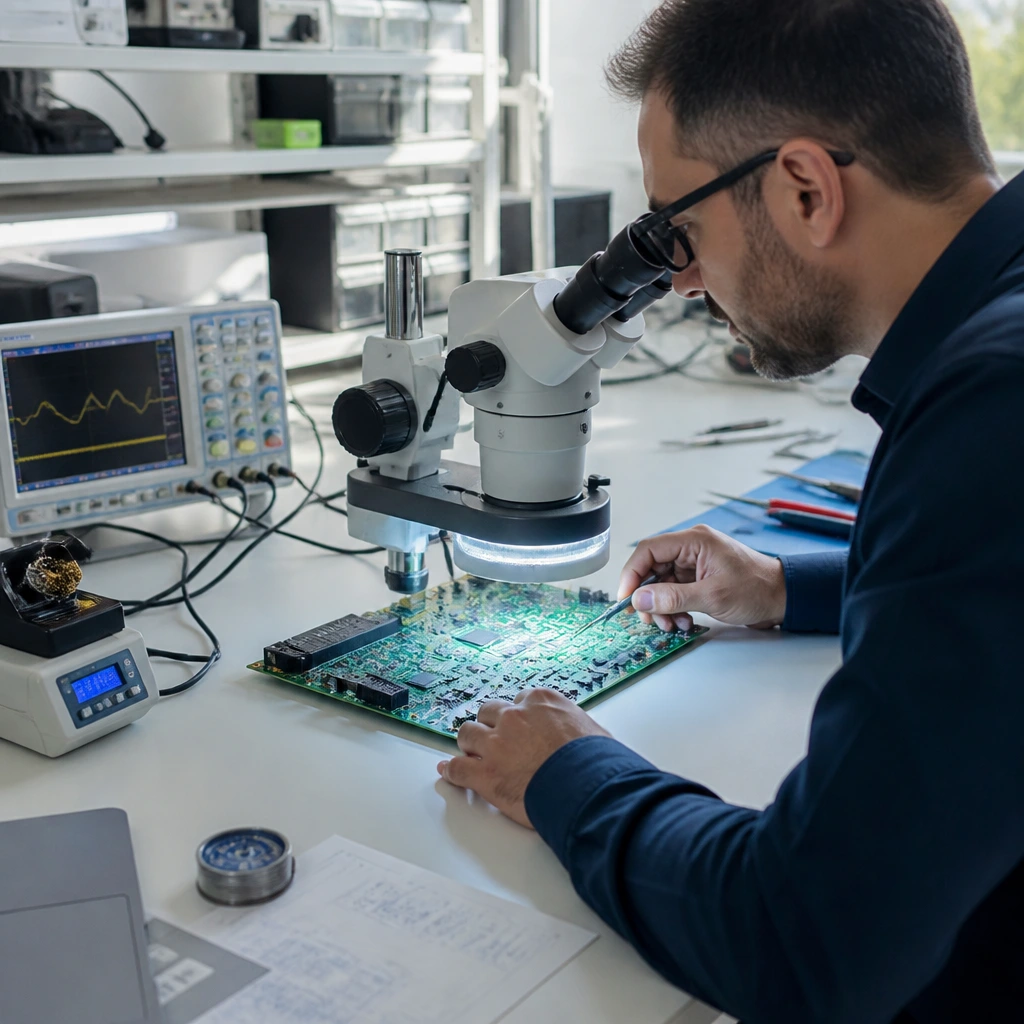
At the silicon level, embedded Internet of Things (IoT) innovations are defined by a massive leap in processing capabilities at the extreme edge. In 2026, microcontrollers (MCUs) and application-specific integrated circuits (ASICs) feature integrated neural processing units (NPUs) designed specifically for tiny machine learning (TinyML). This allows devices to execute complex inferencing tasks locally, analyzing sensor data streams in real-time without relying on continuous cloud connectivity.
- Ultra-Low Power NPUs: Enabling advanced pattern recognition and predictive maintenance directly on battery-operated sensors.
- Advanced Energy Harvesting: Integrating photovoltaic, kinetic, and thermal harvesting to achieve near-perpetual device lifespans.
- Hardware-Rooted Security: Utilizing physical unclonable functions (PUFs) and secure enclaves to protect sensitive telemetry at the silicon layer.
- Deterministic Networking: Implementing Time-Sensitive Networking (TSN) protocols for ultra-reliable, low-latency industrial control.
By shifting data processing from remote server farms to the immediate physical edge, embedded systems in 2026 achieve unprecedented levels of privacy, responsiveness, and operational autonomy.
Interoperability, Standards, and Unified Protocols
The elimination of communication barriers has been the single most critical driver of IoT adoption this year. The widespread adoption of universal communication standards has effectively bridged the historical divide between industrial automation and consumer smart spaces. Developers now build applications targeting abstract capability layers rather than proprietary APIs, significantly reducing time-to-market and maintenance overheads.
These unified protocols are backed by robust cryptographic frameworks that enforce end-to-end encryption across all interconnected nodes. As billions of devices exchange telemetry, state updates, and firmware payloads, decentralized identity management ensures that only authorized entities can participate in the ecosystem. This architectural resilience protects critical infrastructures against sophisticated cyber threats while maintaining the high availability required for mission-critical operations.
Industrial IoT (IIoT) and Predictive Infrastructure
In the industrial sector, embedded IoT innovations are driving the fourth industrial revolution to its logical zenith. Factories, energy grids, and smart cities are increasingly populated by intelligent, self-monitoring assets. Vibration sensors, acoustic monitors, and thermal imaging nodes work in concert to predict mechanical failures weeks before they manifest, drastically reducing costly unplanned downtime.
Moreover, the integration of digital twins powered by real-time IoT feeds allows engineers to simulate operational adjustments virtually before deploying them to physical machinery. This closed-loop optimization minimizes resource consumption, reduces carbon footprints, and maximizes asset utilization across global supply chains. The boundary between digital design and physical execution has effectively dissolved, creating living, breathing infrastructural systems.
Security, Privacy, and the Future Horizon
As smart ecosystems expand into every facet of daily life and critical infrastructure, security and privacy remain paramount. The regulatory landscape in 2026 mandates stringent compliance regarding data minimization, localized processing, and transparent firmware update lifecycles. Manufacturers are held legally accountable for the entire operational lifespan of their embedded devices, forcing a cultural shift from rapid product turnover to long-term software stewardship.
Looking ahead, the convergence of quantum-resistant encryption algorithms and autonomous edge agents promises to redefine what embedded systems can achieve. As these technologies mature, smart device ecosystems will continue to evolve from reactive tools into proactive partners, quietly and securely optimizing the physical world in the background.