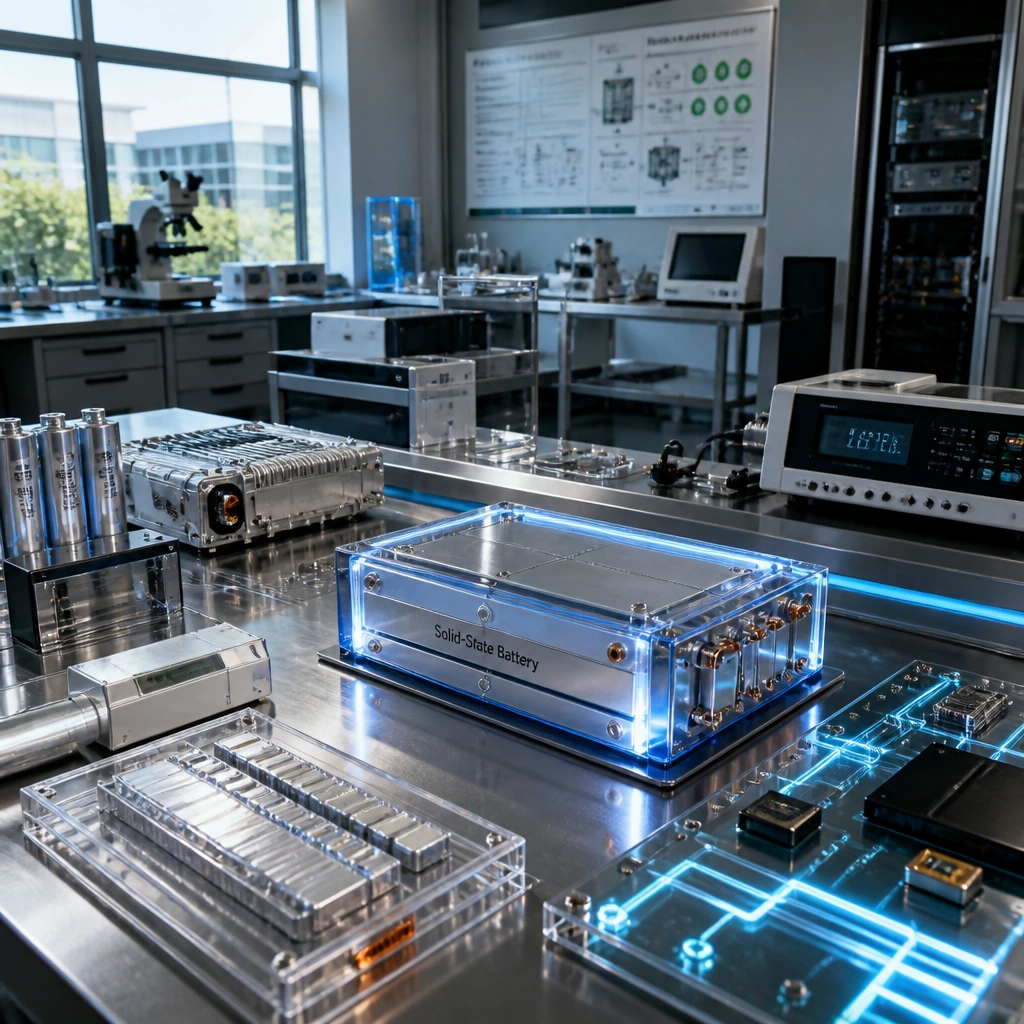
The Paradigm Shift in Energy Storage
The global energy landscape is undergoing a monumental transformation, driven by the urgent need for safer, denser, and more efficient energy storage systems. Traditional lithium-ion batteries have served as the backbone of portable electronics and electric vehicles for decades, yet they are rapidly approaching their theoretical performance limits. As society pushes toward aggressive net-zero carbon targets, next-generation solid-state batteries have emerged as the holy grail of electrochemical energy storage. By replacing volatile liquid electrolytes with stable solid-state alternatives, researchers are unlocking unprecedented levels of safety, longevity, and energy density that will redefine modern power systems.
This technological evolution is not merely an incremental upgrade; it represents a foundational paradigm shift across multiple industries. Automotive manufacturers, consumer electronics giants, and grid-scale energy providers are heavily investing in research and development to overcome the historical manufacturing bottlenecks of solid-state systems. Understanding these trends requires a multidisciplinary approach, blending electrochemistry, advanced materials manufacturing, and global supply chain logistics.
Materials Science Breakthroughs: Overcoming Solid-State Hurdles
At the heart of the solid-state revolution lies rapid advancement in materials science, specifically concerning solid electrolytes. Researchers are actively evaluating various candidate materials, including polymer-based, oxide-based, and sulfide-based electrolytes, each presenting distinct advantages and engineering challenges. Sulfide electrolytes, for instance, offer exceptional ionic conductivity at room temperature, rivaling or even exceeding traditional liquid electrolytes. However, their sensitivity to moisture and the complex manufacturing environments they require have historically limited commercial scalability.
- Development of high-conductivity sulfide and oxide solid electrolytes
- Innovative interfacial engineering to minimize internal resistance and degradation
- Integration of lithium-metal anodes for maximized volumetric and gravimetric energy density
- Advanced nanoscale manufacturing techniques to ensure consistent film thickness and defect-free layers
The successful commercialization of solid-state batteries hinges not just on chemistry, but on our ability to scale atomic-level precision to gigafactory production lines without incurring prohibitive capital expenditures.
Simultaneously, engineers are tackling the notorious issue of dendrite formation—microscopic lithium fibers that pierce traditional separators and cause short circuits. By engineering advanced protective coatings and utilizing novel composite solid electrolytes, contemporary research laboratories are successfully mitigating dendrite growth, thereby paving the way for ultra-fast charging capabilities and extended operational lifespans.
Integration with Smart Grids and Renewable Energy Infrastructures
Beyond electric vehicles, next-generation solid-state batteries are poised to revolutionize stationary energy storage systems, acting as the crucial stabilizing force for renewable energy grids. As solar and wind power installations expand globally, the inherent intermittency of these clean energy sources demands robust, scalable storage solutions capable of smoothing out generation peaks and valleys. Solid-state technology offers superior thermal stability and resistance to degradation, making it ideally suited for large-scale grid deployments where safety and round-trip efficiency are paramount.
Furthermore, the synergy between solid-state batteries and smart grid technologies is creating intelligent energy ecosystems. Advanced battery management systems equipped with machine learning algorithms can predict degradation patterns, optimize charge-discharge cycles, and seamlessly balance localized microgrids. This deep integration ensures that clean energy can be captured, stored, and distributed with minimal transmission losses, significantly accelerating the global transition away from fossil fuel dependency.
Economic Implications, Supply Chains, and Geopolitical Shifts
The transition toward next-generation clean energy technologies carries profound economic and geopolitical ramifications. The race to secure critical raw materials—such as lithium, cobalt, nickel, and solid electrolyte precursors—has transformed international trade dynamics. Nations are increasingly prioritizing domestic supply chain security, incentivizing local refining capabilities, and investing heavily in circular economy initiatives, including advanced battery recycling technologies designed to recover high-purity materials from spent cells.
- Diversification of critical mineral sourcing to reduce geopolitical vulnerabilities
- Massive capital allocation toward domestic gigafactory manufacturing infrastructure
- Implementation of stringent ESG (Environmental, Social, and Governance) standards across supply chains
- Acceleration of battery recycling frameworks to recover scarce elements economically
As manufacturing yields improve and production scales up, cost parity with conventional liquid-electrolyte batteries is projected to arrive within the decade. This economic tipping point will trigger widespread adoption, rendering internal combustion engines and legacy energy storage increasingly obsolete. Stakeholders across finance, engineering, and policy-making must align their strategic roadmaps to navigate this complex, high-stakes transition effectively.
The Road Ahead: Commercialization Horizons and Future Outlook
While the theoretical benefits of solid-state batteries are undeniable, the journey from laboratory-scale prototypes to ubiquitous commercial deployment remains fraught with rigorous engineering challenges. Current pilot lines are demonstrating impressive metrics, yet scaling these processes to meet the staggering demands of the global automotive and energy markets requires unprecedented cross-sector collaboration. Equipment manufacturers, chemical conglomerates, and tier-one automotive suppliers are forging strategic joint ventures to share intellectual property and de-risk capital-intensive manufacturing build-outs.
Ultimately, the successful integration of next-generation solid-state batteries into the global clean energy matrix will serve as a defining technological achievement of the twenty-first century. By dissolving the traditional trade-offs between safety, energy density, and cost, these advanced systems will empower a fully electrified, sustainable society. The strategic insights gathered today will lay the indispensable groundwork for the resilient energy architectures of tomorrow.