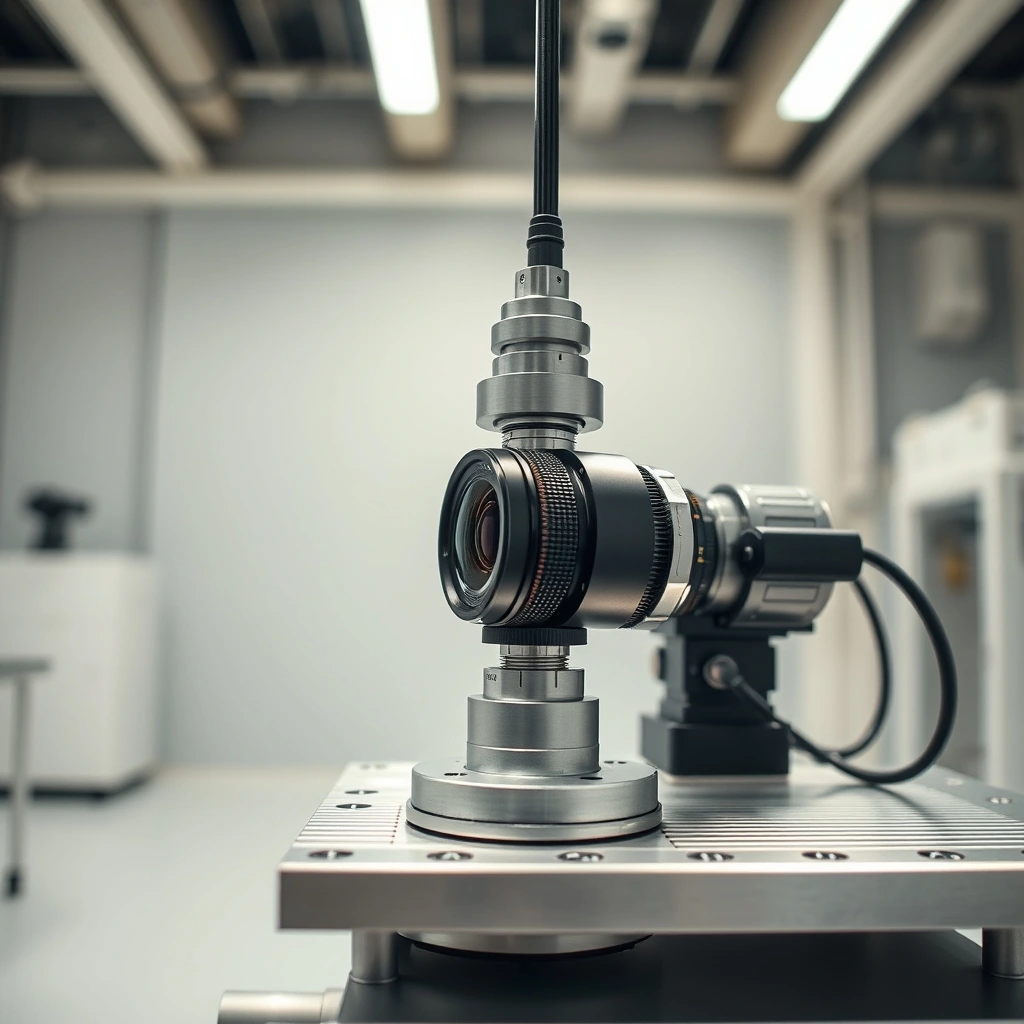
- Optics vs. Form Factor: Pancake lenses reduce bulk but severely throttle optical efficiency.
- Thermal Realities: Passive cooling cannot handle high-nit micro-OLED panels without aggressive throttling.
- Enterprise ROI: Real-world deployments prove success relies on mundane data workflows, not flashy holograms.
Let us be candid: the corporate pitch decks for spatial computing ignore the laws of physics. We hear endless chatter about floating interfaces and digital workflows taking over the office. Yet, engineers sweating over thermal dissipation in cramped optical chambers know the truth. Building comfortable mixed-reality hardware is an uphill battle against raw thermodynamics.
The Thermal Trap Behind Micro-OLED Displays
Modern augmented reality depends on micro-OLED panels pushing massive pixel density into postage-stamp-sized glass. Achieving high brightness requires driving extreme current through tiny organic light-emitting diodes. Heat builds up instantly. Without active fans—which consumers reject for head-mounted gear—processors throttle within minutes.
- Thermal throttling cuts peak brightness by half during intensive processing tasks.
- Enclosure temperatures near the user's forehead frequently exceed comfort thresholds.
- Passive heat dissipation requires heavy copper or graphite shims that defeat lightweight ergonomic goals.
We are asking silicon to perform desktop-class graphics rendering inches from human skin. Until solid-state cooling or vastly superior semiconductor efficiency arrives, hardware designers must compromise. They either sacrifice peak visual fidelity or accept shorter battery runtimes.
Optics, Waveguides, and the Brightness Dilemma
Diffractive and reflective waveguides dictate how light reaches the retina. Unfortunately, scattering efficiency remains abysmal. For every one hundred photons generated by the projector engine, fewer than five actually hit the user's pupil. Compensating for this loss means cranking up the source illumination, which circles right back to our thermal crisis.
- Surface-relief gratings cause rainbow artifacts and spectral dispersion across bright backgrounds.
- Geometric waveguides offer crisp images but demand mechanical alignment tolerances measured in microns.
- Outdoor usability requires thousands of nits, frying miniature batteries in under an hour.
| Aspect | Traditional Approach | Modern Solution |
|---|---|---|
| Optics | Glass prisms and bulky lenses | Pancake lenses and folded optics |
| Illumination | Standard LEDs | Micro-LEDs and laser beam scanners |
| Power Delivery | Tethered cables or single cells | Distributed modular battery straps |
The Software Rendering Bottleneck
Hardware is only half the puzzle. Rendering stereoscopic interfaces at ninety frames per second with minimal motion-to-photon latency requires algorithmic acrobatics. Reprojection techniques mask dropped frames, but they introduce visual artifacts that trigger physical nausea. Users notice micro-stutters immediately when virtual anchors drift against real-world walls.
Developers must adopt extreme optimization practices. Drawing call reduction, aggressive level-of-detail management, and foveated rendering driven by eye-tracking cameras are mandatory. Throwing brute-force compute at spatial interfaces fails every time.
Do not build custom spatial UI frameworks from scratch. Rely on platform-native spatial anchors and physics layers, and focus your engineering budget strictly on domain-specific data pipelines.
Enterprise Deployment Realities
Forget consumer living rooms for a moment. Industrial floors and surgical suites represent the actual testing grounds. Here, ergonomics trump sleek aesthetics. A technician wearing a headset for an eight-hour shift cares nothing about futuristic styling. They care about weight distribution, strap durability, and resistance to dust and moisture.
- IP ratings for dust and water resistance add bulk that counters lightweight design goals.
- Modular battery hot-swapping prevents equipment downtime during critical operational shifts.
- Interoperability with legacy enterprise resource planning software remains a persistent bottleneck.
Frequently Asked Questions
Why are pancake lenses dominating modern headset design?
Pancake lenses fold the optical path multiple times using polarization optics. This drastically shortens the physical distance between the display panel and the eye, allowing for significantly thinner and lighter headset profiles.
Is micro-LED ready to replace micro-OLED in commercial hardware?
Not quite yet. While micro-LEDs offer phenomenal brightness and longevity without burn-in risks, manufacturing yields for high-resolution sub-micron arrays remain prohibitively expensive for mass-market consumer devices.
What is the biggest mistake engineering teams make in spatial computing?
Treating spatial UI as a traditional 2D web or mobile app ported into a 3D space. Designing effective spatial tools requires rethinking ergonomics, input modalities, and cognitive load from the ground up.