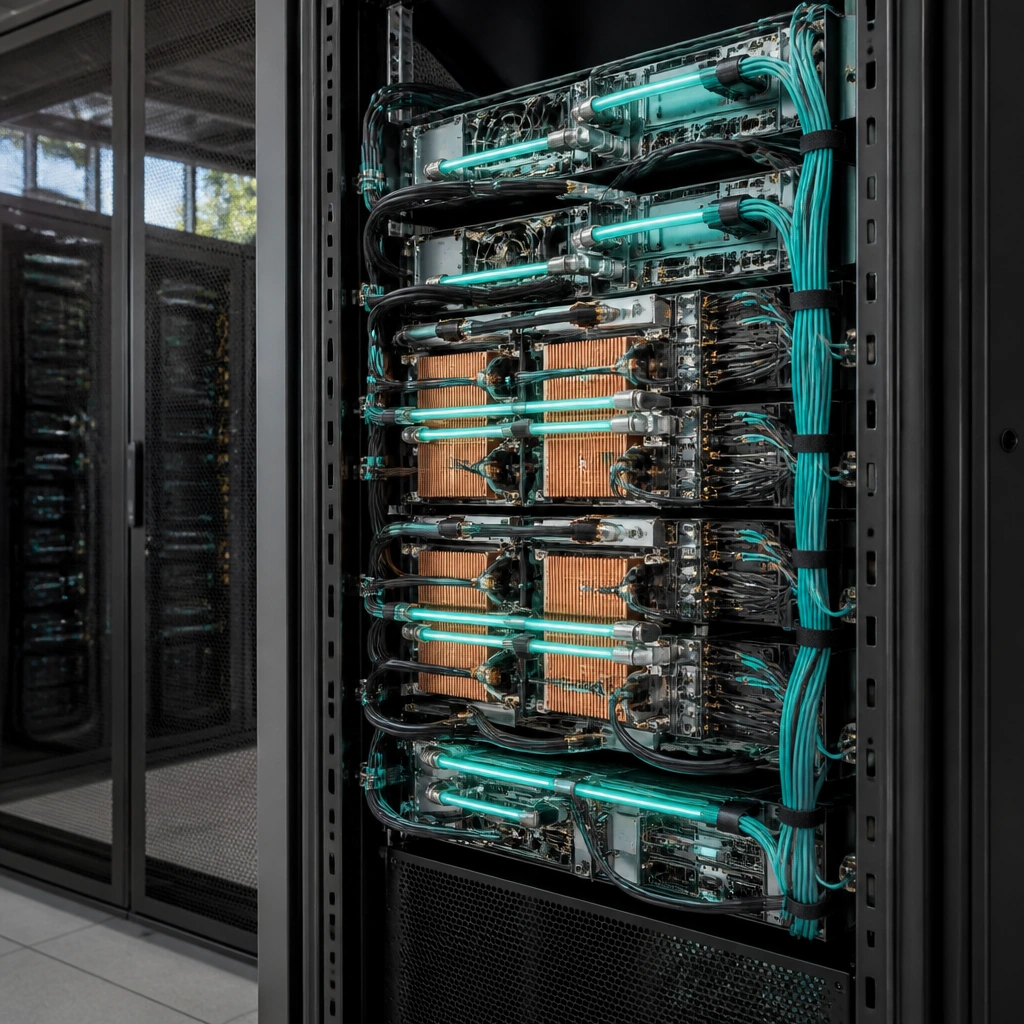
- The Weight Monopoly Is Broken: Open-weight models like Llama 3, DeepSeek, and Mistral match closed-source performance at a tiny fraction of the serving cost.
- Decentralized Compute Emerges: Orchestration frameworks like Petals, exo, and Ray stitch heterogeneous consumer GPUs into distributed clusters across continents.
- Standardization Is Urgent: Emerging formats such as GGUF, SafeTensors, and open communication standards dictate the survivability of independent machine learning infrastructure.
Let's be candid: the corporate narrative around generative artificial intelligence was carefully scripted to terrify you into subscription lock-in. Silicon Valley spent two years insisting that only trillion-dollar balance sheets could train, fine-tune, and serve frontier models. That script just fell apart.
The Golden Cage of Proprietary Weights
For months, the standard enterprise playbook was simple. You called an API endpoint, paid per token, and accepted whatever censorship, latency spikes, or sudden deprecations the vendor threw at you. Your data slipped into a black box. You owned nothing. Compute costs stung.
Then the open-weights movement ignited. Independent labs and research consortiums proved that dense parameter scaling had diminishing returns compared to high-quality synthetic data and aggressive architectural optimizations. Smaller architectures—quantized down to 4-bit precision—now outperform older commercial giants on everyday tasks. You can run serious intelligence on local workstations. No subscriptions. Complete privacy. Absolute uptime control.
Yet, having access to code and weights solves only half the puzzle. If you still depend on centralized hyper-scalers for training clusters and high-concurrency inference, you remain shackled to their billing departments. This bottleneck catalyzed the next phase: distributed computing networks.
Distributed Compute: Stitching Supercomputers From Scraps
High-end H100 and B200 chips remain scarce. Cloud providers exploit that scarcity with obscene margins. But consider the collective silicon already spread across consumer basements, regional data centers, and underutilized corporate racks. Millions of idle Tensor cores sit waiting.
The barrier has always been latency. Running pipeline parallelism across consumer-grade internet connections once seemed impossible. If one GPU on a domestic fiber link lags, does the entire transformer layer grind to a halt?
Modern distributed engines solved this via speculative decoding, split-execution layers, and aggressive fault tolerance. Protocols such as Petals slice language models across peer-to-peer swarms, allowing users to pool memory across machines scattered across different continents. Tools like exo bring this dynamic into local office environments, unifying Apple silicon, Nvidia workstations, and AMD cards into a single unified virtual accelerator.
- Pipeline Swarming: Dynamically assigning layers based on network ping and available VRAM.
- Fault Resilient Sharding: If a decentralized node drops offline mid-token, adjacent nodes take over the forward pass instantly without dropping the session.
- Zero-Knowledge Inference: Encrypting activation tensors so participating host machines process numeric operations without ever inspecting the raw prompt contents.
| Aspect | Traditional Cloud Compute | Distributed Open Infrastructure |
|---|---|---|
| Cost per Token | High, unpredictable markup | Near-commodity electricity and hardware cost |
| Data Privacy | Requires blind trust in third-party logs | Fully sovereign or cryptographically shielded |
| Failure Mode | Centralized provider outages take down whole regions | Fault-tolerant node failover without service drops |
| Hardware Agnosticism | Locked into specific proprietary instances | Unifies heterogeneous GPUs, TPUs, and consumer chips |
The Infrastructure Math That Terrifies Cloud Giants
Hardware economics tell an uncompromising story. Centralized cloud vendors charge up to four dollars an hour for an accelerator you can purchase outright for a fraction of its annual rental cost. When you operate distributed clusters, your hardware pays for itself in four months.
Engineers are realizing that most production workloads never require full FP16 precision. Int4 and Int8 quantization schemes eliminate bandwidth choke points without visible degradation in response logic. Compute clusters suddenly shrink. Smaller footprints mean less heat, reduced kilowatt hours, and zero vendor lock-in.
Do not wait for standard cloud pricing to drop. If your team processes over 50 million tokens daily, spin up a self-hosted trial using vLLM or Ollama on dedicated bare-metal rentals. You will cut operational burn immediately while gaining sovereign control over model weights.
The War for Formats and Emerging Standards
Without unified standards, open-source technology splinters into chaos. The field spent years wrestling with clunky, unsafe formats. The pickle file era was a security nightmare; downloading weights often meant risking remote code execution. That wild west is ending.
The community rallied around SafeTensors, a transparent serialization format that prevents arbitrary code execution while speeding up direct memory mapping from disk to VRAM. Parallel to this stands GGUF, which streamlined cross-platform deployment across consumer CPU and unified-memory architectures. These are not mere technical footnotes. They are the universal electrical sockets of machine intelligence.
- Standardized Tokenization Protocols: Preventing tokenizer drift across multilingual deployments.
- Open Weights Auditing Standards: Open schemas to verify training dataset cleanliness, pre-training provenance, and energy expenditure.
- Open Distributed Execution APIs: Standardizing inference protocols so front-end applications switch between local hardware, peer-to-peer swarms, or hosted open nodes with zero code refactoring.
Frequently Asked Questions
Can decentralized compute realistically support training from scratch?
Full pre-training of massive foundation models over wide-area networks remains difficult due to parameter synchronization bottlenecks across slow consumer uplinks. However, fine-tuning techniques like LoRA and QLoRA, as well as distributed reinforcement learning from human feedback, run exceptionally well across decentralized setups today.
Are open-weight models truly secure for regulated industries?
Yes. In fact, they are significantly safer for compliance. Financial institutions and healthcare systems deploy open weights entirely inside air-gapped on-premise environments, ensuring sensitive data never leaves their firewalls. Proprietary API calls cannot offer that level of verifiable physical isolation.
What keeps distributed nodes from stealing prompts?
Emerging architectures use split computing and secure multiparty computation. Prompts are tokenized and scattered across layers; individual node operators see only intermediate floating-point activation numbers, making prompt reconstruction computationally intractable without ownership of the cryptographic keys.