The Unlikely Place at the Center of China’s AI Boom
When thinking of the global artificial intelligence arms race, images of hyper-sleek Silicon Valley campuses, bustling glass towers in Shenzhen, or research labs in Hangzhou typically come to mind. Yet, the physical reality of artificial intelligence is fundamentally unglamorous. Training massive foundation models, processing trillion-parameter datasets, and executing real-time inference across millions of users require an immense physical footprint: millions of square feet of warehouse space, gargantuan volumes of cooling water, and above all, continuous gigawatts of electricity.
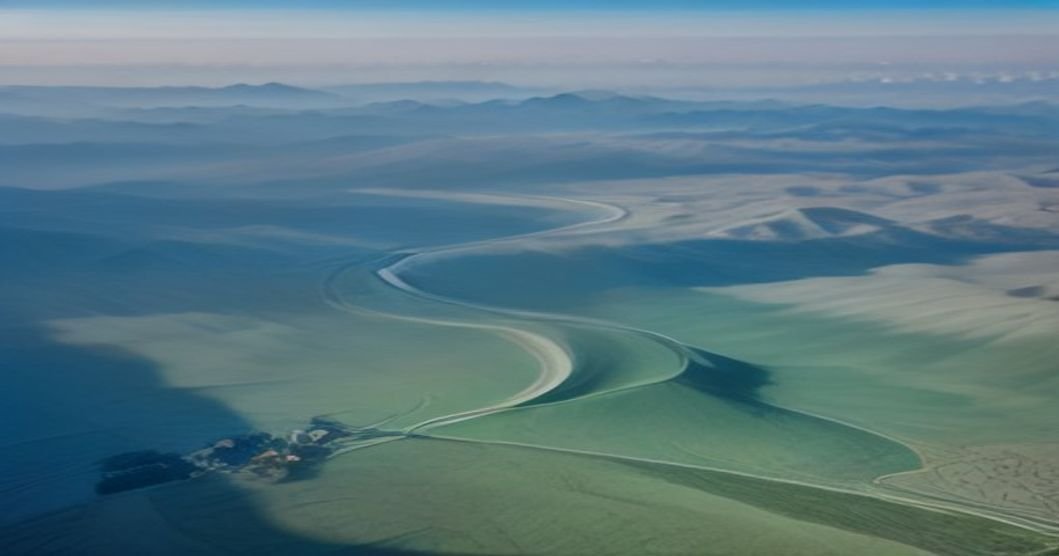
In China, the epicenter of this hardware infrastructure is not located in the traditional tech capitals along the coast. Instead, it sits on the windswept steppes of Inner Mongolia. Specifically, the city of Ulanqab—once a quiet transit node known primarily for agriculture and proximity to the Gobi Desert—has transformed into the unsung backbone of China’s artificial intelligence boom.
The Physics of AI: Why Geography Matters
To understand why Inner Mongolia has emerged as a cloud computing titan, one must first understand the physics of modern compute. Modern high-density AI server racks produce unprecedented levels of heat. Keeping tens of thousands of interlinked GPUs from overheating requires massive cooling infrastructure, which traditionally swallows up to 40% of a data center’s total energy consumption.
This reality has redefined the criteria for tech real estate. While software development can happen anywhere with a fiber-optic connection and a laptop, modern AI compute infrastructure demands three non-negotiable physical resources:
- Ultra-cheap, high-capacity electricity to power rows of power-hungry accelerator chips continuously.
- Vast, inexpensive land with low seismic activity to build horizontal, single-story mega-facilities.
- A cool ambient climate to enable free-air cooling, drastically slashing Power Usage Effectiveness (PUE) metrics.
Inner Mongolia checks every single box, offering a geographic profile that coastal tech hubs like Beijing, Shanghai, and Shenzhen simply cannot match.
The Three Pillars of the Inner Mongolian Data Empire
1. Abundant, Cheap Energy and the Renewable Transition
Data centers are fundamentally industrial energy sinks. In cities like Beijing or Shanghai, commercial electricity tariffs can severely strain operational margins, especially when scaled up to compute clusters running round-the-clock training cycles. Inner Mongolia, by contrast, boasts some of the lowest electricity rates in East Asia.
Historically anchored by vast coal reserves, the region is undergoing a massive green transformation. The high-altitude plateaus of Inner Mongolia offer some of the highest wind speeds and solar radiation levels in China. Massive wind farms and photovoltaic fields stretch across the grasslands, supplying a steady stream of clean energy directly to the data center parks. For tech giants aiming to hit carbon-neutrality targets while training power-intensive AI models, this mix of cheap grid power and abundant green energy is an irresistible value proposition.
2. Ambient Air Cooling and Expansive Land
Ulanqab experiences an average annual temperature of around 4.3°C (39.7°F). For nearly ten months of the year, data centers in the region can rely almost entirely on outdoor air intake to cool their server halls—a process known as "free cooling." By pulling cold Mongolian steppe air through filtered ventilation systems rather than running power-hungry mechanical chillers, operators can achieve PUE ratios as low as 1.15 to 1.2, placing them among the most energy-efficient facilities on Earth.
Furthermore, land acquisition costs in Inner Mongolia are a fraction of those in eastern provinces. Data centers require vast, unbroken plots of land. Flat, geologically stable prairie allows engineers to construct massive, single-story facilities optimized for high-density fiber routing and minimal spatial friction.
3. Low Latency: The Beijing Connection
Land and cheap power exist in many remote corners of the world, but most are too isolated to host latency-sensitive workloads. Inner Mongolia's decisive edge lies in its geographical proximity to Beijing. Located just 300 to 400 kilometers northwest of the capital, cities like Ulanqab and Hohhot sit right on the doorstep of China's primary political, academic, and technological node.
Through dedicated, high-capacity direct fiber-optic highways laid across the mountains, data transmission latency between Ulanqab and Beijing has been reduced to under 5 milliseconds. This near-instantaneous connection allows AI companies headquartered in Beijing to offload heavy training runs and real-time processing to Inner Mongolian server farms without experiencing noticeable network lag.
"The physical realm of artificial intelligence is governed by thermodynamics and logistics. Inner Mongolia offers the ideal intersection: cold weather to cool the silicon, vast lands to house the servers, and a direct pipeline into Beijing's technological nervous system."
Policy Alignment: The 'Eastern Data, Western Computing' Strategy
The transformation of Inner Mongolia is not merely an organic market shift; it is a core component of Beijing’s macro-economic blueprints. Launched formally by state planners, the "Eastern Data, Western Computing" (Dongshu Xisuan) initiative seeks to balance regional economic disparities and optimize resource distribution across the nation.
Under this national strategic initiative, China's densely populated, resource-scarce eastern megalopolises are encouraged to offload non-real-time compute tasks, big data storage, and heavy AI model pre-training to energy-rich western hubs. Inner Mongolia was designated as one of the key national computing hubs under this program, triggering a wave of state-backed infrastructure investments, tax incentives, and preferential land grants.
Tech Giants Build on the Grasslands
Today, driving through Ulanqab’s "Prairie Cloud Valley" reveals a landscape where traditional pastoral life meets cutting-edge computing infrastructure. Flocks of sheep graze within sight of sprawling, featureless grey complexes housing hundreds of thousands of high-performance servers.
Nearly every major player in China’s tech ecosystem has established a massive footprint in the region:
- Huawei: Has constructed massive cloud data centers in Ulanqab, serving as a primary node for its enterprise cloud and AI infrastructure.
- Alibaba and Tencent: Maintain large-scale server farms to support their respective cloud divisions, e-commerce networks, and generative AI research platforms.
- Baidu: Relies on Inner Mongolian infrastructure to train its Ernie Bot series and support its autonomous driving compute workloads.
- Telecom Carriers: China Mobile, China Telecom, and China Unicom have built state-of-the-art national data parks in the region, providing the foundational backbone for the country's 5G and AI networks.
Challenges on the Horizon
Despite its meteoric rise, Inner Mongolia's AI computing hub faces evolving challenges. As generative AI models grow exponentially larger, the energy demands are stretching even local grid capacities. Integrating highly variable renewable sources—like wind and solar—into a grid that demands 99.999% uptime for delicate server operations requires sophisticated battery storage and microgrid management infrastructure.
Furthermore, global hardware trade dynamics present ongoing hurdles. While the physical facilities are state-of-the-art, data center operators face continuous pressure to acquire and deploy high-performance AI accelerator chips. Maximizing the structural efficiency of facilities in Inner Mongolia becomes even more vital when hardware resources must be utilized with maximum operational precision.
Conclusion: The Future of Compute
The story of Inner Mongolia's transformation reveals a fundamental truth about the digital age: the virtual world is irrevocably anchored to the physical planet. The algorithms driving modern conversational agents, predictive analytics, and computer vision do not exist in a vacuum; they run on hardware powered by local rivers, winds, and coal beds.
As the global appetite for artificial intelligence continues to grow, places like Ulanqab demonstrate that the digital capital of the future may not be defined by software developers sitting in coastal high-rises, but by quiet, cold, land-rich outposts capable of sustaining the massive industrial heartbeat of the AI era.