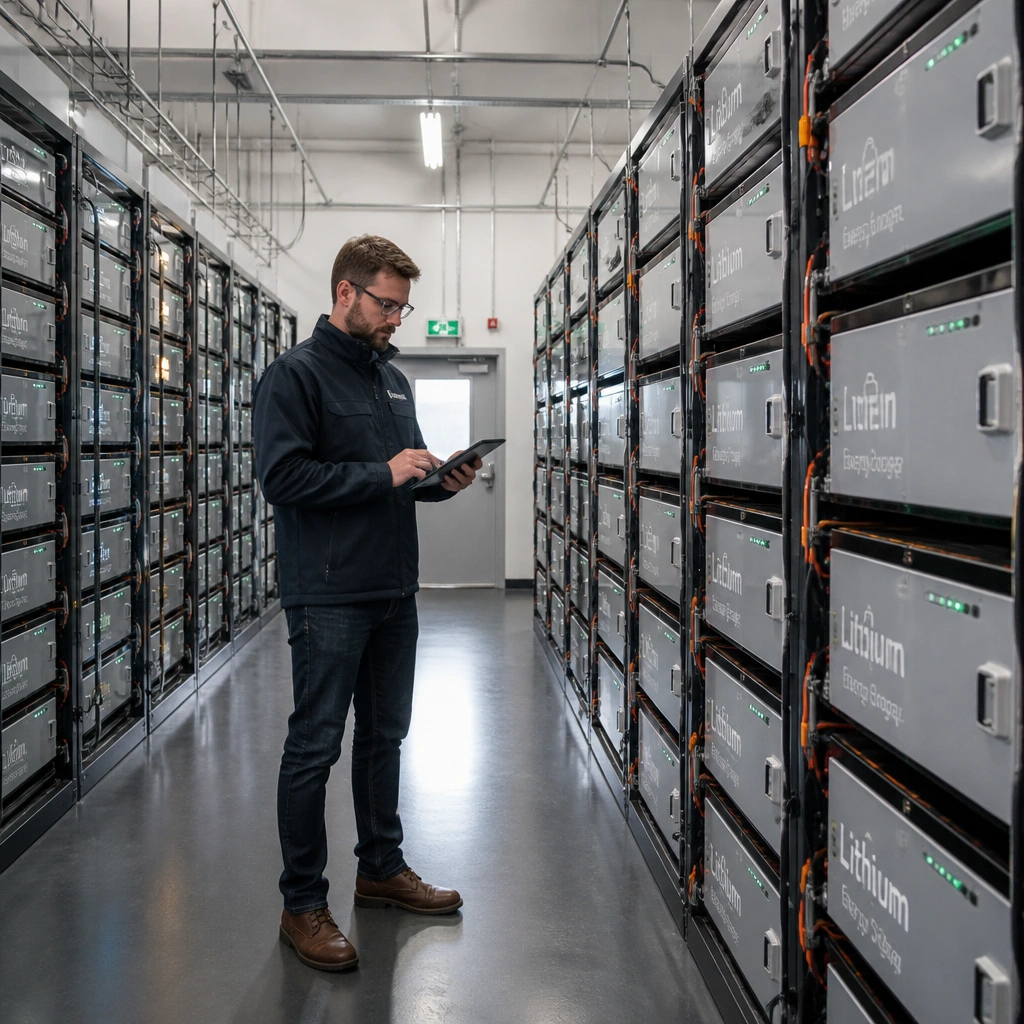
- Cost Crossover: Utility-scale battery storage has dropped below the capital expense of traditional natural gas peaker plants.
- Speed to Power: Data centers can deploy chemical storage in months rather than waiting years for gas pipeline interconnects.
- Carbon Economics: Investors increasingly penalize fossil-reliant infrastructure, altering long-term asset valuations.
Let us be completely candid: energy infrastructure is notoriously boring until everything breaks. For decades, fossil fuels held an absolute monopoly on heavy-duty backup generation. If you ran a server farm processing millions of queries per second, you bought a gas turbine. End of story. But markets move ruthlessly, quietly, and fast. Right now, on the balance sheets of major technology companies, a quiet upheaval is taking shape. Batteries are no longer just for electric cars or smoothing out rooftop solar spikes. They are cheaper, faster to deploy, and fundamentally superior to natural gas turbines for the digital economy's insatiable appetite.
The Math That Broke the Old Energy Playbook
Here is what nobody tells you about building modern computing infrastructure. The constraint is no longer silicon chips or software engineers. The bottleneck is the wall socket. When a massive hyperscale facility draws eighty megawatts of continuous power, traditional grid interconnect queues stretch out past half a decade. Gas turbines used to fill that gap. You burned hydrocarbons to keep servers humming during peak demand hours. Yet, lithium iron phosphate and alternative chemistries dropped in price by nearly ninety percent over the last decade. That deflationary curve changed the fundamental economics of grid stability.
When financial analysts run the total cost of ownership models today, gas turbines carry hidden burdens. You need pipeline permits. You need long-term fuel hedging contracts. You face escalating carbon pricing mechanisms across multiple jurisdictions. Batteries, by contrast, require flat concrete pads, inverters, and firmware. The upfront capital expenditure for a multi-hour battery installation frequently undercuts a custom-engineered natural gas turbine setup.
| Aspect | Traditional Approach | Modern Solution |
|---|---|---|
| Deployment Timeline | 3 to 7 Years | 6 to 12 Months |
| Fuel Risk | High Volatility | Zero Direct Fuel Risk |
| Emissions Profile | Significant CO2 Output | Zero Direct Emissions |
| Maintenance Overhead | Complex Mechanical Parts | Solid-State Software Monitoring |
Why Silicon Valleys New Neighbor Is a Gigawatt Battery
Look at the outskirts of major metropolitan technology hubs. You will not spot smokestacks billowing exhaust. You will see rows of pristine, climate-controlled steel containers humming quietly. These installations do more than provide emergency backup. They actively arbitrage energy prices. During low-demand overnight hours, they soak up cheap renewable generation. When local grid loads peak at two o'clock on a scorching afternoon, they discharge seamlessly. Natural gas turbines simply cannot match that operational flexibility without burning costly fuel at inefficient idle rates.
Never evaluate battery economics on hardware costs alone. Factor in the financial penalty of interconnection delays. A gas turbine sitting unpowered in a queue for five years carries a massive opportunity cost compared to a battery bank energized in twelve months.
This agility solves a massive crisis for infrastructure planners. Operators cannot afford downtime, nor can they wait for bureaucratic utility commissions to approve new fossil-fuel transmission lines. Batteries bypass the red tape because they integrate directly behind the meter or connect to microgrids with minimal friction.
The Reliability Myth Dies Hard
For years, legacy utility executives argued that chemical storage lacked the brute inertia of spinning metal turbines. They claimed only combustion engines could handle sudden, massive spikes in electrical draw. That argument withered under real-world operational stress. Modern grid-forming inverters respond in milliseconds. They stabilize frequency drops faster than any mechanical turbine ever could. When an artificial intelligence cluster initiates a heavy training run, drawing instantaneous gigawatts, chemical storage absorbs the shock instantly.
- Instantaneous Response: Solid-state power electronics react orders of magnitude faster than mechanical valves.
- Decentralized Resilience: Distributed storage arrays eliminate single points of catastrophic failure common in centralized pipelines.
- Software Upgrades: Energy capacity and discharge profiles optimize over time through firmware enhancements rather than hardware overhauls.
The Regulatory Cliff Approaching Fossil Fuels
Institutional capital votes with its wallet. Major pension funds and infrastructure investors face mounting pressure to decarbonize their portfolios. Financing a new natural gas turbine intended to operate for thirty years is fast becoming a liability. If carbon regulations tighten further—an inevitability in most developed markets—those gas assets risk becoming stranded. Batteries offer a clean exit ramp. When storage degradation finally occurs after fifteen years, the underlying minerals recycle cleanly into new packs, preserving asset value.
Frequently Asked Questions
Do batteries actually provide enough backup duration for a data center blackout?
Most facilities do not need batteries to run indefinitely on chemical storage alone. They need bridging power to either gracefully shut down critical workloads or transition smoothly to emergency generators. For multi-day outages, long-duration energy storage technologies are rapidly closing the gap, though standard lithium-ion setups easily handle typical grid blips and peak shaving requirements.
Are supply chain bottlenecks threatening battery cost advantages?
Supply chains remain dynamic, but diversification is happening rapidly. With alternative chemistries like sodium-ion entering commercial production and massive recycling plants coming online domestically, reliance on constrained materials is steadily dropping.