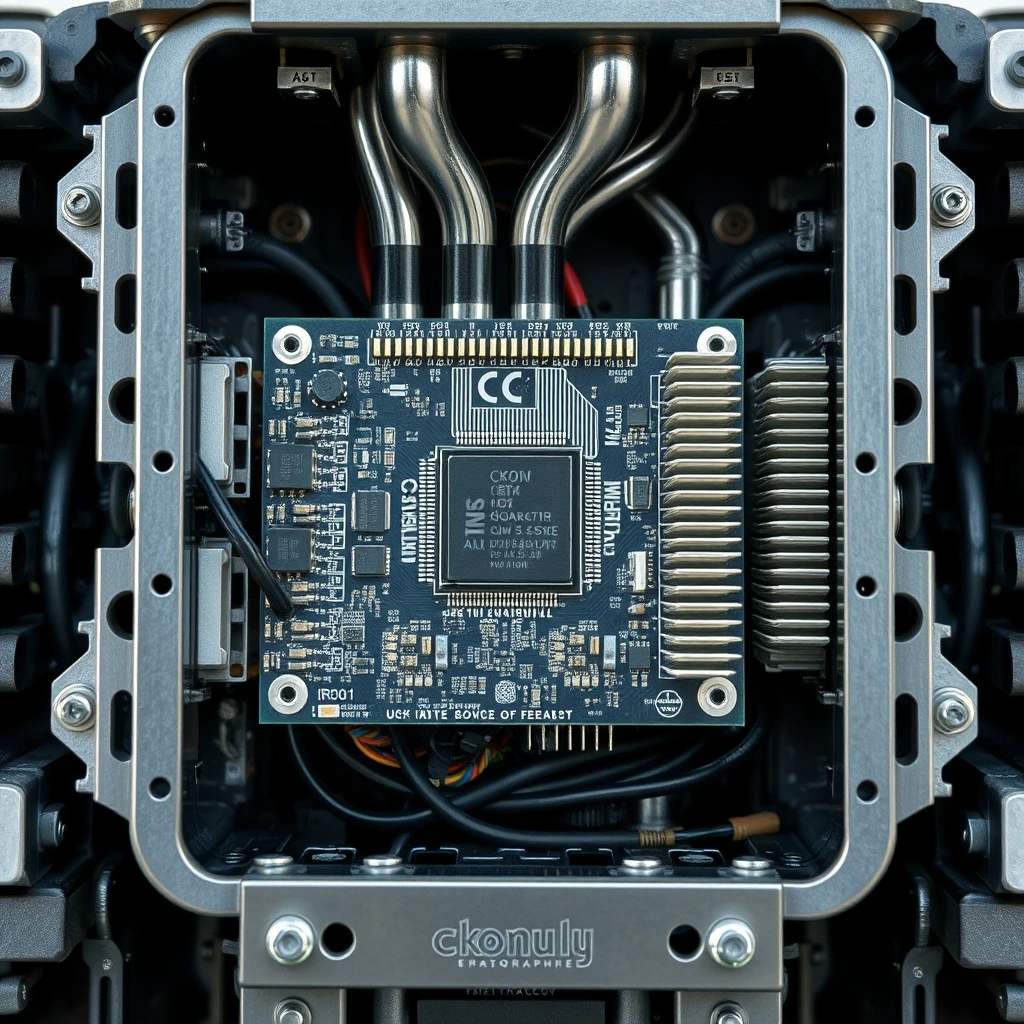
- Latency Kills: Round-trip cloud communication introduces fatal delays for physical machinery.
- Local Intelligence: Edge processing shifts decision-making directly onto the hardware chassis.
- Architecture Shift: Engineering teams must balance power constraints with heavy neural network demands.
Let us be candid: sending raw sensor data from a moving forklift or warehouse drone to a distant cloud server is a terrible engineering strategy. Networks drop, latency spikes, and physical objects crash. Yet, companies spent billions building centralized pipelines before realizing the physics simply do not work. The industry is waking up.
The Breaking Point of Centralized Cloud Pipelines
For years, the software playbook was simple. Build a thin client on the hardware side, stream everything to AWS or Azure, crunch the numbers, and send commands back. This works fine for web apps. For a mechanical arm handling fragile inventory at two meters per second, a fifty-millisecond network stutter causes catastrophic failure.
- Network jitter introduces unpredictable command delays.
- Cellular dead zones render remote-controlled fleets instantly blind.
- Bandwidth costs escalate exponentially when streaming high-definition LiDAR and camera feeds.
Shifting the Compute Burden to the Edge
Engineers are ripping out dumb controllers and replacing them with local processing units. We are talking about ruggedized system-on-chips mounted right next to the actuators. Instead of shipping terabytes of raw video across a facility, the machine runs object detection locally. It drops the bandwidth requirement down to tiny, discrete event logs.
This requires a radical mindset shift. Software teams accustomed to infinite cloud storage and memory now have to squeeze complex perception pipelines into tight thermal and power envelopes. Every watt burned by the GPU is a watt stolen from the battery life of the mobile robot.
Do not wait for hardware vendors to solve your thermal throttling issues. Design active thermal management directly into your chassis prototype from day one, or watch your edge processors clock down during peak summer warehouse operations.
Comparing Architectural Philosophies
| Aspect | Traditional Approach | Modern Solution |
|---|---|---|
| Data Routing | Stream raw sensor feeds to cloud | Process locally at the edge |
| Latency Profile | Variable (50ms to 2000ms+) | Deterministic (under 5ms) |
| Connectivity Risk | High (downtime causes failure) | Low (autonomous local operation) |
| Power Draw | Low on-device, high infrastructure | High on-device, localized power |
The Leadership Challenge: Hiring and Hardware Alignment
Business leaders often treat robotics like standard SaaS deployment. They expect continuous weekly updates with zero hardware friction. That expectation breaks down the moment a software bug bricks a three-hundred-thousand-dollar mobile manipulator sitting in a dusty distribution center three time zones away.
Engineering directors need to bridge the gap between firmware developers and application software engineers. If your teams operate in isolated silos, your edge deployment will stall. You need multidisciplinary talent capable of understanding both kernel-level drivers and modern computer vision models.
What Comes Next for Autonomous Engineering
The convergence of edge computing and autonomous machinery is just beginning. As specialized silicon improves, local inference will handle tasks we currently assume require server farms. The winners in this space will be the companies that treat hardware and software as a single, unified organism rather than separate silos.
Frequently Asked Questions
Why is cloud computing insufficient for modern robotics?
Physics dictates the limit. Speed-of-light propagation delays combined with wireless network congestion mean cloud round-trips take too long for high-speed physical reactions.
How do we handle software updates safely at the edge?
Implement robust A/B partition flashing with automatic fallback triggers. If a new edge binary fails internal health checks, the hardware must roll back to the previous stable state independently.