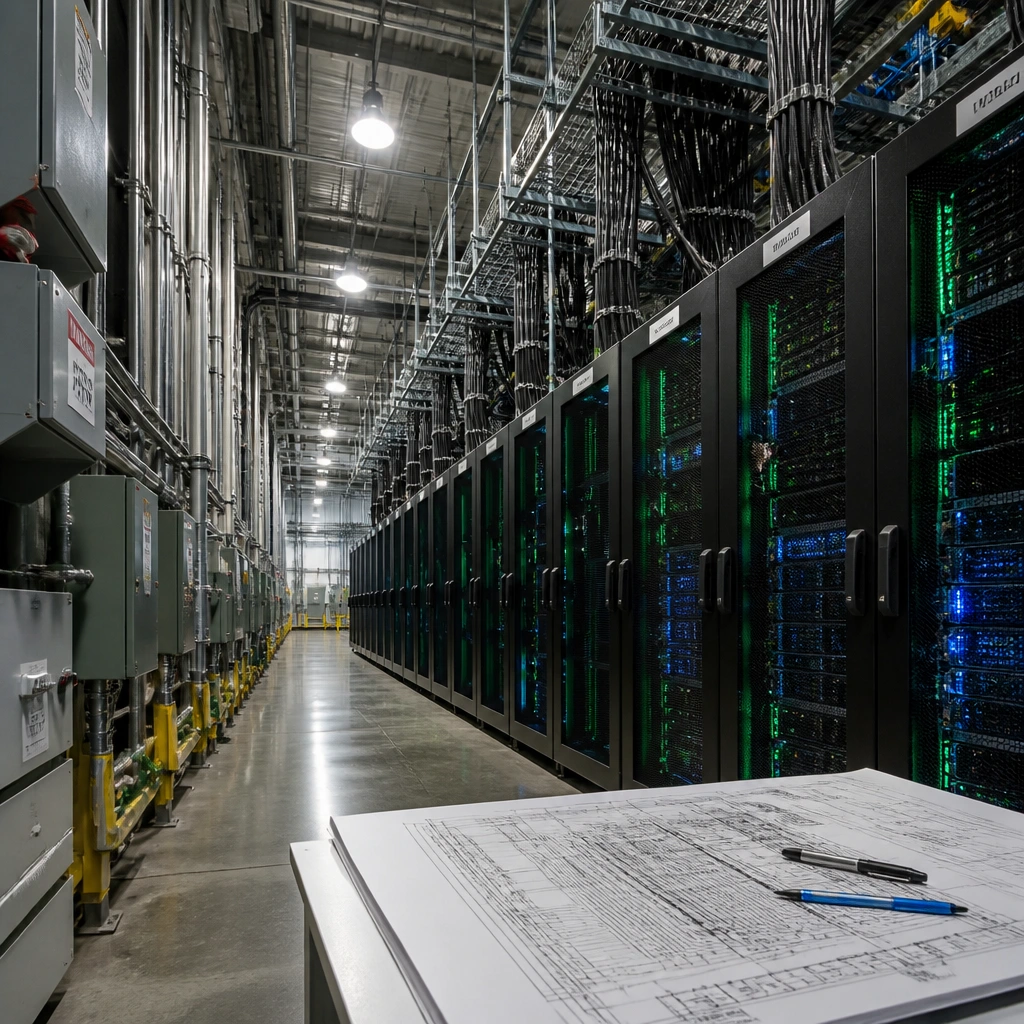
- The Deal: Crusoe quietly walked away from a massive $1.25 billion agreement aimed at deploying Boom turbines for data centers.
- The Power Crunch: Generative AI workloads demand uninterrupted, massive electricity scales that traditional wind hardware struggles to guarantee consistently.
- The Pivot: Industry players are rapidly shifting back toward natural gas, geothermal, and nuclear options to keep server racks humming.
Here is what nobody tells you about the grand convergence of artificial intelligence and green energy: the math simply stopped working. When Crusoe decided to drop a staggering $1.25 billion turbine arrangement, it sent shockwaves through the infrastructure market. Let us be candid. Building massive server complexes is easy compared to finding reliable gigawatts of electricity. When the physics of wind generation clashed with the ruthless uptime demands of modern GPU clusters, something had to snap.
The High Stakes of Powering the AI Boom
Compute clusters eat electricity. They feast on it 24 hours a day, seven days a week, without a single polite pause. Wind turbines, by their very nature, refuse to cooperate with this relentless schedule. They spin when the weather behaves. They sit idle during a calm summer afternoon. For a standard electrical grid, that intermittent output is manageable through storage and balancing. For an artificial intelligence data center training billion-parameter models, a drop in voltage means catastrophic training interruptions.
Crusoe built its reputation on clever energy arbitrage, capturing flared natural gas in remote oil fields to run modular data centers. That approach worked brilliantly for localized compute tasks. Scaling up to utility-sized AI complexes required a different beast entirely. The Boom turbine initiative was supposed to bridge that gap. Instead, the sheer volatility of deployment timelines and capital costs proved to be an insurmountable hurdle.
When Ambition Collides with Industrial Reality
Financing multi-billion-dollar energy infrastructure requires predictable returns. Heavy industrial manufacturing moves at a glacial pace compared to the hyperactive cycle of silicon chips. While graphics processing units evolve every twelve months, large-scale turbine manufacturing deals take years to materialize, permit, and construct.
- Supply Chain Bottlenecks: Specialized materials and large-scale casting components remain chronically backlogged across global markets.
- Interconnection Queues: Transmission lines are jammed, leaving green energy projects stranded miles away from urban data hubs.
- Capital Efficiency: Spending billions on hardware that suffers from low capacity factors makes it nearly impossible to service debt.
The Pivot Back to Baseload Power
Reality has a stubborn way of correcting market hype. As projects like this fall apart, data center operators are quietly crawling back to reliable, carbon-heavy baseload sources. Natural gas is having an unexpected renaissance. Nuclear energy startups are suddenly finding eager venture capitalists willing to fund experimental reactors. Nobody wants to admit it out loud, but carbon reduction goals are taking a back seat to raw uptime requirements.
Let us look at the operational trade-offs driving these decisions right now:
| Aspect | Traditional Approach | Modern Solution |
|---|---|---|
| Primary Power Source | Intermittent Wind & Solar | Baseload Gas, Nuclear, Geothermal |
| Uptime Guarantee | Weather Dependent (30-40%) | Continuous Basemload (90%+) |
| Deployment Speed | Multi-year Permitting Nightmares | Colocated On-Site Generation |
Do not buy into corporate press releases promising entirely green-powered AI clusters without checking their power purchase agreements for backup fossil fuel dependencies. True off-grid 24/7 zero-carbon compute remains an unsolved engineering puzzle.
What This Means for the Rest of the Market
The collapse of this specific turbine pact signals a broader cooling-off period for speculative green infrastructure deals. Venture firms and private equity groups are tightening their purse strings. They want proof of cash flow, not just ambitious environmental pledges that look great on a slide deck.
Expect to see more infrastructure firms quietly cancel partnerships that rely on unproven or overly complex energy setups. The race for computing supremacy leaves zero room for trial-and-error hardware experiments.
Frequently Asked Questions
Why did Crusoe choose Boom turbines initially?
The partnership aimed to harness localized wind resources to power remote, modular data centers without overwhelming traditional regional power grids.
Are other tech companies abandoning green energy goals?
Not entirely, but many are delaying pure green targets in favor of hybrid approaches that mix renewable energy with reliable natural gas or nuclear power to guarantee continuous uptime.
How does this affect the future of AI data center construction?
Developers will likely build closer to existing nuclear plants and natural gas pipelines rather than relying on remote, utility-scale wind farms that require extensive transmission lines.