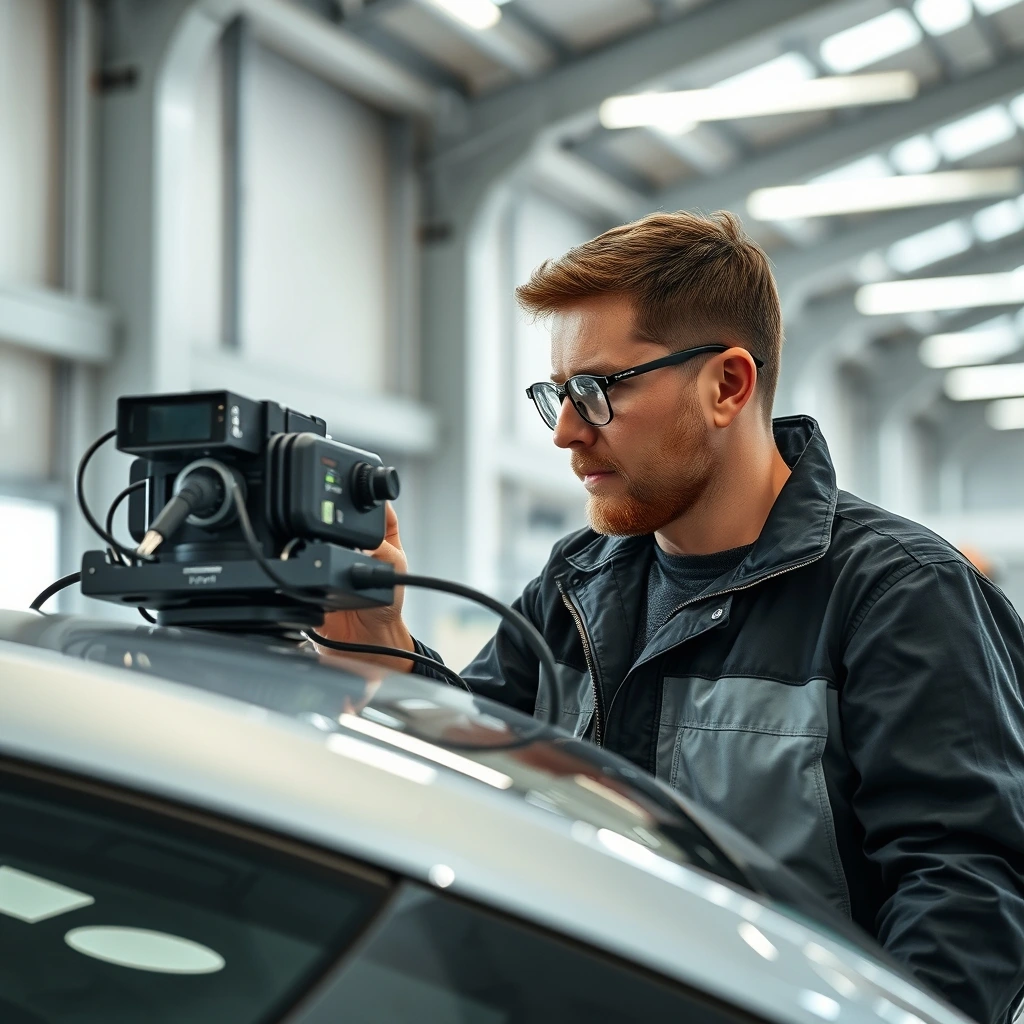
- The Alliance: inDrive pairs its massive emerging market footprint with Pony.ai autonomy and Nvidia hardware.
- The Timeline: Real-world testing is slated for 2027, targeting specific urban corridors in Central Asia.
- The Strategy: Bypassing saturated Western markets to crack autonomy where infrastructure and pricing models differ wildly.
Silicon Valley loves to preach that autonomy is a solved problem, provided you have pristine lane markings, endless mapping budgets, and San Francisco's weather. Let's be candid: that is absolute nonsense. Real cities are chaotic, messy, and entirely unpredictable. That exact reality is why inDrive's quiet pivot toward autonomous vehicle trials in Central Asia by 2027 deserves your undivided attention. They are not copying the Uber playbook. They are building an entirely different machine.
The Anatomy of an Unlikely Trio
Corporate partnerships usually happen in sterile boardrooms over stale coffee. This specific triangle of companies looks different. You have inDrive, a company born in Yakutsk that built its empire on peer-to-peer pricing and aggressive expansion across developing markets. Then you have Pony.ai, an autonomous driving veteran with heavy miles logged in dense Asian mega-cities. Finally, Nvidia brings the raw compute muscle required to process millions of sensory inputs per second.
- inDrive: Provides local regulatory navigation, user demand data, and massive market penetration in secondary cities.
- Pony.ai: Supplies the autonomous stack, perception software, and decision-making architecture.
- Nvidia: Delivers the high-performance hardware and simulation environments needed to train neural networks.
Why Central Asia? Simple. The regulatory friction is lower, municipal governments are eager to modernize transport grids, and labor costs are shifting. Western players are burning billions trying to squeeze profits out of Manhattan and Phoenix. This trio is looking straight at Almaty, Tashkent, and Astana.
Mapping the 2027 Finish Line
Three years sounds like a comfortable cushion. In the world of self-driving hardware integration, it is tomorrow morning. Building a system that handles snow, ice, aggressive lane-splitters, and unmapped dirt roads is not for the faint of heart. Weather variables in the region swing from blistering summer heat to brutal winter freezes. Sensors freeze. Lidar gets blinded by dust storms. Cameras lose tracking in heavy snowfall.
If they hit this target, it will not be because the technology is flawless. It will be because they trained the software to handle ambiguity. Western autonomous firms often stall out when faced with a situation not covered in their training manuals. Emerging market driving culture forces algorithms to become pragmatic rather than rigid.
Do not expect empty robotaxis on every corner by New Year's Day 2027. Initial tests will involve safety drivers behind the wheel, geofenced routes around financial districts, and strictly controlled weather conditions.
The Economics Nobody Is Talking About
Autonomous vehicle economics are brutal. Buying an off-the-shelf vehicle, decking it out with expensive sensors, and maintaining local depots costs a fortune. Traditional ride-hailing relies on independent contractors supplying their own depreciation. Robotaxis invert that model completely. Capital expenditure skyrockets.
| Aspect | Traditional Approach | Modern Solution |
|---|---|---|
| Vehicle Ownership | Driver-owned vehicles | Fleet-owned autonomous pods |
| Cost Structure | Variable commission splits | High upfront CapEx, low labor OpEx |
| Expansion Speed | Viral driver sign-ups | Slow geographic geofencing |
| Maintenance | Third-party repair shops | Centralized tech hubs |
inDrive's superpower has always been keeping overhead remarkably lean. Transitioning into fleet management requires a massive shift in corporate DNA. They must prove that software-driven cars can operate profitably in regions with lower average fare prices than London or San Francisco.
What Happens When the Software Blinks?
Every autonomous vehicle project hits a wall. Literally or figuratively. Edge cases are the bane of every robotics engineer. A stray animal on a highway, a sudden road closure with hand-drawn signs, or an aggressive traffic officer waving cars through a broken red light will test the Pony.ai system to its limits.
- Edge Case Handling: Requiring human remote assistance when the vehicle hits an unsolvable logic puzzle.
- Infrastructure Gaps: Navigating areas with poor signage or erratic street lighting.
- Public Trust: Convincing skeptical passengers to step into a driverless cabin for the first time.
Central Asian commuters are pragmatic. They care about price and punctuality above all else. If an autonomous inDrive can get them across town cheaper and faster than a human driver, adoption will happen faster than skeptics expect.
Frequently Asked Questions
Why did inDrive choose Pony.ai instead of building their own tech?
Building autonomous driving stacks from scratch takes billions of dollars and decades of specialized research. Partnering lets inDrive focus on what they do best: logistics, pricing algorithms, and market expansion.
Are these robotaxis going to replace human drivers completely by 2027?
Not even close. The 2027 tests are highly restricted pilot programs. Human drivers will remain the backbone of the platform for many years to come.
How does Nvidia fit into this partnership?
Nvidia provides the underlying silicon processors and simulation platforms that allow the self-driving software to practice driving millions of virtual miles before hitting real asphalt.