- Point 1: Proprietary software moats are shrinking fast.
- Point 2: Distributed computing solves the GPU shortage headache.
- Point 3: Emerging standards will dictate who survives the next infrastructure shift.
Let us be candid: the corporate narrative around artificial intelligence is falling apart. For years, massive technology conglomerates whispered that only they had the capital, the raw compute, and the secret sauce to build world-class models. They lied. Today, a rogue developer in a basement can download weights that rival corporate flagships, hook them into a decentralized cluster, and run inference for pennies. Welcome to the wild west of open-source artificial intelligence and distributed infrastructure.
The Myth of the Proprietary Moat
For a long time, buying into a closed ecosystem felt safe. You paid the API fee, you accepted the rate limits, and you trusted the vendor. That trust is evaporating. When open-weights models from independent labs began matching closed systems on standard benchmarks, the economics shifted overnight. Organizations realized they were paying a massive tax for convenience.
Running your own models locally or on rented clusters changes the risk equation entirely. Data privacy becomes absolute. Customization stops being a gated feature and becomes a core capability. Yet, transitioning away from locked-in software requires rethinking your entire operational stack. You cannot simply drop an open-source model into a legacy pipeline and hope for the best.
Distributed Computing: Wiring the Global Grid
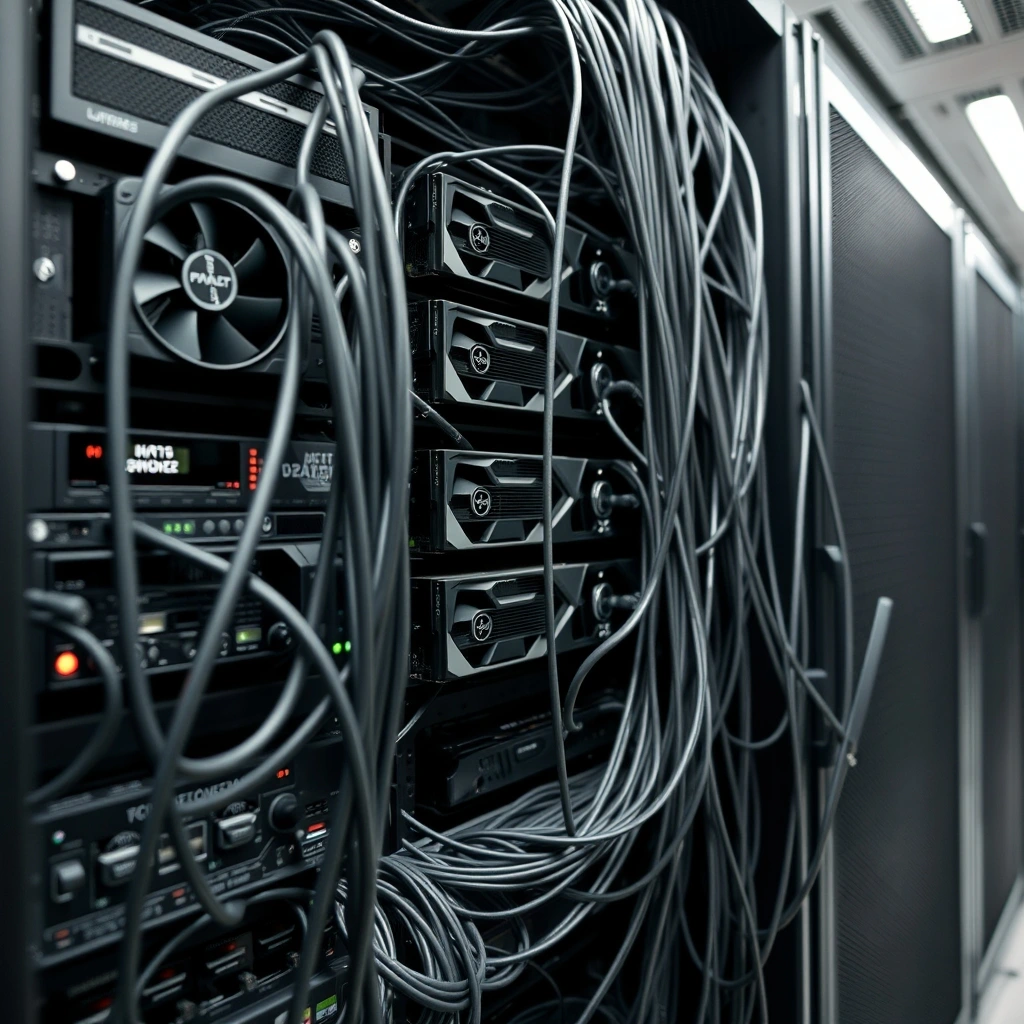
Compute is the new oil, and silicon is running scarce. Buying thousands of enterprise-grade accelerators demands budgets reserved for sovereign nations. Enter distributed computing platforms. Instead of relying on a single monolithic data center, modern workflows shard training and inference across geographically dispersed nodes.
This is not an easy engineering feat. Latency kills productivity. Network drops corrupt training runs. However, orchestration tools have matured rapidly, turning volatile decentralized hardware into cohesive processing units. If your infrastructure cannot handle spot instances spread across multiple cloud providers, you are burning capital.
| Aspect | Traditional Approach | Modern Solution |
|---|---|---|
| Infrastructure | Monolithic Cloud GPUs | Distributed Heterogeneous Clusters |
| Model Weights | Hidden Behind Proprietary APIs | Fully Open Source & Self-Hosted |
| Cost Structure | Unpredictable Usage-Based Billing | Fixed Hardware + Optimized Compute |
The Standardization Battleground
Chaos is great for innovation, terrible for production. Right now, every framework introduces its own format, its own runtime, and its own quirks. We are watching a brutal standards war play out in real-time. Without universal protocols for model interchange and distributed communication, engineers spend half their sprints writing custom glue code.
Open standards are emerging from the grassroots, not from industry cartels. Projects focusing on unified execution graphs and hardware-agnostic runtimes are gaining traction. If these standards stick, switching hardware vendors will become as simple as swapping a graphics card in a desktop PC.
Do not build your own orchestration layer from scratch. Adopt mature open-source schedulers that already handle network partitions gracefully, because your nodes will drop offline at the worst possible moment.
Security and Governance in the Open Era
When anyone can modify a model's weights, the attack surface shifts. Poisoned open-source repositories and subtle supply chain vulnerabilities are the new zero-day exploits. You cannot blindly trust a checkpoint downloaded from a public hub.
Organizations need rigorous validation pipelines. Every downloaded model must undergo strict behavioral testing and cryptographic verification before touching production data. The freedom of open source demands disciplined internal oversight.
Frequently Asked Questions
Can small teams really compete with tech giants using open-source models?
Yes, because you do not need to train foundational models from scratch. Fine-tuning existing open-weights models requires a fraction of the compute and data, yielding domain-specific performance that often beats general-purpose corporate APIs.
Is distributed computing reliable enough for mission-critical applications?
It can be, provided you implement aggressive fault tolerance and automated failovers. Modern orchestration frameworks automatically migrate workloads when a node fails, minimizing downtime.