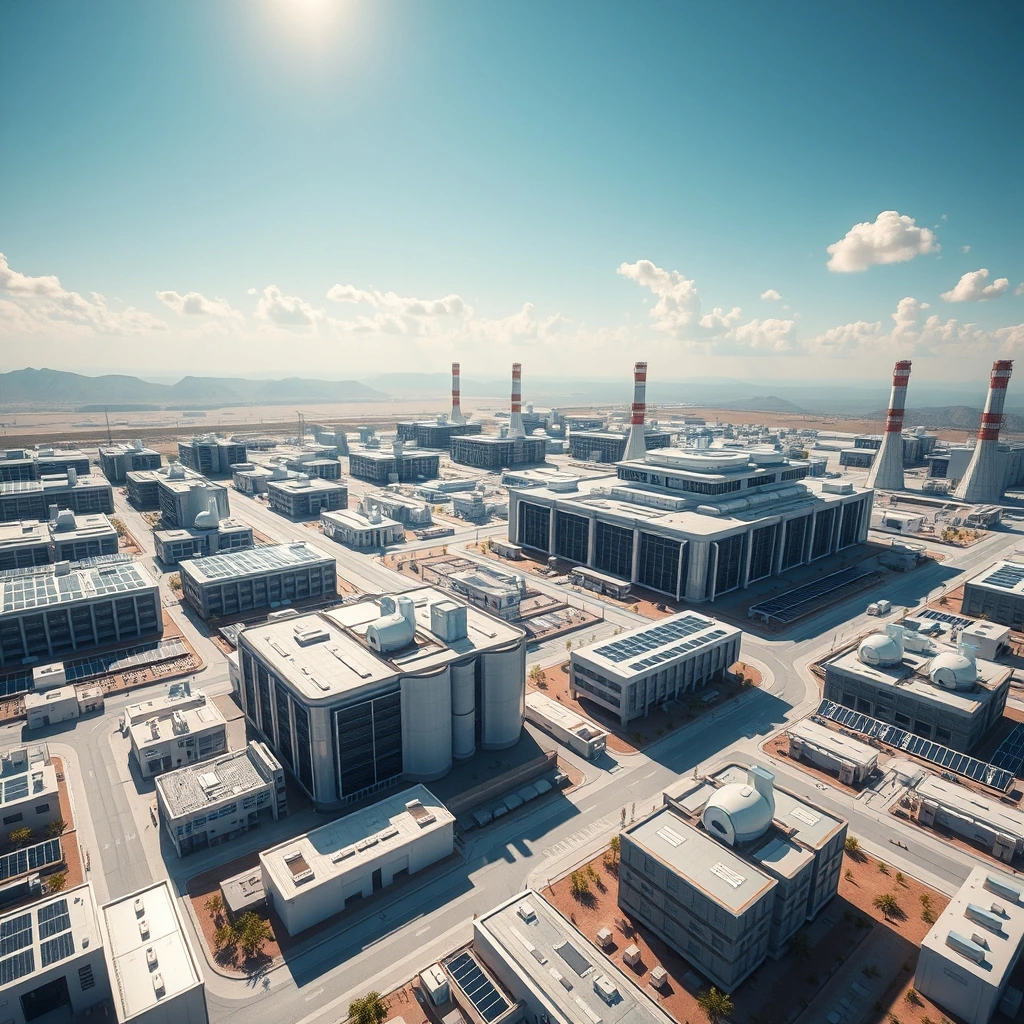
- Name Change: OpenAI is shifting terminology from industrial data centers to academic-style 'AI compute campuses'.
- Energy Reality: These sites require massive power generation, rivaling small cities.
- Public Relations: The rebrand attempts to soften local opposition to massive industrial sprawl.
We need to talk about what happens when server racks start needing their own zip codes. For years, tech giants hid their processing power inside drab, windowless warehouses tucked away in quiet industrial parks. Now, everything is changing. OpenAI is reportedly eyeing a massive rebranding effort, trading the mundane term 'data center' for something that sounds decidedly more collegiate: 'AI compute campuses'. Let's be candid: a server by any other name still runs hot, but the psychology behind this shift reveals how the industry plans to win over skeptical communities.
The Psychology Behind the Architectural Rebrand
Words shape reality. When you tell a town council that you are building a data center, they picture whirring fans, blinking lights, and zero local jobs. It sounds heavy. It sounds intrusive. Swap that label out for 'campus', and suddenly the mental image shifts. People think of leafy quads, intellectual inquiry, and high-tech progress. OpenAI knows the optics of AI expansion are getting rocky. Power grids are straining. Water usage for cooling is skyrocketing. By styling these massive facilities as campuses, the company is attempting to frame heavy industrial manufacturing as centers of modern learning and scientific discovery.
Strip away the marketing veneer, and you find facilities designed to house hundreds of thousands of specialized accelerators running 24 hours a day. They draw staggering amounts of electricity. They require dedicated substations. Yet, branding them as campuses hints at a broader ambition—perhaps housing on-site research teams, green energy microgrids, and educational partnerships with local universities.
What Actually Goes Inside an AI Compute Campus?
You might picture rows of sleek servers blinking in unison. The reality is far more industrial and heavy-duty. Liquid cooling tanks, massive backup diesel generators, and high-voltage transmission lines dominate the footprint. These sites are not standard cloud hosting facilities. They are specialized training grounds for foundational models.
- High-Density Liquid Cooling: Traditional air conditioning simply cannot handle the heat generated by modern AI chips.
- Direct Power Generation: Many planned sites are exploring dedicated natural gas or nuclear power plants to bypass overburdened local grids.
- Advanced Fiber Backbones: Ultra-low latency networking gear connects thousands of nodes together to act as a single, unified supercomputer.
| Aspect | Traditional Approach | Modern Solution |
|---|---|---|
| Cooling | Standard HVAC air cooling | Direct-to-chip liquid loops |
| Power Source | Municipal electrical grid | Dedicated microgrids and direct generation |
| Location | Suburban industrial parks | Expansive rural plots with massive land buffers |
The Local Resistance Factor
Communities are pushing back. Across the country, residents are showing up to zoning board meetings with hard questions about noise pollution, water drain, and power reliability. Nobody wants their electric bill to spike so a distant tech company can train a better chatbot. This is where the campus concept gets deployed as a strategic tool.
By pitching these developments as collaborative hubs, companies can promise local workforce training programs, community investments, and tax contributions that sound less like an extraction of local resources and more like a regional partnership. Whether local populations buy into the narrative remains an open question.
Do not let corporate nomenclature distract you from zoning realities. When evaluating local infrastructure proposals, always look past the marketing deck and demand transparent metrics on water consumption and grid impact.
The Economics of Hyperscale Infrastructure
Building these facilities requires capital on a scale previously reserved for national defense projects. OpenAI and its partners are talking about investments running into the hundreds of billions of dollars. At that price tag, public relations and community management are not afterthoughts. They are risk mitigation strategies. If a single town blocks a project over noise or power concerns, the timeline slips by years. Rebranding the hardware footprint is an attempt to grease the wheels of bureaucracy.
Frequently Asked Questions
Why change the name from data center to campus?
The term 'data center' carries connotations of heavy industrial noise and minimal local benefit. 'Campus' softens the image, aligning the facility with education, research, and community integration.
Are these new facilities actually different from traditional servers?
Yes. They require significantly higher power density, advanced liquid cooling infrastructure, and direct access to heavy electrical generation sources.