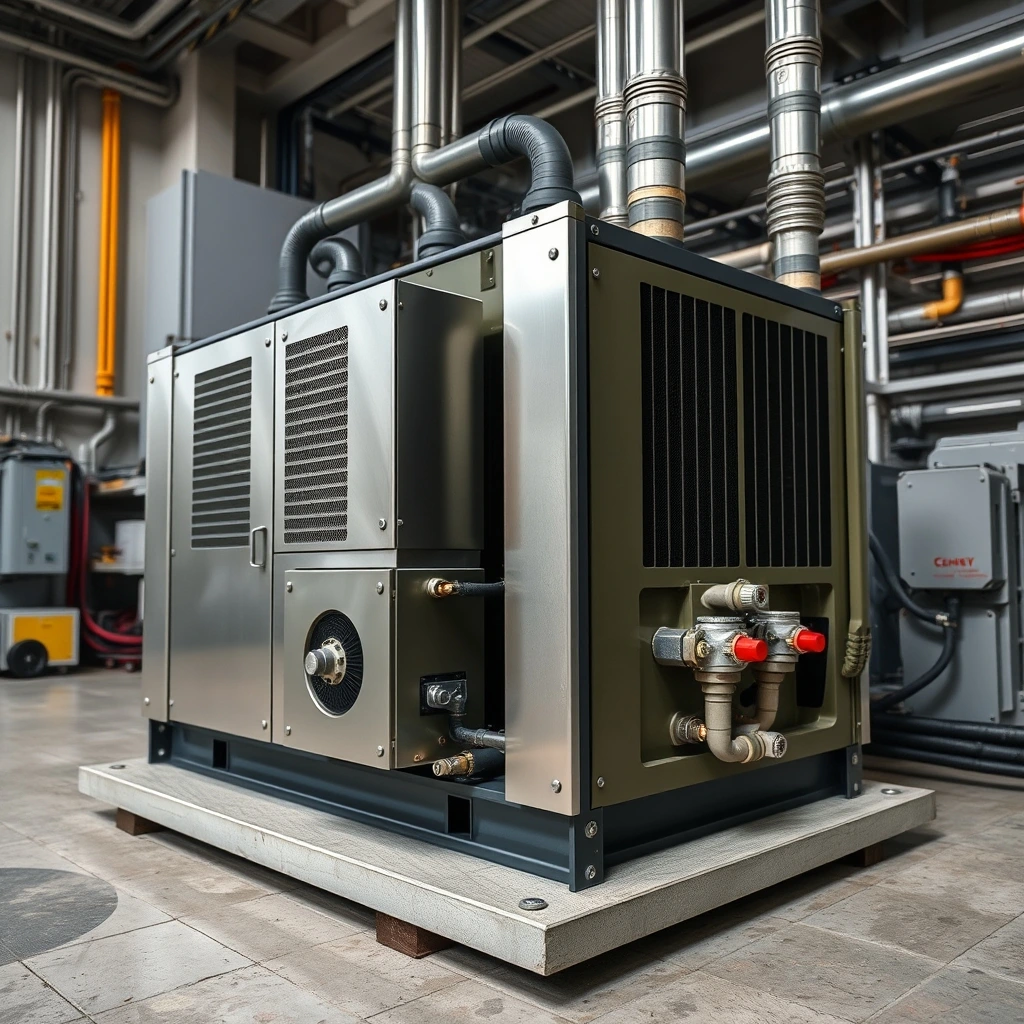
- The Shared Bottleneck: AI clusters and military platforms face identical constraints: massive electrical demand, fragile distribution, and loud, inefficient legacy generators.
- Solid Oxide Revival: Petra Power redesigns solid oxide fuel cells (SOFCs) to survive vibration and thermal cycling, sidestepping historical durability traps.
- Drop-in Fuel Flexibility: The hardware processes existing logistics fuels—diesel, propane, natural gas—bypassing the need for speculative green hydrogen infrastructure.
- Edge Resilience: Off-grid data hubs and forward operating bases gain continuous baseload power without massive battery footprints.
Here is what nobody tells you about the artificial intelligence boom: the code does not matter if the copper melts. Power grids across northern Virginia, Dublin, and Singapore are maxed out. At the exact same time, thousands of miles away in tactical testing grounds, armored fighting vehicles sit stalled because their electronics suck down more juice than their diesel engines can crank out during idle. It is an odd pairing, but data centers and combat vehicles share the exact same crisis. Enter Petra Power.
The Brutal Physics of Modern Compute and Combat
Silicon Valley likes to pretend software floats on air. Defense strategists like to talk about autonomous swarms and laser defense as if energy is free. Reality hits hard at the busbar.
A modern GPU rack pulls north of 40 kilowatts. Hyperscalers need hundreds of megawatts just to bring a single campus online, waiting up to seven years for utility interconnects. Meanwhile, military vehicles have turned into rolling data centers. Jamming pods, active protection systems, radar suites, and secure tactical communications demand staggering electrical loads. When an armored vehicle runs silent watch—surveilling without running its main engine—lead-acid and lithium batteries drain in a couple of hours. Firing up a massive multi-liter combat engine just to power an infrared sensor wastes fuel, radiates an unmistakable heat signature, and paints a bullseye on the crew.
Both sectors hit a hard wall. Traditional diesel gensets are loud, maintenance-heavy, and thermally obvious. Chemical batteries are too heavy and run out of juice fast. The search for compact, dense, dispatchable energy leads straight back to an old, finicky technology: solid oxide fuel cells.
Cracking the Solid Oxide Curse
Solid oxide fuel cells sound like magic on paper. They turn chemical fuel directly into electricity via electrochemical reactions, skipping combustion entirely. That means zero mechanical vibration, minimal noise, and thermal efficiencies that make standard gas turbines look prehistoric.
So why hasn't the entire world adopted them?
Historically, SOFCs were brittle divas. They run hot—often between 600 and 800 degrees Celsius. Ceramic components crack under thermal shock. Turn them on and off too quickly, and the stack shatters. Put them on the back of a truck driving over rutted dirt, and the ceramic layers turn to powder. For decades, they remained bolted to the floors of pristine, climate-controlled utility basements.
Petra Power took an axe to that reputation. Spun out of advanced metallurgy and additive manufacturing research, the team re-engineered cell architecture to withstand mechanical shock and aggressive thermal cycling. Instead of delicate, massive ceramic wafers, they use robust metal-supported designs. These cells can heat up quickly, cool down without self-destructing, and tolerate the brutal vibrations of tracked vehicles.
When evaluating alternative power startups, ignore claims about pure hydrogen. Green hydrogen logistics remain non-existent outside specialized industrial corridors. The real winners design stacks capable of reforming field fuels like standard diesel, natural gas, or propane inside the unit.
Fuel Agnosticism as an Operational Lifeline
Clean-tech startups love hyping pure green hydrogen. Military brass and data center site managers live in the real world.
You cannot deliver compressed hydrogen to an austere tactical outpost under fire. You cannot run a 100-megawatt computing facility on hydrogen pipelines that do not exist. Petra Power engineered its reforming systems to run on logistics fuels already flowing through supply chains: pipeline natural gas, commercial propane, and high-sulfur diesel.
Their fuel reformer converts hydrocarbons into hydrogen and carbon monoxide internally. The SOFC stack consumes both, leaving far lower emissions than an internal combustion engine while stripping away the carbon penalty of grid coal and open flaring. For a server farm developer waiting on a delayed substation, this means ordering fuel via truck or tapping standard commercial gas lines to spin up compute clusters years ahead of utility timelines.
| Operating Metric | Diesel Generator | Lithium-Ion BESS | Petra Power SOFC |
|---|---|---|---|
| Primary Fuel | Ultra-low sulfur diesel | Stored grid electricity | Natural Gas, Diesel, Propane |
| Acoustic Footprint | High (85-105 dB at 7m) | Silent | Near-silent (cooling fans only) |
| Continuous Run Time | Limited by fuel tank size | 2 to 6 hours max | Continuous (fuel pipeline/tank) |
| Maintenance Cycles | Frequent (oil, filters, belts) | Low (cell degradation checks) | Minimal (solid-state balance of plant) |
| Efficiency Under Partial Load | Poor (wet stacking risks) | High discharge efficiency | Sustained high efficiency |
The Dual-Market Playbook
Building specialized hardware for only the Pentagon is usually a death sentence for tech startups. The procurement cycles take decades. The testing requirements burn capital like jet fuel. Conversely, building solely for commercial data centers leaves hardware startups vulnerable to the whims of hyperscaler purchasing committees who squeeze margins down to zero.
By straddling defense and computing, Petra Power builds a hedge. Military contracts provide non-dilutive development funding, rigorous testing protocols, and mission-critical validation under worst-case operating environments. If a power module can survive a mortar-tested tactical carrier bouncing through desert washouts, operating inside an air-conditioned server corridor in Texas is an absolute breeze.
Data centers offer the volume. The defense sector provides the margin and testing crucible. That combination attracts serious capital while ensuring the engineering team solves real, mechanical headaches rather than chasing theoretical academic benchmarks.
The Bottom Line: Hard Tech at the Edge
The energy transition is not just about utility wind farms and rooftop solar arrays. Those assets are intermittent, weather-dependent, and geographically tethered to fragile transmission grids. What the next decade demands is dense, dispatchable, rugged baseload power delivered exactly where the work happens.
Whether that work is matrix multiplication on an H100 cluster or electronic surveillance on a contested border, power density dictates who wins. Petra Power is proving that modern solid oxide systems are no longer delicate laboratory experiments. They are workhorses built for dirty, power-starved edges.
Frequently Asked Questions
How does Petra Power prevent solid oxide fuel cells from cracking during rapid startup?
Traditional SOFCs use thick ceramic support structures that fail under thermal expansion. Petra Power utilizes metal-supported cell architectures. By depositing thin ceramic functional layers onto rugged metallic substrates, the stack accommodates thermal expansion far better, reducing startup times from hours to minutes without fracturing materials.
Can these fuel cell systems run on clean hydrogen in the future?
Yes. Fuel-flexible solid oxide stacks handle pure hydrogen directly without internal reforming. While the hardware runs today on diesel, propane, and pipeline natural gas, operators can switch fuels as hydrogen infrastructure matures without swapping out the core stack.
Why choose SOFCs over microturbines for off-grid data centers?
Microturbines operate via high-speed rotating parts, which produce high acoustic noise, require precision bearings, and lose substantial efficiency when scaled down below megawatt sizes. SOFCs generate electricity through electrochemical reactions with no large moving parts, yielding significantly higher electrical efficiency (up to 60%) at modular, smaller footprints.