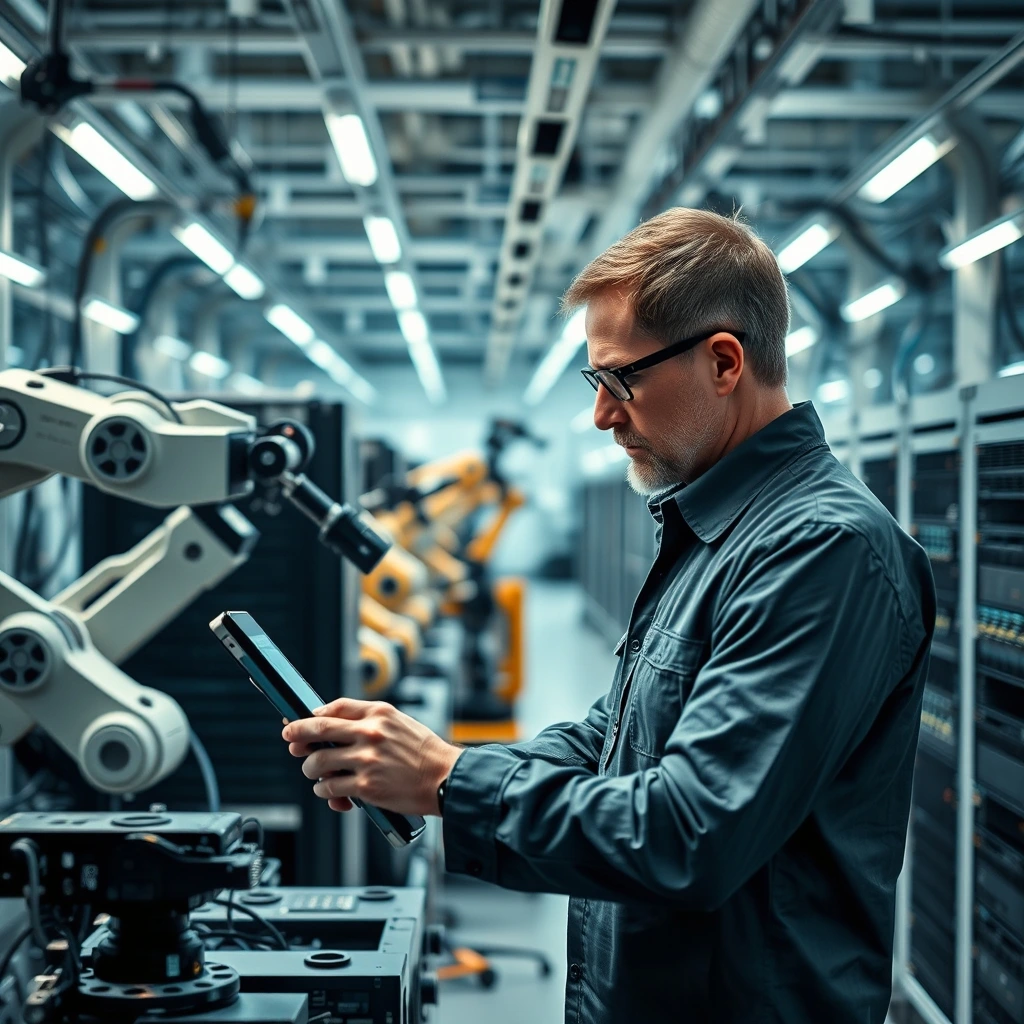
- Massive Capital Injection: Mecka AI secures $60 million in a fresh funding round spearheaded by Sequoia.
- The Data Bottleneck: Hardware is cheap, but high-quality training data for physical robotics remains scarce.
- Enterprise Adoption: Logistics and manufacturing firms are desperate for adaptable automation solutions.
Let's be candid: building physical robots has never been the hard part. The real engineering nightmare lies in teaching those machines what to do once they enter the messy, unpredictable real world. That exact friction point explains why Sequoia just handed a staggering $60 million check to Mecka AI, a startup quietly building the foundational data pipelines that heavy automation desperately needs.
The Real Bottleneck in Modern Automation
For years, venture capitalists chased shiny hardware. We watched autonomous drone companies rise and fall. We saw warehouse delivery bots stall out on uneven concrete. Hardware is straightforward. You mill the aluminum, wire the sensors, and write baseline movement scripts. But teaching a robotic arm to handle a fragile, bruised tomato without crushing it? That requires petabytes of edge-case training data that simply does not exist in standard datasets.
- Traditional simulation environments fail to replicate real-world physics accurately.
- Collecting manual teleoperation data is painfully slow and expensive.
- General-purpose AI models trained on internet text cannot navigate physical friction.
Mecka AI identified this exact chasm. Instead of building another flashy robot, they built the data engine underneath. They aggregate, clean, and synthesize physical interaction data at scale. That infrastructure play is precisely what caught the eye of Sequoia's partners.
Inside the Sequoia Playbook: Why Data Infrastructure Wins
Backing picks and shovels during a gold rush is a classic venture capital strategy. Sequoia knows that hardware startups will burn through cash trying to train proprietary models from scratch. By positioning Mecka AI as the central data utility for physical automation, the investors are hedging their bets across the entire robotics ecosystem. If fifty different companies build warehouse pickers, all fifty will likely need Mecka's data pipelines to function reliably.
| Aspect | Traditional Approach | Modern Solution |
|---|---|---|
| Data Collection | Manual teleoperation in labs | Automated synthetic generation and edge aggregation |
| Model Training | Static, rule-based programming | Foundation models trained on diverse physical interaction datasets |
| Scaling Speed | Linear and painfully slow | Exponential deployment across multiple hardware vendors |
This dynamic shifts the economics of robotics development. Teams no longer need to spend three years building proprietary telemetry software just to make a robotic gripper close properly. They plug into existing data pipelines and focus purely on deployment.
The Hidden Challenges Facing Data-First Robotics
Here is what nobody tells you about running a robotics data startup: physical data degrades faster than digital code. A slight change in warehouse lighting, a new shade of cardboard packaging, or a drop in ambient temperature can render months of collected sensor logs completely obsolete. Mecka AI has to solve the continuous synchronization problem between digital training runs and messy physical realities.
When evaluating physical AI startups, ignore the polished demo videos filmed in pristine lab conditions. Always ask how the system handles sudden sensor degradation and dynamic environmental changes.
Furthermore, privacy and proprietary operational secrets complicate data pooling. Logistics giants do not want their exact warehouse layouts or workflow speeds exposed to competing enterprises. Mecka AI must navigate secure, federated data architectures to keep enterprise clients comfortable while still aggregating valuable generalized training insights.
What This Means for the Broader Tech Landscape
The $60 million injection into Mecka AI signals a broader market pivot. Venture capital is drifting away from consumer software and speculative crypto bets, returning hard to heavy engineering, deep tech, and physical infrastructure. We are watching the industrial automation stack mature in real-time.
- Manufacturing plants will increasingly rely on generalized automation rather than custom-built assembly lines.
- Supply chain resilience will depend heavily on software layers that make hardware adaptable.
- The race for specialized physical AI talent will intensify dramatically over the next twenty-four months.
Frequently Asked Questions
What makes Mecka AI different from traditional robotics companies?
Mecka AI does not build physical robots. Instead, they build the data infrastructure, training pipelines, and simulation datasets that other companies use to make their robots functional.
Why did Sequoia invest $60 million at this specific stage?
Sequoia recognized that the physical automation market is bottlenecked by training data availability. By funding the foundational data layer, they gain exposure to the entire downstream robotics industry.
How does physical robotics data differ from standard internet data?
Internet data is largely text and 2D imagery. Physical robotics data requires high-frequency telemetry, tactile feedback, spatial coordinates, and force-torque measurements across changing environments.