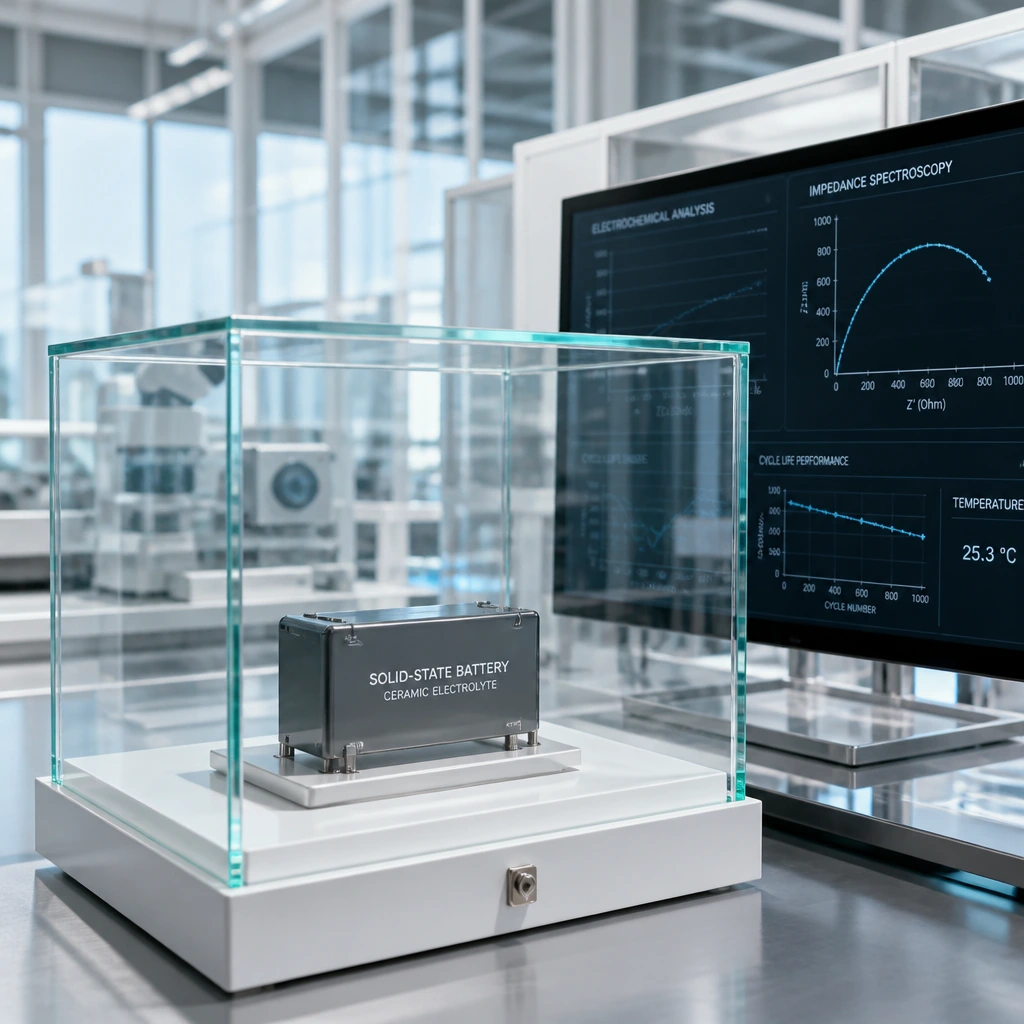
- The Chemistry Bottleneck: Solid electrolytes sound simple on paper, but manufacturing them at scale remains an engineering nightmare.
- Safety Reality: While they eliminate liquid volatile solvents, dendrite formation still causes short circuits under high stress.
- Market Timeline: Mass adoption is arriving in phases, starting with high-end niche hardware before reaching mainstream vehicles.
Let us be candid: the hype surrounding solid-state batteries has reached deafening levels. Every six months, a press release promises a miracle energy storage breakthrough that will render current lithium-ion cells obsolete by next Tuesday. Yet, your phone still dies by dinnertime, and electric cars still rely on liquid chemistry. Why the massive gap between laboratory wonder and commercial reality?
The Ghost in the Machine: Dendrites and Interface Resistance
Building a better battery is not just about changing one ingredient. It is a grueling exercise in materials science. Traditional lithium-ion cells use liquid electrolytes to ferry ions back and forth between the cathode and anode. Solid-state designs swap that liquid for a solid ceramic, polymer, or sulfide compound.
Sounds safer, right? Absolutely. But solid interfaces hate poor contact. When a battery charges and discharges, the electrodes expand and contract. Liquids adapt to this shifting landscape seamlessly. Solids crack. Worse yet, microscopic needle-like structures called dendrites push through the solid electrolyte over time, causing catastrophic short circuits.
- Solid interfaces demand extreme mechanical pressure to maintain ionic conductivity.
- Manufacturing requires ultra-dry rooms—far drier than standard lithium-ion factories.
- Material costs remain prohibitively high for low-margin consumer electronics.
Parsing the Three Main Contenders
Not all solid-state architectures are created equal. Researchers generally divide their bets into three distinct chemical families, each with unique engineering tradeoffs:
- Oxides: Mechanically robust and thermally stable, but brittle and notoriously difficult to sinter at scale.
- Sulfides: Offer incredible ionic conductivity at room temperature, yet react with moisture to release toxic hydrogen sulfide gas.
- Polymers: Easiest to manufacture using existing roll-to-roll machinery, but usually require elevated operating temperatures to function efficiently.
| Aspect | Traditional Approach | Modern Solution |
|---|---|---|
| Electrolyte | Volatile organic liquid | Solid ceramic or polymer |
| Thermal Risk | High thermal runaway potential | Inherently flame-retardant matrix |
| Manufacturing | Mature, highly automated | Emerging, capital-intensive vacuum processing |
The Standardisation Trap
Technology moves fast, but regulatory standards crawl at glacial speeds. If a startup invents a proprietary sulfide electrolyte, how do automakers source backup components? They cannot. Supply chains rely on interchangeable formats and universally accepted safety benchmarks.
Governments across North America and Europe are currently scrambling to draft testing protocols for solid-state cells. Nail penetration tests designed for liquid electrolytes fail to capture how a solid ceramic block reacts to localized mechanical failure. Until uniform testing standards emerge, risk-averse tier-one suppliers will stick with incremental improvements to conventional chemistry.
Do not hold off purchasing an electric vehicle or solar storage system waiting for solid-state technology. Hybrid approaches featuring semi-solid gels are entering the market now, serving as an evolutionary stepping stone rather than an overnight revolution.
Where Clean Energy Grids Intersect with Storage Hardware
Stationary energy storage presents a completely different set of constraints compared to transportation. Grid-scale batteries do not care about weight or volume nearly as much as cycle life and upfront capital cost. While automotive engineers obsess over packing maximum kilowatt-hours into a tiny footprint, grid operators care about thirty-year lifespans.
This is where sodium-ion and flow batteries often steal the spotlight from solid-state lithium variants. When you scale clean energy generation from solar farms, the math changes entirely. Abundant, cheap materials beat exotic ceramic membranes every single time for stationary applications.
Frequently Asked Questions
When will solid-state batteries actually be available for consumers?
Niche hardware like medical devices and premium wearable tech will adopt early iterations first. Mass-market electric vehicles featuring true solid-state packs will likely arrive toward the end of this decade, phased in gradually by luxury brands.
Are solid-state batteries completely fireproof?
Not entirely. While they remove flammable liquid solvents, high-nickel cathodes can still release oxygen under extreme thermal abuse, potentially leading to internal fires if manufacturing defects are present.