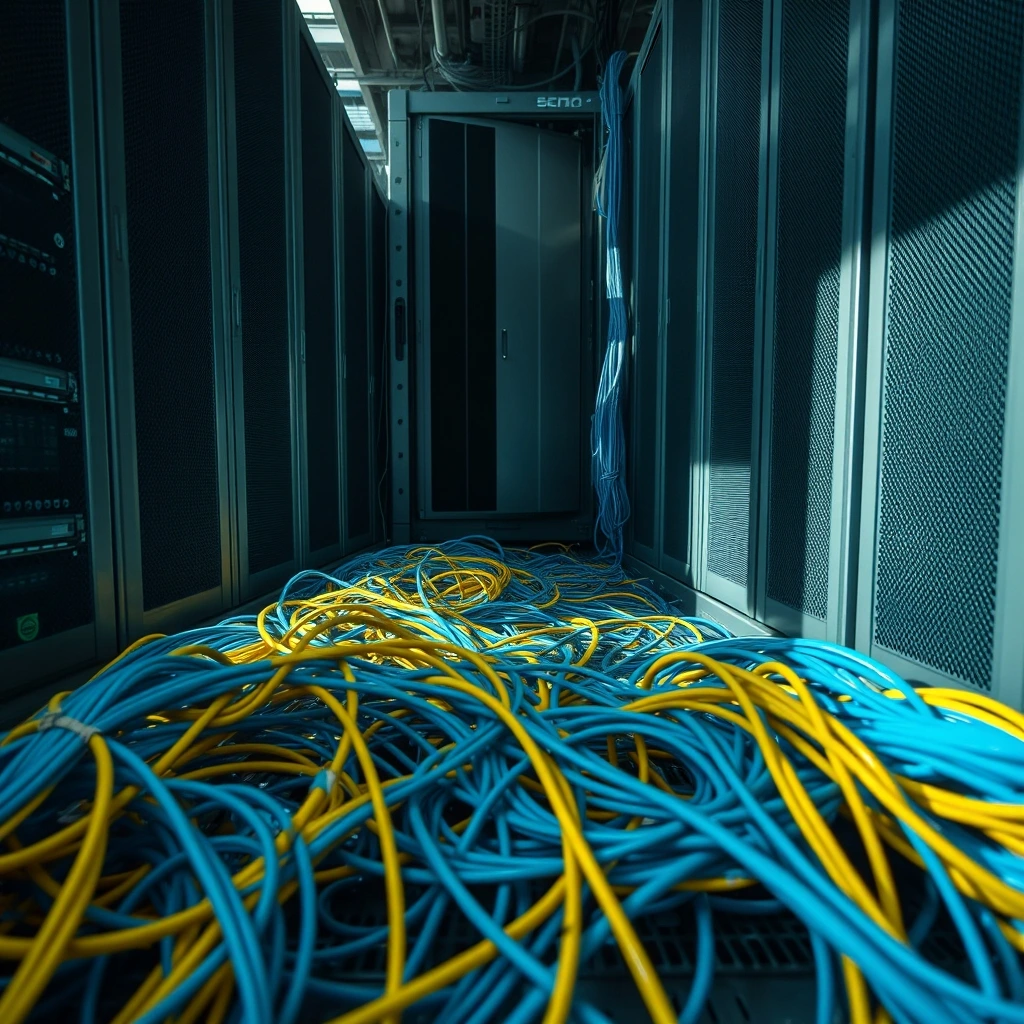
- Cost Control: Cloud bills are rising because of inefficient data movement, not just compute.
- Architecture Shift: Move away from monolithic ETL toward event-driven, modular pipelines.
- Governance: Data quality must be baked into the ingestion layer, not fixed downstream.
Most engineers treat cloud scalability like a bottomless credit card. They build complex, tangled ingestion layers, hoping the sheer power of distributed systems will hide the inefficiency. It rarely works. If you look under the hood of most enterprise data stacks, you will find a graveyard of abandoned microservices and runaway storage costs. The reality is that we have been prioritizing flexibility over raw, functional speed.
The Myth of Infinite Scalability
We spent a decade obsessed with building systems that scale to infinity. But do you actually need to process petabytes in milliseconds? Probably not. The obsession with horizontal scaling has left us with architectures that are impossible to debug and expensive to run. Instead of scaling for the sake of it, look at your latency requirements. If your business can survive with a five-minute delay, stop paying for sub-second streaming infrastructure.
The Death of the Monolithic ETL
Old-school batch processing is dying, but the replacement is often just as messy. We moved from nightly jobs to real-time pipelines, yet the logic remains trapped in monolithic containers. This creates a bottleneck where one failing job stalls the entire flow. Modern pipelines are shifting toward modular, component-based architectures where each transformation step is isolated. This allows for granular scaling and, more importantly, faster failure recovery.
Why Your Storage Strategy is Backwards
Stop dumping everything into a data lake and hoping for the best. That swamp is costing you a fortune. Tiered storage is the only way to survive high-scale growth. Keep your hot data in high-performance NVMe storage, move the warm data to standard object storage, and ship the rest to cold archival tiers immediately. If you are paying for premium storage to hold logs from 2019, you are doing it wrong.
| Aspect | Traditional Approach | Modern Solution |
|---|---|---|
| Data Flow | Monolithic ETL | Event-Driven Micro-Pipelines |
| Storage | Single-tier Data Lake | Automated Lifecycle Tiering |
| Validation | Downstream Cleaning | Contract-based Ingestion |
Never implement a new data transformation step without a defined data contract. If the schema changes, the pipe should break immediately at the source, not silently corrupt your warehouse downstream.
The Hidden Cost of Data Gravity
Moving data is expensive. Egress fees are the silent killer of cloud budgets. Architects often ignore the physical location of data because the cloud makes it feel intangible. It is not. Every time you pull data across regions to perform a join, you are paying a tax. Bring your compute to the data, not the other way around. If your pipeline spans multiple zones, you have already lost the efficiency battle.
Frequently Asked Questions
Why is my cloud bill still high despite using auto-scaling?
Auto-scaling is not a magic fix. It often leaves clusters running at minimum capacity that is still too large for your actual workload. Focus on serverless execution models or ephemeral clusters that die when the job finishes.
Should I move everything to a streaming architecture?
Only if you have a clear business requirement for low latency. Streaming is significantly more complex to maintain than batch. If your users are fine with hourly updates, stick to batch to save your sanity and your budget.