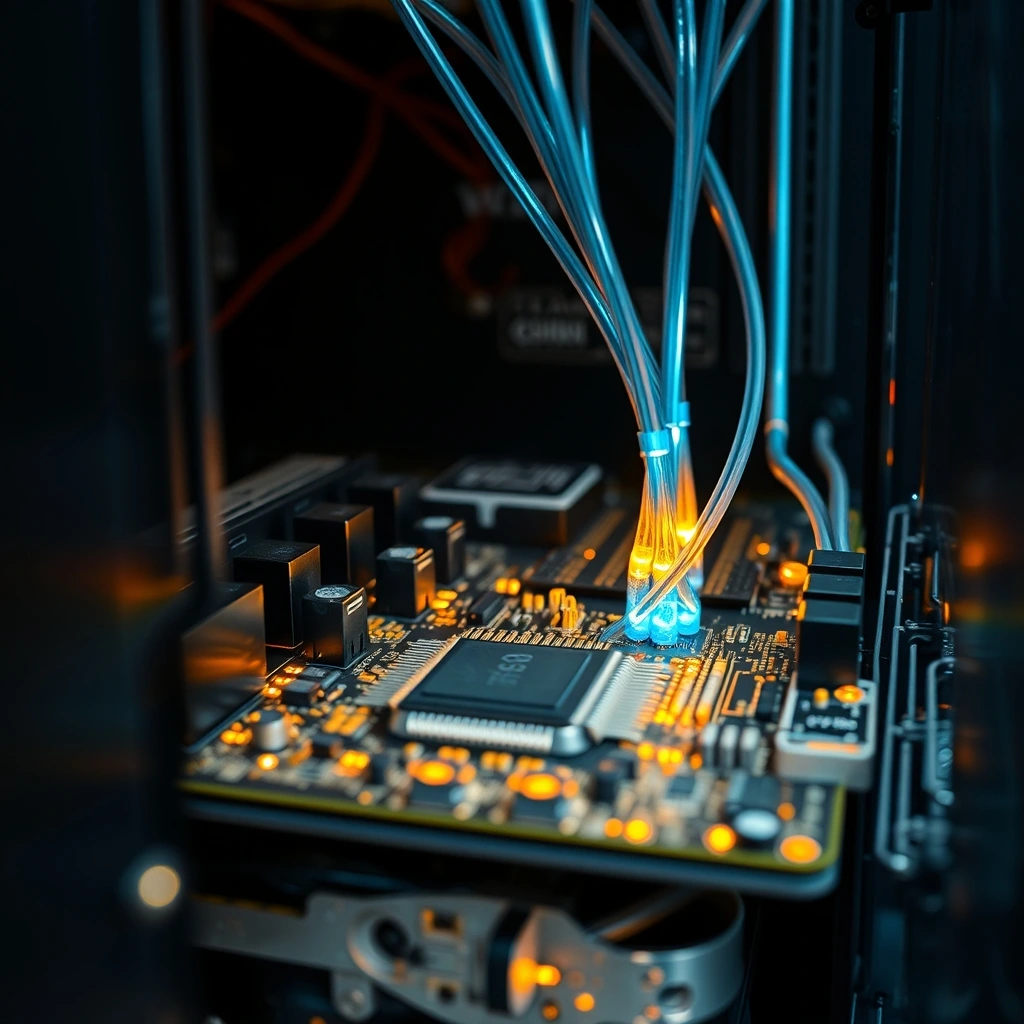
- Neural Integration: AI is no longer an add-on service; it acts as the native operating system for 6G architecture.
- Sub-Millisecond Reality: Ultra-reliable low-latency communication opens paths for autonomous swarm coordination.
- Spectrum Shift: Terahertz frequencies present massive data capacities alongside severe propagation hurdles.
Let us be completely candid: 5G was largely an incremental evolution disguised as a massive leap. It gave us faster video streaming and slightly shorter download windows. But behind closed laboratory doors, engineers are already building the next infrastructure wave, and it operates on an entirely different rulebook. AI sits squarely at the center of this transformation.
The Invisible Brain Inside the Infrastructure
Traditional telecom architecture relied on rigid, human-configured routing tables and static baselines. That model breaks down completely at terahertz speeds. The sheer volume of signals demands automated management that only machine learning models can deliver.
We are witnessing the birth of networks that heal themselves, predict congestion before it occurs, and allocate spectrum dynamically. Here is what infrastructure management actually looks like now:
- Predictive traffic steering based on historical user movement patterns.
- Automated energy throttling to shut down idle transmitter cells during low-demand hours.
- Real-time anomaly detection spotting hardware degradation weeks before failure.
Terahertz Frequencies and the Physics Problem
Everyone loves talking about theoretical speeds hitting a terabit per second. Physics, however, remains remarkably stubborn. Terahertz waves travel short distances and get blocked by almost anything, including a heavy sheet of glass or falling rain.
Solving this requires smart surfaces—programmable panels mounted on building facades that bounce and bend signals around obstacles. Without neural models directing these adaptive reflectors in real time, high-frequency bands remain useless for mobile applications.
Edge Computing Meets Distributed Cognition
Data centralization is dead. Sending every sensor reading back to a distant cloud server introduces fatal delays for applications like autonomous robotics. 6G shifts processing power directly to the network edge.
| Aspect | Traditional Approach | Modern Solution |
|---|---|---|
| Data Routing | Centralized Cloud Servers | Distributed Edge Neural Nodes |
| Latency Target | 10 to 50 Milliseconds | Sub-Millisecond Response |
| Resource Allocation | Manual Provisioning | AI-Driven Dynamic Slicing |
Do not anchor your product roadmap to theoretical maximum speeds. Plan your architecture around latency floors and reliability guarantees instead.
Security Realities in an Autonomous Era
When networks run themselves, traditional cybersecurity measures fail. Human security analysts cannot respond fast enough when an exploit unfolds in microseconds. Autonomous systems require cryptographic protocols generated and verified by machine learning algorithms on the fly.
Bad actors will also utilize these same intelligent systems. The race is no longer just about building faster pipes; it involves establishing resilient trust frameworks that withstand AI-driven attacks.
Frequently Asked Questions
When will real 6G networks actually launch?
Commercial rollouts will not happen until the early 2030s. Right now, researchers are finalizing standard definitions, spectrum allocations, and basic hardware prototypes.
Will existing 5G infrastructure become useless?
Not at all. 6G will inherit much of the standalone 5G core architecture, gradually upgrading base stations and adding terahertz radio units where density demands it.