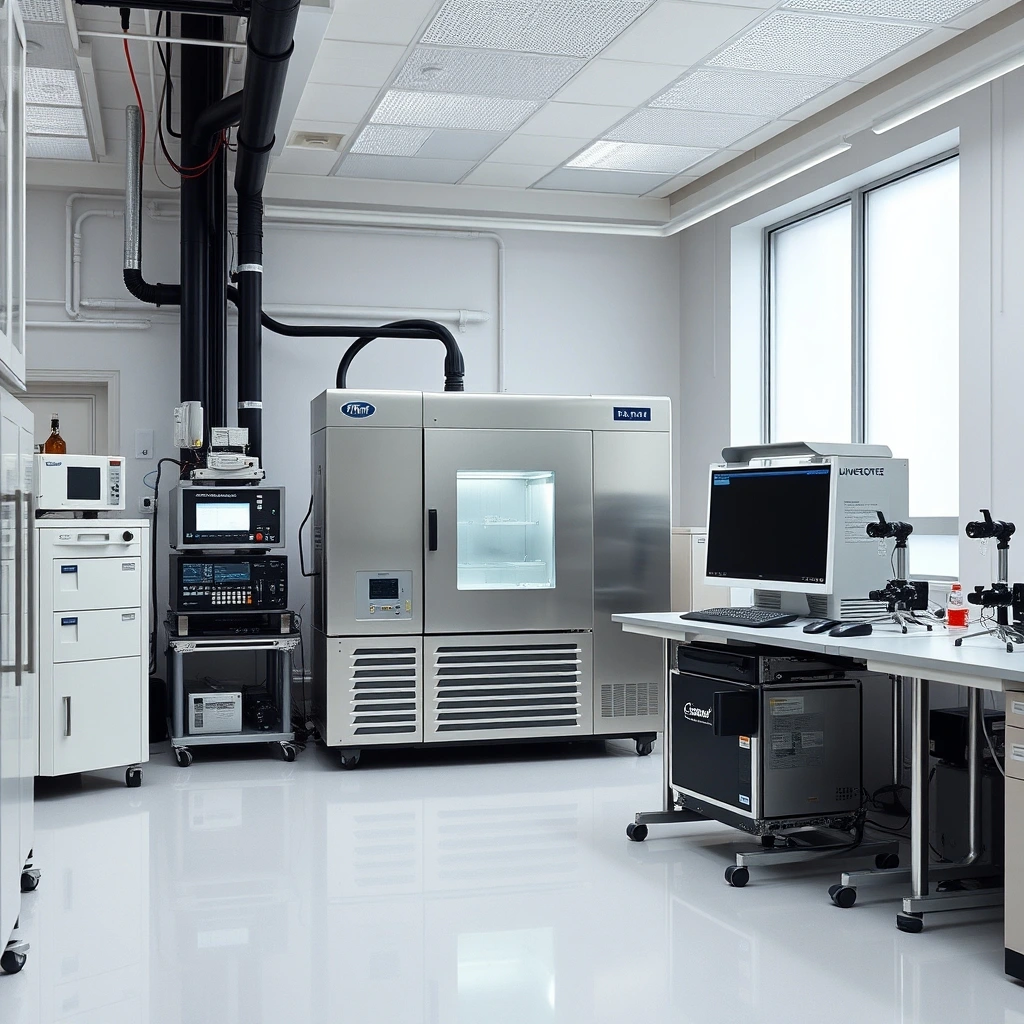
- Hardware Reality: Noisy intermediate-scale quantum systems dominate today's labs, requiring clever error mitigation rather than pure scale.
- Practical Utility: Materials science and financial modeling show actual promise, while general cryptography remains years away from disruption.
- Strategic Pivot: Engineering teams must start hybrid classical-quantum workflows immediately to avoid falling behind the curve.
Let us be entirely candid: most enterprise pitches about quantum computing read like science fiction disguised as a roadmap. Boardrooms burn millions chasing instant computational supremacy, ignoring the brutal physics of decoherence and error correction. Here is what nobody tells you about actual progress on the ground.
The Noise Problem Nobody Wants to Discuss
Building a stable qubit is agonizingly difficult. Traditional computers rely on bits that sit comfortably at zero or one. Quantum bits, or qubits, exist in messy superpositions. They collapse when a stray magnetic field so much as sneezes near the cryostat.
We are currently living through the NISQ era. That stands for Noisy Intermediate-Scale Quantum. It sounds impressive on a slide deck, but it translates to hardware that makes mistakes. Lots of them.
- Physical qubits require intense isolation to prevent thermal noise interference.
- Logical error correction currently demands thousands of physical qubits just to protect one stable bit of data.
- Clock speeds lag far behind classical silicon, meaning quantum hardware is fundamentally an accelerator rather than a standalone desktop replacement.
Milestones That Matter vs. Marketing Fluff
Every month brings a press release claiming quantum supremacy. Take those claims with a heavy grain of salt. Solving a custom mathematical puzzle designed specifically to favor a particular quantum chip tells us very little about solving supply chain bottlenecks.
Instead of watching qubit counts climb upward, look at gate fidelity. Look at coherence times. These boring metrics dictate whether an algorithm finishes its run before the system loses its state entirely.
Where the Math Actually Pays Off
Where should engineering teams actually deploy quantum resources? Do not throw qubits at web traffic routing. That remains a classic problem easily solved by classical integer programming.
Focus instead on complex molecular simulation. Classical computers choke on electron correlation problems because the math scales exponentially with particle count. Quantum systems map naturally onto these exact physical states.
| Aspect | Traditional Approach | Modern Solution |
|---|---|---|
| Molecule Simulation | Approximations and heuristic density functional theory | Variational Quantum Eigensolver (VQE) on hybrid circuits |
| Portfolio Optimization | Monte Carlo simulations requiring massive CPU clusters | Quantum Approximate Optimization Algorithm (QAOA) |
| Supply Chain Routing | Greedy algorithms and classical genetic programming | Quantum annealing and tensor network approximations |
The Hybrid Playbook for Modern Engineering Teams
Waiting for a fault-tolerant quantum computer with a million clean qubits is a losing strategy. The enterprises winning this race are building hybrid architectures today. They offload specific computational bottlenecks to cloud-accessible quantum processing units while keeping the rest of the pipeline safely on classical GPUs.
Do not hire a team of theoretical physicists just yet. Instead, upskill your current senior software engineers in linear algebra, tensor networks, and variational algorithms. Practical hybrid integration requires developers who understand classical constraints just as much as quantum mechanics.
Frequently Asked Questions
When will quantum computers break modern encryption?
Shor's algorithm can theoretically crack RSA encryption, but executing it requires millions of error-corrected physical qubits. Most cryptographers and hardware engineers agree we are at least a decade away from hardware capable of running that specific workload at scale.
Should my company buy proprietary quantum hardware?
Almost certainly not. The capital expenditure for cryogenic infrastructure and maintenance is prohibitive. Cloud-based quantum-as-a-service models provide access to the exact same hardware ecosystems without the operational nightmare.