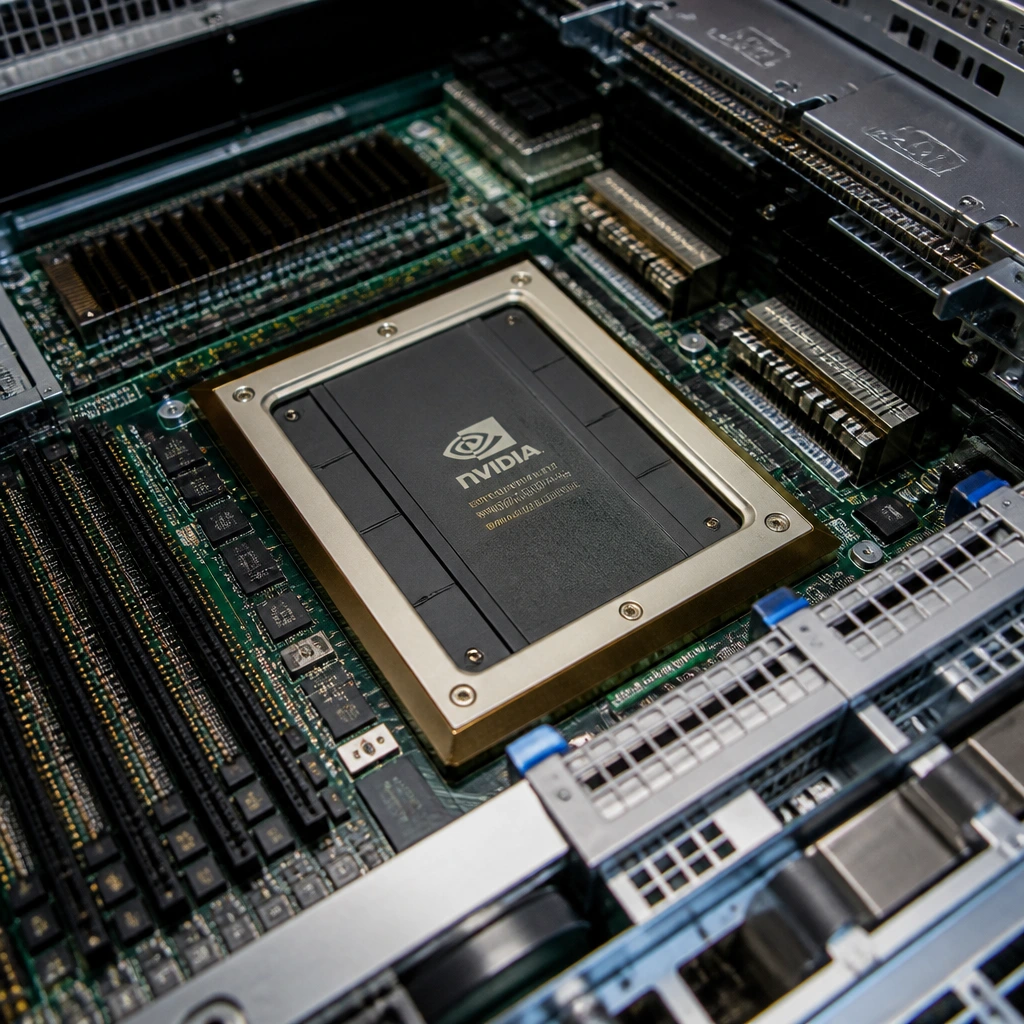
- Silicon Shift: General-purpose CPUs are no longer viable for heavy neural network training and large-scale inference workloads.
- Economic Reality: Custom NPUs reduce datacenter power consumption drastically while scaling throughput for generative models.
- Edge Computing: Localized neural processing moves intelligence away from centralized clouds directly into physical machinery and mobile devices.
Here is what nobody tells you about the modern artificial intelligence boom: it runs on physical metal, and that metal is dangerously scarce. While boardrooms obsess over model parameters and training datasets, a quiet war for specialized silicon dictates who survives the next decade of enterprise technology.
The Day General-Purpose Computing Died
Let's be candid. For decades, the standard central processing unit handled everything. That era is over. Modern machine learning models demand parallel matrix multiplication at a scale that chokes traditional architectures. Trying to train a frontier large language model on standard server chips is like attempting to drain an ocean with a garden hose.
Hardware engineers realized that specialized instruction sets were mandatory. Graphics cards offered a temporary escape hatch, but their general-purpose heritage left efficiency gaps. Today, application-specific integrated circuits designed solely for neural computation dominate procurement pipelines.
- Massive parallel execution units replacing sequential instruction pipelines.
- Radically reduced memory footprints for intermediate calculations.
- Native support for low-precision arithmetic like FP8 and INT4.
Following the Money Trail of Specialized NPUs
Capital allocation tells the true story of industrial shifts. Venture capital and corporate treasuries are pouring billions into fabrication plants and custom chip design startups. Why? Because electricity bills for traditional server farms are reaching breaking point. When running a single inference query costs fractions of a cent too much, profitability vanishes at scale.
Companies ignoring custom silicon face an insurmountable margin disadvantage. If your competitor runs inference on purpose-built neural silicon while you rely on bloated cloud instances, their unit economics will eventually crush your pricing model. This is not about marginal performance gains anymore. It is about baseline operational survival.
The Edge Revolution No One Saw Coming
Cloud datacenters get all the headlines. The real battlefield, however, sits at the edge. Industrial robots, autonomous vehicles, and medical diagnostic tools require instant decision-making. Waiting for round-trip cloud latency is not an option when a robotic arm needs to correct its grip in milliseconds.
| Aspect | Traditional Approach | Modern Solution |
|---|---|---|
| Latency | High (Cloud round-trip) | Ultra-low (On-device NPU) |
| Power Draw | Heavy server racks | Battery-optimized local chips |
| Security | Data transmitted externally | Zero-trust local processing |
Next-generation neural silicon brings datacenter-grade intelligence to low-power edge devices. Cameras running local object detection no longer need constant internet connections. Industrial sensors analyze acoustic anomalies on the factory floor instantly, triggering preventative maintenance before a costly breakdown occurs.
Do not over-index on raw floating-point benchmarks when purchasing AI hardware. Real-world memory bandwidth and thermal dissipation limits matter far more than peak theoretical TOPS.
Architectural Trade-Offs Engineers Face Daily
Designing custom neural accelerators requires brutal compromises. Every millimetre of silicon real estate counts. Architects must constantly choose between memory capacity and compute density. Pack too much cache onto the die, and you sacrifice raw arithmetic units. Expand the compute array, and the chip starves for data.
- Balancing on-chip SRAM capacity against off-chip HBM bandwidth limits.
- Managing thermal throttling during continuous burst workloads.
- Ensuring software stack compatibility with rapidly evolving model architectures.
Software often lags behind hardware innovation. A brilliantly designed chip is useless if compilers cannot optimize neural graphs effectively for its specific instruction set. The winning organizations treat hardware and software co-design as a single discipline.
Frequently Asked Questions
Why can't traditional GPUs handle future AI workloads?
Traditional GPUs are engineered for graphical rendering pipelines. While adaptable, they carry legacy overhead that wastes silicon space and electrical power. Dedicated neural processors strip away non-essential logic to focus purely on tensor operations.
Is on-device AI silicon secure enough for enterprise deployment?
Yes. Processing sensitive data locally on dedicated hardware eliminates the risks associated with transmitting proprietary corporate information across public networks to third-party cloud endpoints.
How quickly does AI hardware become obsolete?
The hardware lifecycle is accelerating. While traditional enterprise servers last five to seven years, specialized AI accelerators often face functional obsolescence within three years as neural network architectures shift.