- Latency is the enemy: Milliseconds matter when an autonomous arm handles heavy payloads.
- Local intelligence: Edge processing keeps factories running even during complete internet outages.
- Hardware reality: Designing physical systems requires balancing compute power with strict thermal limits.
Let us be candid: the cloud has failed industrial robotics. Sending sensor data halfway across the planet to make a split-second braking decision on a factory floor is a terrible engineering choice. Yet, for years, corporate IT blueprints insisted on doing exactly that. Here is what nobody tells you about building truly autonomous machinery: survival requires local brains, not distant data centers.
The Millisecond Trap That Broke Old Architectures
Data travel time is an unforgiving physical constraint. Light in fiber optic cables moves fast, but queueing delays, router hops, and bandwidth bottlenecks add up quickly. When a mobile robot navigates a cluttered warehouse aisle filled with human workers, waiting fifty milliseconds for a central server to parse a spatial map can result in a catastrophic collision.
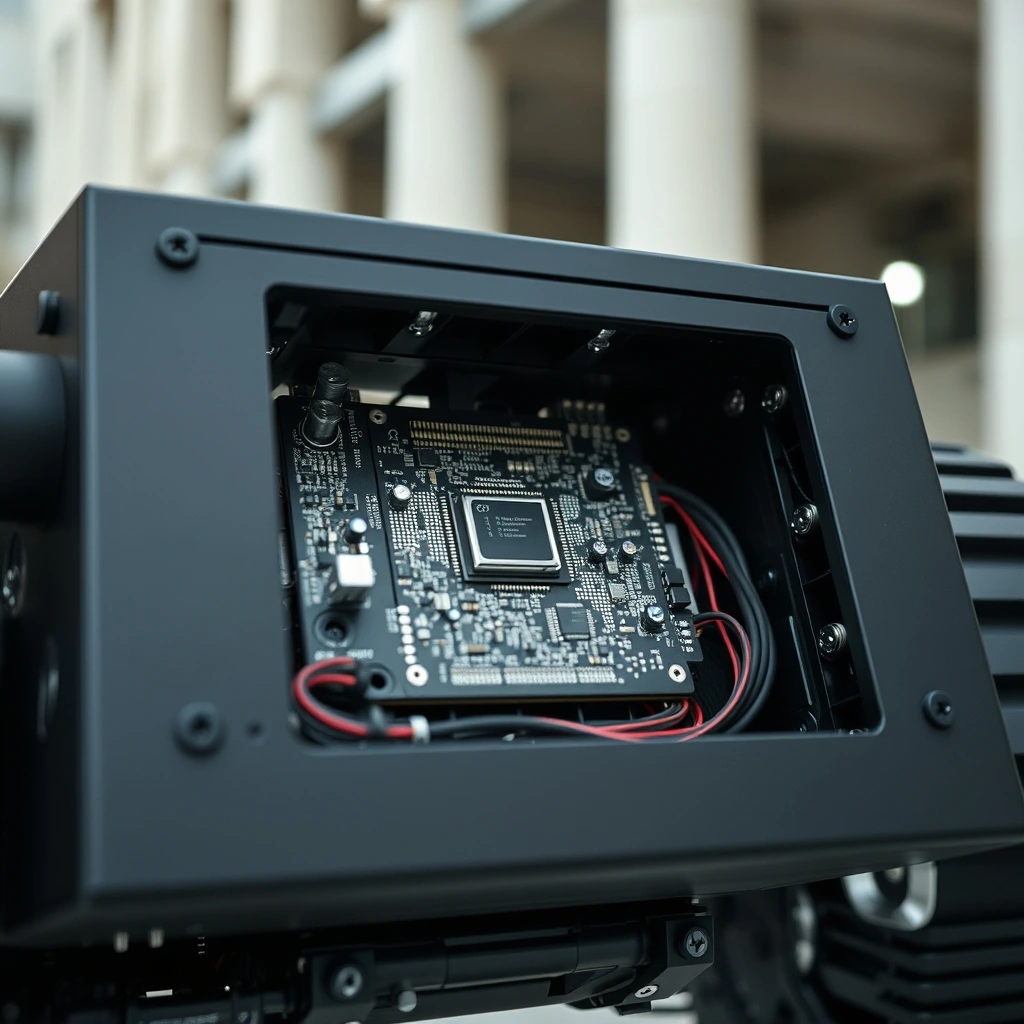
Edge computing changes the physics of the problem. By placing heavy computational units directly on the chassis of the robot, sensory inputs from LiDAR, depth cameras, and inertial measurement units are processed locally. The machine perceives, decides, and acts within microseconds.
- Zero dependence on Wi-Fi: Local inference works deep inside concrete bunkers and underground mines.
- Bandwidth conservation: Only critical metadata gets transmitted upstream, saving massive networking costs.
- Deterministic response times: Hard real-time operating systems ensure critical safety loops never drop a cycle.
Why Centralized Cloud Models Fall Apart
Traditional IT architectures rely on a hub-and-spoke model. Every sensor feeds a central lake, where machine learning models train on vast historical records. That approach works fine for predicting consumer buying habits. It fails miserably when applied to autonomous industrial systems.
| Aspect | Traditional Approach | Modern Solution |
|---|---|---|
| Data Processing | Centralized Cloud Servers | On-Device Edge Hardware |
| Network Reliability | Requires Constant Uptime | Autonomous Offline Operation |
| Latency | High (50ms to 300ms) | Ultra-Low (under 5ms) |
| Security Risk | Vulnerable Data Transit | Isolated Local Storage |
The Hardware Realities Nobody Discusses
Building an autonomous robot that runs complex neural networks at the edge sounds glamorous. In practice, engineers face brutal trade-offs. Power consumption dictates battery life. Heavy graphic processing units generate intense heat, requiring sophisticated passive cooling fins or liquid cooling loops.
Never size your edge compute hardware based on dry lab benchmarks. Always test thermal throttling under maximum motor load in an ambient temperature chamber that mimics real factory conditions.
Power budget management is an art form. If a robotic arm draws too much current for compute tasks, its operational runtime drops below acceptable commercial thresholds. Balancing power draw between drive motors, actuators, and neural accelerators is the defining challenge of modern robotics engineering.
Designing Resilient Systems for the Real World
Resilience is not a feature you patch on at the end of a project. It must be baked into the silicon and software architecture from day one. When network connections drop, an autonomous system must gracefully degrade its capabilities without stopping entirely.
- Fail-safe fallback: Smooth transition from advanced AI navigation to deterministic waypoint tracing.
- Edge redundancy: Dual microprocessors running independent safety checks in parallel.
- Local model caching: Storing updated weights locally to handle intermittent connectivity.
Frequently Asked Questions
Does edge computing completely replace cloud infrastructure in modern factories?
No. The cloud remains vital for fleet-wide analytics, long-term model training, and firmware updates. Edge computing handles the real-time reflexes, while the cloud handles strategic learning.
How do engineers manage software updates across thousands of deployed edge robots?
Teams use containerized deployments paired with robust over-the-air management platforms that roll back automatically if an onboard health check fails post-update.