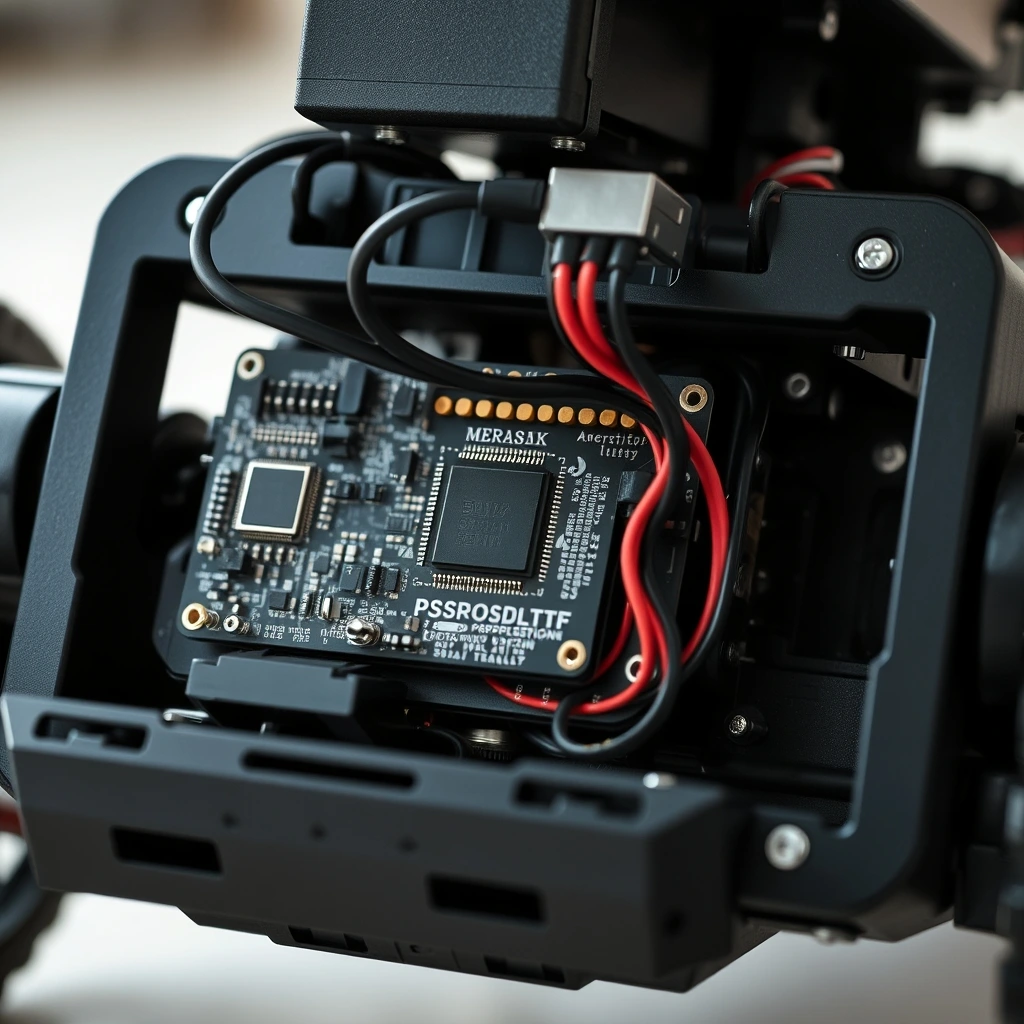
- Latency Kills: Milliseconds matter when an autonomous vehicle encounters unexpected debris at high speed.
- Bandwidth Constraints: Remote field operations cannot rely on stable cellular uplinks in rural or underground deployment sites.
- Model Compression: Running transformer models locally requires aggressive pruning and quantization techniques.
Let us be candid about modern robotics: we built brilliant machines, but tethered them to an umbilical cord of unreliable Wi-Fi. Every time a delivery rover or warehouse drone waits for a round-trip server ping, it invites failure. The engineering community spent a decade pushing every byte to massive data centers, assuming connectivity would always save the day. That assumption is burning millions of dollars in field failures right now.
The Latency Trap That Stalls Innovation
Here is what nobody tells you about cloud-native autonomy: network jitter is an existential threat. When a robotic arm processes visual feedback through a remote API, a simple fifty-millisecond network hiccup transforms precision assembly into a destructive collision. Physics does not wait for packets to clear a distant router.
- Round-Trip Bottlenecks: Inference requests traversing local Wi-Fi introduce unpredictable delay spikes.
- Packet Loss Vulnerability: Tunnel entries and concrete structures instantly sever control loops.
- Safety Liabilities: Autonomous emergency braking systems must execute on bare metal locally, zero exceptions.
Engineers are waking up to this reality. Moving computation out of the server rack and directly onto the circuit board changes the entire architectural paradigm. We are shrinking neural networks until they fit comfortably inside power-constrained silicon dice.
Trimming the Fat Off Heavy AI Models
You cannot simply drop a bloated fifty-gigabyte vision model onto an embedded board running on a battery pack. Thermal throttling and power limits will fry the components within minutes. The engineering challenge is brutal: shrink the model without lobotomizing its spatial intelligence.
- Quantization Strategies: Shifting weights from 32-bit floating-point down to 8-bit integer formats slashes memory footprints dramatically.
- Structured Pruning: Systematically snipping dead neural pathways that contribute virtually nothing to inference accuracy.
- Hardware Acceleration: Designing dedicated NPUs that process matrix multiplications natively alongside traditional CPU cores.
Success requires ruthless pragmatism. If a layer does not measurably improve object detection rates under real-world lighting conditions, it gets ripped out of the architecture entirely.
Never test your edge models solely on clean desktop datasets. Inject simulated sensor noise, lens smudges, and direct sunlight glare into your training pipeline early, or watch your robots fail on day one of field trials.
Architectural Shifts: Centralized Servers Versus Distributed Nodes
Let us look at how the underlying hardware topology has evolved over the past five years. The pendulum swung from local mainframes to centralized cloud fleets, and now it is snapping back hard toward decentralized edge clusters.
| Aspect | Traditional Approach | Modern Solution |
|---|---|---|
| Compute Location | Remote Cloud Server | On-Device Edge NPU |
| Failure Mode | Total freeze during disconnect | Autonomous degraded operation |
| Power Draw | High baseline server usage | Optimized duty-cycling |
| Latency | 50ms to 300ms | Under 5ms local execution |
This structural change forces developers to rethink software stacks entirely. Operating systems must be stripped down to real-time kernels, and communication pipelines must prioritize local telemetry over remote telemetry dumps.
Power Budgets and Thermal Dynamics
Batteries are heavy, and heat is the silent killer of microelectronics. When you cram high-performance GPUs and AI accelerators into a sealed, dust-proof robotic chassis, you trap thermal energy with nowhere to vent it.
- Thermal Design Power (TDP): Balancing peak inference throughput against safe operating thresholds inside sealed enclosures.
- Dynamic Voltage Scaling: Adjusting clock speeds on the fly based on current environmental complexity and obstacle density.
- Passive Cooling Integration: Utilizing the robot's aluminum chassis as a giant heat sink to eliminate vulnerable cooling fans.
Ignoring these physical constraints results in field units that shut down mid-shift due to thermal overload. Good code means nothing if the silicon melts itself into a paperweight.
Frequently Asked Questions
Why not just use 5G for ultra-reliable low-latency communication?
While 5G improves speeds, it does not eliminate dead zones inside concrete buildings, underground mines, or dense urban canyons. Autonomous machines operating in safety-critical domains cannot depend on cellular infrastructure they do not control.
How do localized edge devices handle software updates?
Modern field systems utilize differential over-the-air updates. They download compressed model weights incrementally over background connections and verify safety constraints locally before hot-swapping active weights during idle states.