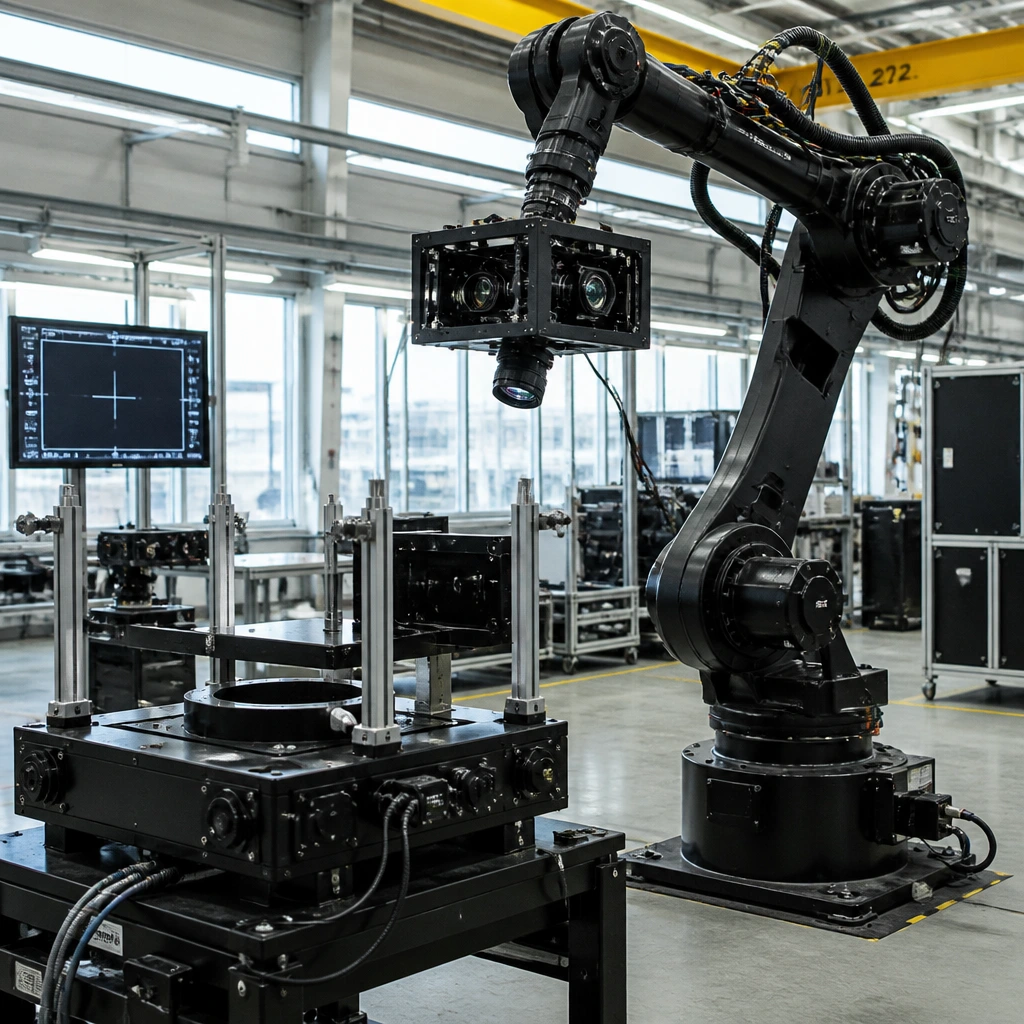
- Hardware Reality: Spatial displays and AR headsets are finally dropping in weight and latency, making factory floors viable zones.
- AI Synergy: Machine learning algorithms process spatial telemetry in milliseconds to predict equipment failures before they happen.
- Workflow Friction: Integrating these tools requires throwing out legacy desktop habits completely.
Let's be candid: most corporate tech rollouts fail because they try to digitize broken analog workflows instead of fixing the underlying mess. For years, executive boards threw money at flat monitors and basic software dashboards, expecting magic. It did not work. Now, spatial computing and augmented reality are forcing a brutal reckoning. If you still think AR is just for gaming or retail filters, you are missing the massive industrial shift happening right beneath your nose.
The Death of the Two-Dimensional Dashboard
For decades, human-machine interfaces meant staring at a glowing rectangle. We squinted at spreadsheets, tracked server loads on static graphs, and tried to map three-dimensional physical structures using mouse clicks on a flat screen. It is an absurd bottleneck. Modern industry demands physical context. When an adult male engineer walks onto an assembly floor wearing a spatial headset, the machine telemetry does not pop up in a browser tab—it projects directly onto the malfunctioning robotic arm.
- Contextual data overlays reduce diagnostic time by eliminating manual lookups.
- Real-time spatial mapping lets operators see hidden electrical conduits inside concrete walls.
- Hand-tracking sensors allow hands-free parameter adjustments while wearing heavy safety gloves.
This is not about looking futuristic. It is about cognitive load. When your eyes do not have to dart back and forth between a control panel and a physical asset, error rates plummet.
Where Artificial Intelligence Meets Spatial Awareness
Hardware is only half the equation. Without artificial intelligence processing the incoming sensor stream locally, spatial computing is just a heavy pair of expensive glasses. Machine learning models run constantly in the background, recognizing object geometry, predicting structural stress points, and cleaning up jittery eye-tracking data.
Think about a massive aerospace hangar. Hundreds of sensors track structural alignment on a commercial fuselage. An edge-computed AI model ingests this spatial data feed, correlates it with historical stress reports, and highlights a hairline fracture in bright amber right in the mechanic's field of view. Nobody wrote a manual for that specific fault. The system figured it out by watching the space.
Do not buy hardware first. Map your worst operational bottleneck on the factory floor, build a lightweight AI proof-of-concept, and only then choose the spatial display tier that matches your latency tolerances.
The Hardware Bottleneck No One Talks About
Here is what the glossy product brochures leave out: battery physics and thermal limits. You cannot strap a high-powered desktop computer to your face for an eight-hour shift. Modern display technology—Micro-OLED panels, pancake lenses, and custom silicon chips—is improving rapidly, but heat dissipation remains a constant engineering nightmare.
| Aspect | Traditional Approach | Modern Solution |
|---|---|---|
| Data Access | Desktop terminals and paper manuals | Contextual AR overlays |
| Maintenance | Reactive repairs after failure | Predictive spatial AI alerts |
| Training | Shadowing veterans on live equipment | Immersive digital twin simulations |
Factories are hot, dusty environments. Dust gets into optical sensors. Sweat fogs up custom optics. Companies rushing to deploy consumer-grade hardware find out the hard way that enterprise floors will destroy delicate electronics within weeks. Ruggedized spatial hardware is expensive, but buying cheap gear twice is a fast way to kill your digital transformation budget.
Rewriting Training Manuals for the Physical Web
Traditional employee onboarding relies on thick binders and dry video modules. People forget eighty percent of what they read within a week. Spatial computing changes training into muscle memory. An apprentice welder does not practice on scrap metal until funds run low. They step into a virtualized fabrication bay where the AI critiques their torch angle, arc distance, and travel speed down to the millimeter.
- Trainees build physical coordination safely without burning through raw materials.
- Remote supervisors can drop into an apprentice's field of view from thousands of miles away.
- Safety protocols become interactive scenarios rather than liability waivers signed in HR.
Frequently Asked Questions
Is spatial computing ready for small-to-midsize manufacturing plants?
Not everywhere at once. Start with high-risk, high-cost maintenance procedures or specialized training programs where a single mistake is expensive. Do not try to outfit every floor worker on day one.
How do we handle employee pushback regarding privacy and constant tracking?
Transparency is your only defense. Involve floor workers in the testing phase, clearly define what data sensors collect, and ensure eye-tracking metrics are used exclusively for system performance optimization, not surveillance.
Will traditional monitors completely disappear from the workplace?
Not anytime soon. Deep data analysis, coding, and heavy creative writing still benefit greatly from stable, high-resolution flat displays. Spatial computing complements the desk setup; it does not entirely erase it.