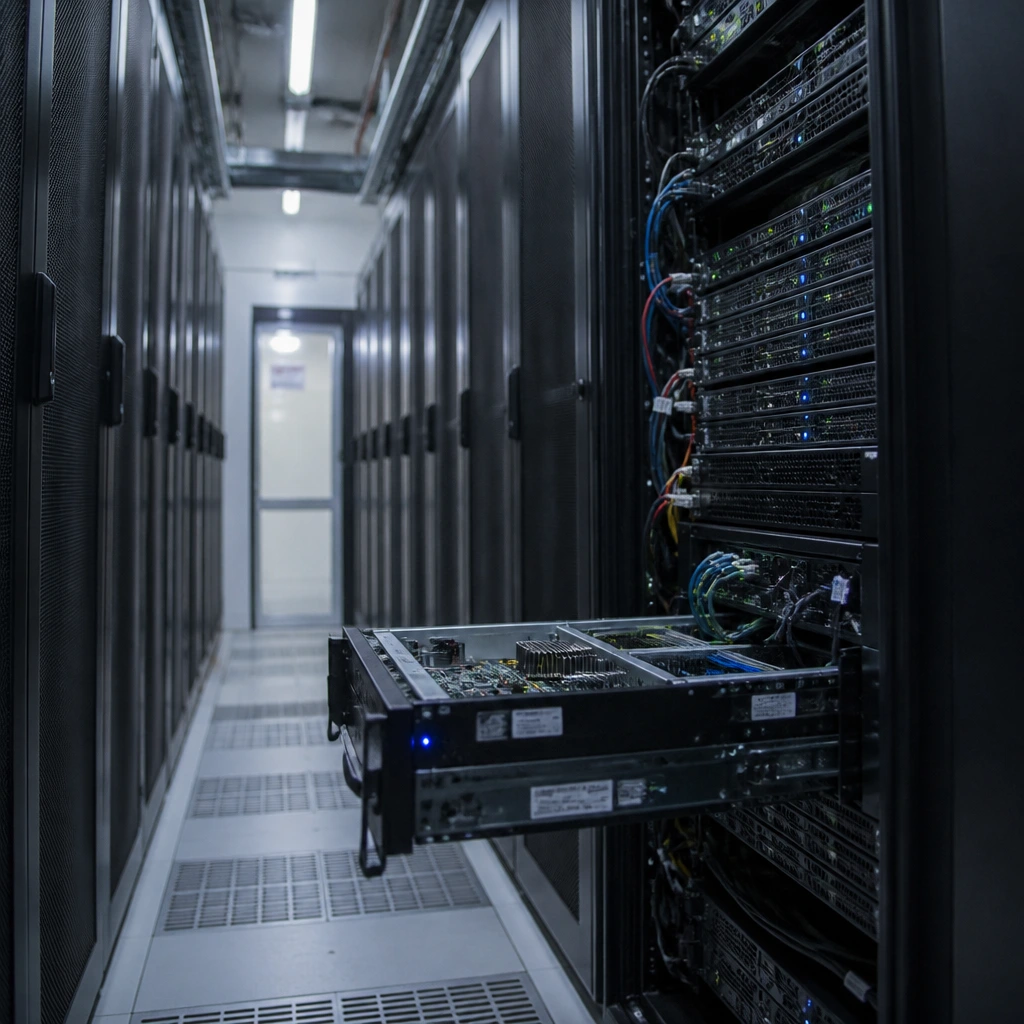
- Compute Decentralization: Single-node training is dead for heavy enterprise models.
- The Open-Weight Shift: True open source requires reproducible data pipelines, not just model weights.
- Infrastructure Economics: Distributed clusters now prioritize dynamic spot-instance orchestration over static bare metal.
Let us be candid: most infrastructure teams treating open-source models like drop-in replacements for proprietary APIs are heading straight for a financial wall.
The Death of the Single-Node Illusion
For years, engineers treated local model deployment as a weekend project. Download a checkpoint, spin up a Python script, watch the tokens stream. That era is gone. Modern architectures demand orchestration layers that look less like traditional software deployments and more like high-performance computing clusters designed for particle physics.
- Dynamic tensor parallelism across commodity hardware.
- Memory bandwidth bottlenecks that quietly throttle inference speed.
- Intricate caching strategies to prevent explosive GPU RAM consumption.
When you scale beyond seven billion parameters, latency spikes turn into business crises. You stop fighting Python dependencies and start fighting PCIe bus limits.
Weights Are Not Open Source
Here is a hard truth about current ecosystem terminology. Getting a `.safetensors` file dropped into a public repository does not make a system open source. Without the exact training recipe, tokenizer configurations, and dataset curation scripts, you hold a black box wrapped in an open license.
Pragmatic leaders look past model cards. They audit the reproducibility of the entire pipeline. If your team cannot replicate a fine-tuning run from scratch using documented scripts, you do not own your AI stack. You are simply renting someone else's unmanaged experiment.
| Aspect | Traditional Approach | Modern Solution |
|---|---|---|
| Model Sourcing | Single proprietary API endpoint | Multi-tier open-weight model catalog |
| Compute Management | Static enterprise cloud reservations | Elastic distributed container clusters |
| Fine-Tuning | Full-parameter cloud monolith training | Parameter-efficient distributed adapters |
Orchestrating the Distributed Mesh
Building a resilient distributed training cluster requires abandoning traditional Kubernetes assumptions. Stateful workloads in AI demand low-latency interconnects. InfiniBand is no longer just for Wall Street HFT firms; it is table stakes for teams serious about custom model pre-training.
- Network jitter destroys gradient synchronization faster than bad hyperparameters.
- Storage I/O throughput often creates silent bottlenecks during massive checkpoint writes.
- Container runtimes must support direct GPU memory access without host CPU translation overhead.
Stop over-provisioning expensive enterprise nodes for inference. Instead, build fallback routing layers that push baseline token generation to distributed consumer-grade GPUs running optimized inference runtimes.
The True Cost of Ownership
Calculations around open-source AI savings often ignore operational overhead. Hiring specialized distributed systems engineers is expensive. Maintaining custom compilation flags for various hardware accelerators drains internal focus.
Leaders must balance the freedom of custom weights against the brutal reality of maintenance debt. If your core business is not infrastructure tooling, owning every layer of the stack is an expensive vanity project.
Frequently Asked Questions
Should my team build or buy our foundational models?
Almost no one should build from scratch. Fine-tuning robust open-weight baselines delivers ninety percent of custom capability at a fraction of the capital expenditure.
How do we handle sudden inference latency spikes?
Implement aggressive speculative decoding strategies and migrate away from monolithic serving runtimes toward distributed execution engines that pool memory across idle cluster nodes.