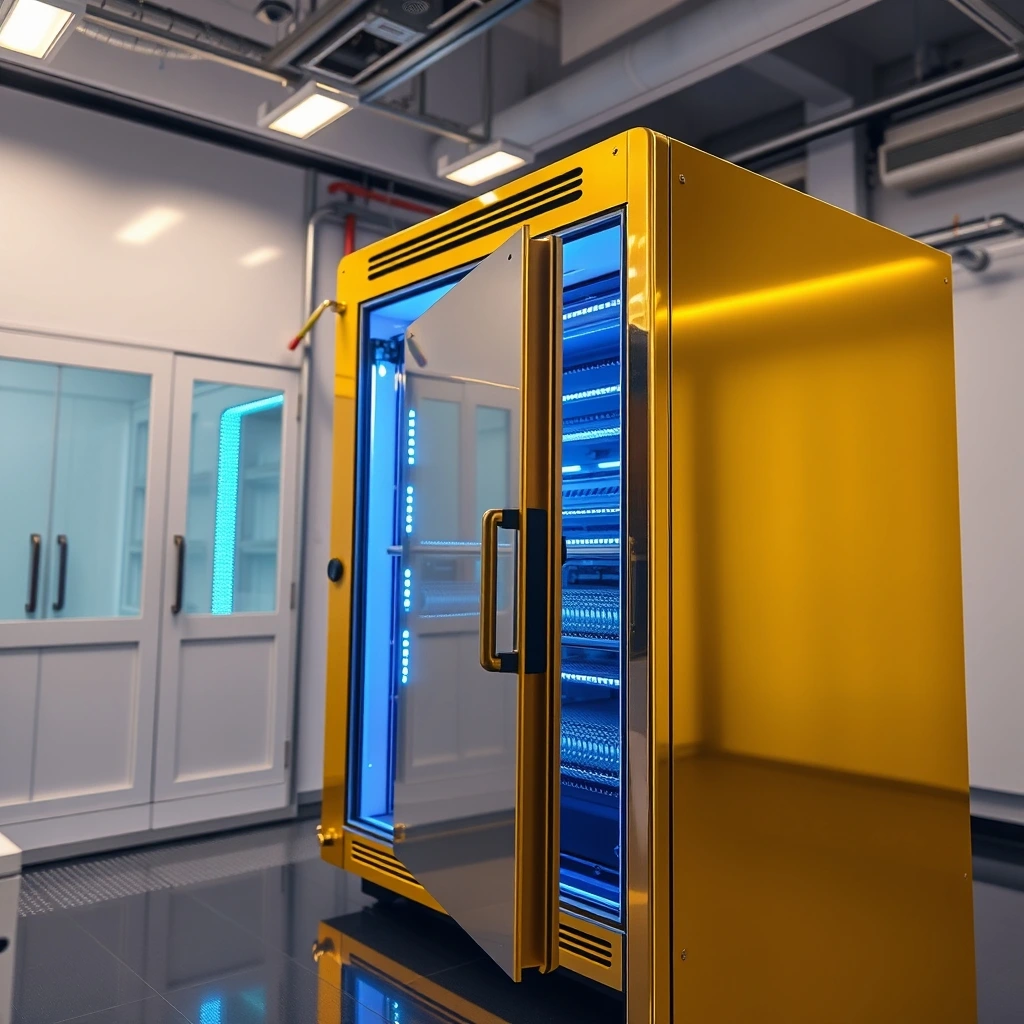
- Practical Utility: Hardware scale matters less than algorithmic efficiency right now.
- Security Shifts: Post-quantum cryptography standards demand immediate board-level attention.
- Hybrid Workloads: Classical and quantum systems must fuse to deliver actual business value.
Let us be candid: most corporate boardrooms discussing quantum computing are chasing ghosts. They hear whispers of infinite processing power and instantly panic about obsolescence. Yet, sitting in actual research labs, the reality is starkly different. We are not staring at a sudden technological explosion. We are climbing a brutal, unforgiving cliffside of error-correction milestones.
The Noise Versus The Signal In Hardware
Every week brings a fresh press release boasting higher qubit counts. Ignore them. Physical qubits are noisy, fragile, and prone to environmental disruption. What actually matters is logical qubit stability.
- Physical qubit counts indicate raw scale, not functional capability.
- Error rates dictate whether a calculation finishes or dissolves into static.
- Cryogenic infrastructure costs continue to limit deployment to major institutions.
Without radical breakthroughs in fault tolerance, adding raw physical qubits resembles strapping jet engines to a bicycle. The machine goes faster, but the crash arrives sooner.
Where Practical Applications Actually Live
Stop waiting for quantum machines to solve general enterprise payroll. That is a waste of capital. Instead, look closely at narrow, highly complex mathematical optimization problems.
Material science, molecular modeling, and logistics routing are the current proving grounds. Simulating complex chemical interactions requires exponential classical computing power. A quantum system handles these states natively.
Do not buy quantum hardware. Buy access via cloud providers and invest your real capital into upskilling internal teams on hybrid classical-quantum algorithms.
The Post-Quantum Security Ticking Clock
Here is what keeps chief information security officers awake at night. Harvest-now-decrypted-later attacks are already happening. Bad actors vacuum up encrypted data streams today, storing them until machines break current encryption.
| Aspect | Traditional Approach | Modern Solution |
|---|---|---|
| Encryption | RSA and ECC algorithms | NIST-approved lattice-based crypto |
| Threat Level | Theoretical for decades | Active intercept-and-store campaigns |
| Migration Cost | Incremental software patches | Multi-year architecture overhauls |
Transitioning infrastructure to post-quantum cryptography is not optional. It is a grueling, multi-year migration that must begin today, regardless of hardware milestones.
Building The Hybrid Bridge
Isolated quantum processors are useless ornaments. The winning architecture bridges classical supercomputers with quantum accelerators, routing specific sub-routines dynamically.
- Classical hardware handles orchestration, input preparation, and result validation.
- Quantum processing units tackle the combinatorial bottleneck moments.
- Middleware layers translate enterprise queries into quantum gate operations automatically.
Frequently Asked Questions
When will quantum computers make classical computers obsolete?
They will not. Quantum systems excel at specific optimization and simulation tasks. General-purpose computing will remain firmly classical for the foreseeable future.
How should small technology firms prepare for this shift?
Focus on algorithm design and data readiness. Companies that organize their data pipelines cleanly today will plug effortlessly into quantum accelerators tomorrow.