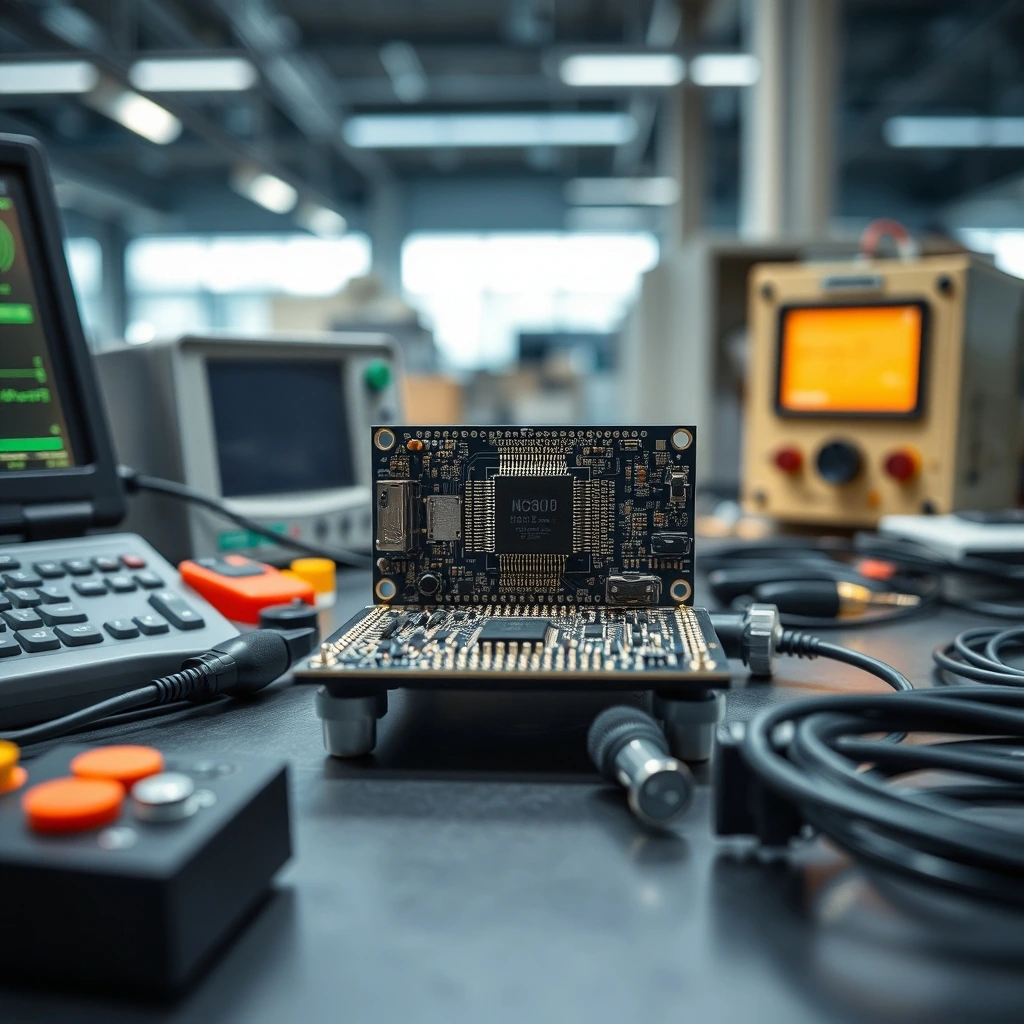
- Edge Intelligence: Processing data locally on microcontrollers eliminates costly cloud roundtrips and latency bottlenecks.
- Power Constraints: Hardware choices must prioritize microamp sleep states over raw clock speed to survive real-world battery limits.
- Security Reality: Hardcoded credentials and unencrypted flash memory are no longer acceptable liabilities in modern product design.
Let us be candid: most connected hardware products ship with a ticking clock inside them. Engineers rush to push data straight to distant servers, completely ignoring the sheer fragility of that pipeline. When the internet drops, your brilliant appliance turns into an expensive brick. That architecture is dying.
The Illusion of Infinite Cloud Bandwidth
For a decade, the playbook was simple. Build a cheap sensor node, attach a Wi-Fi chip, and stream every raw data point to a centralized cloud database. Executives loved it because storage felt cheap. Developers loved it because Python scripts made ingestion trivial. But physics eventually catches up with bad engineering.
Streaming raw audio, continuous vibration logs, or high-frequency telemetry over cellular or local networks chews through batteries at an alarming rate. Radios are greedy. Every millisecond a transmitter stays active draws precious current from the cell. Moving intelligence to the silicon changes the math entirely.
When tiny machine learning models run directly on microcontrollers, the device only sends actionable insights instead of raw noise. An acoustic sensor listens for a failing bearing locally. It triggers an alert only when anomalous frequencies spike. The cloud receives a tiny text packet instead of gigabytes of raw audio streams.
Silicon Choices That Separate Toys From Tools
Choosing a microcontroller used to mean checking three boxes: clock speed, flash size, and cost. Today, you need to think like a power management specialist. Modern embedded systems require dedicated neural processing units sitting right next to the main CPU core.
- Low-Power NPUs: Running matrix multiplication at the hardware level without waking the primary CPU.
- Flexible Sleep States: Retaining SRAM contents while drawing nanoamps of standby current.
- Hardware Roots of Trust: Securing cryptographic keys inside immutable silicon zones from day one.
Ignore these silicon realities, and your bill of materials will balloon the moment field failures demand physical firmware patches. Updating firmware over the air sounds simple until a bad packet bricks ten thousand units deployed across remote industrial sites.
| Aspect | Traditional Approach | Modern Solution |
|---|---|---|
| Data Processing | Raw stream to cloud | Edge inference and local filtering |
| Power Management | Periodic polling and deep sleep | Event-driven interrupts and dedicated NPUs |
| Security | Software-level validation | Hardware root of trust and secure boot |
The Hidden Debt of Proprietary SDKs
Vendor lock-in is a silent killer for engineering velocity. Semiconductor vendors love handing you massive, proprietary software development kits loaded with custom abstractions. They promise immediate productivity. They deliver rigid handcuffs.
Standardize on hardware-agnostic hardware abstraction layers early. If swapping a microcontroller vendor requires rewriting half your application logic, your architecture is fundamentally brittle.
When a global component shortage forces you to swap an MCU mid-production, proprietary SDKs will stall your timeline for months. Building clean separation layers between hardware drivers and application code takes discipline upfront, but it pays massive dividends when supply chains fracture.
Security Is Not a Firmware Patch
Too many teams treat security as a feature added during the final sprint before manufacturing. They bolt on TLS certificates and call it a day. That mindset leaves physical devices wide open to side-channel attacks and physical memory dumping.
Real security starts at the fab. You need secure bootloaders that verify every single instruction before execution. You need encrypted flash storage that renders data unreadable even if someone desolders the memory chip with a heat gun. If your device handles critical infrastructure or personal data, assume bad actors have physical access to the hardware.
The Shift Toward Deterministic Embedded Systems
Real-time operating systems are making a massive comeback. As smart devices take on autonomous safety-critical tasks, probabilistic cloud control loops are entirely too slow. A robotic arm or an industrial valve cannot wait for a round-trip acknowledgment from an AWS region three states away.
Engineers must master deterministic scheduling, priority inversion mitigation, and memory-safe languages at the metal layer. Rust is rapidly proving its worth here, eliminating entire classes of memory corruption bugs before the binary ever hits a test bench.
Frequently Asked Questions
Why are more teams moving away from cloud-first IoT architectures?
Cloud-first designs suffer from latency, high bandwidth costs, privacy liabilities, and total failure when internet connectivity drops. Local edge processing solves these issues by keeping critical logic on the device.
Is it difficult to run machine learning models on microcontrollers?
It requires specialized tooling to quantize and prune models, but modern frameworks allow complex neural networks to run efficiently on chips consuming less than a single milliwatt.
How can small engineering teams future-proof their hardware designs?
Prioritize modular software architectures, use hardware-agnostic abstraction layers, and select microcontrollers with built-in cryptographic accelerators and scalable memory options.